Noëlle
 for thematic elements and a fight.
Reviewed by: Rev. Bryan Griem
CONTRIBUTOR
| Moral Rating: | Better than Average |
| Moviemaking Quality: |
|
| Primary Audience: | Adults |
| Genre: | Christmas Holiday Drama |
| Length: | 1 hr. 30 min. |
| Year of Release: | 2007 |
| USA Release: |
December 7, 2007 DVD release: November 11, 2008 |


REVIEWS of other Christmas movies
Roman Catholic priests—Why do some feel it necessary to give up their religion to follow Christ? Answer
| Featuring | David Wall, Sean Patrick Brennan, Kerry Brennan, Brennan Wall, Jean Bates, Curt Dewitz, David Hickey, Ciaran O'Reilly, See all » |
| Director |
David Wall |
| Producer | John Brennan, Kerry Brennan, Kerry Brennan, Sean Patrick Brennan, Sean Patrick Brennan, Denise DeFelice Hopkins, Lenny Manzo, David Wall, David Wall |
| Distributor | Gener8Xion Entertainment |
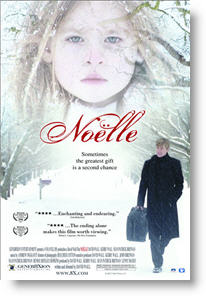
“He came to shut them down. They had a better idea.”
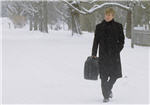
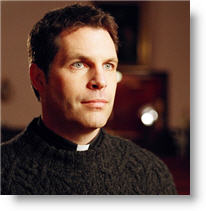
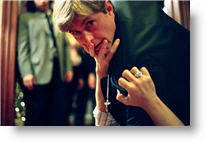
This story begins with Father Jonathan Keene, a Robert Redford-looking church killer, who arrives in Cape Cod to end the life of a local congregation that the Catholic authorities deem no longer profitable. He is a conflicted person who must come to terms with his life’s calling and simultaneously execute the immediate task at hand. Upon arrival, he encounters various townspeople until he catches up to the parish priest, Father Simeon Joyce (Sean Patrick Brennan) who he convinces to stage a living Nativity with the clinging church members on Christmas Eve. This was to be the congregation’s last chance at drawing public attention with the hope of saving the declining church, before Fr. Keene officially pulled the plug.
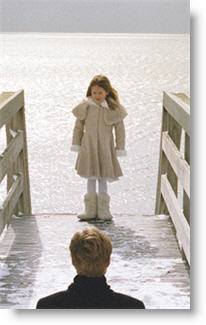
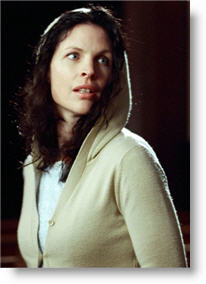
Noëlle, the feminine variant of the French word for Christmas that literally means “Nativity,” is the name of Fr. Keene’s imaginary child specter that intermittently makes appearances throughout the film. She is a haunting memory and the cause for his current unhappy course in life. The actors that play Fr. Keene, Noëlle, and Marjorie Worthington, the theatrical candidate for Mary in the upcoming Nativity, are all members of a single family of actors; the Wall’s (David Wall, Brennan Wall, and Kerry Wall, respectively). All perform with excellence and lend quality to the film.
As the story progresses, the interaction between the two priests shows them both to be very human, but the man from the home office comes off as cold and impersonal, while the failing church pastor is revealed to be a beloved shepherd of people who cherishes his job, burdens and all. In the end, all the critical issues of the movie positively resolve, leaving the viewer with an emotional boost for the Christmas season, and plenty to ponder for many days following.
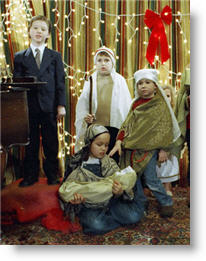
The film, overall, is an interesting production that is easy to follow and like. While the production values are low, the movie delivers in various ways with witty exchanges and intermittent parallels to the biblical story of the birth of Christ. For example, there is a local tree service called The Tree Kings, as in We Three Kings (the star-chasing Wisemen); there is a questionable character with the last name of Herod (like the ruling despot during the time of Christ’s birth), and then there is the aforementioned Marjorie, who is an unwed pregnant mother-to-be, reminiscent of the biblical Mary.
While there are entertaining and amusing bits in the movie, there are times when the script dialogue comes off rather forced and contrived. As well, the character of Father Joyce is likeable and spiritually insightful, but his lines are more often than not delivered flat, uninspiring, and almost monotone. It becomes rather distracting.
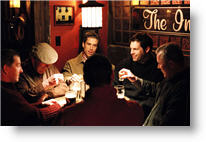
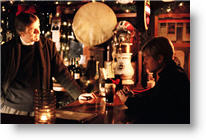
One item of concern for Christian viewers will be the role that alcohol plays in so much of the film. While there is a friendly pub run by a wise and kindly barkeep, consumption sometimes crosses the border from drink to drunk, and the ill-effects associated with inebriation are played out, and those by the clergymen. Prohibitionists will find the whole thing to be distasteful, while others will appreciate the distinction made between social libation and intemperate excess, and the fact that the repercussions of each are delineated. In one scene, a fight breaks out as a result of excessive holiday cheer, albeit mixed with righteous indignation. This is one of the few acts of violence in the movie, but there is nothing portrayed in the film resulting in permanent harm or death to anyone.
With regard to language, the movie is rather tame, but Hell is referenced on one occasion, not as the biblical location, but purely as an expletive. The same with the word “cr*p.” The literal name of God is not used in vain, but the generic word “god” is used repeatedly by one character in various expressions of exasperation, such as “good god,” “my god,” and “thank god.” Smoking is also shown in some scenes.
The subject of abortion is a hidden theme in the movie that is at times discussed and considered, and ultimately gets answered with a pro-life worldview. It is this issue that leads to the redemption, forgiveness, and a second chance at life for the key characters, and ultimately the whole town. Even the congregation is revived, and the movie ends with the cameo vocaling of Michael Sweet (lead singer for the Christian rock band, Stryper). He serves in the background as one of The Tree Kings until he steps forward and delivers the movie’s closing hymn.
Protestant viewers may be put off at this Evangelical-production’s elevated presentation of Roman Catholicism. While slice-of-life movies can be enjoyed unanimously by virtue of common human experience, “Noëlle” possesses an underlying tenor of undiscerning ecumenism that will cause bristling. For those not considering theological ramifications, this may go completely over their heads and won’t even factor into their enjoyment of the story at all.
Reformation issues aside, there is enough entertainment value in this movie to recommend its patronage. Perhaps the strongest line in “Noëlle” is a Jesus quote that rolls off the lips of Fr. Joyce in answer to man’s purpose; “to love one another.” According to Christ, that is a command for Christians second only to loving God (John 13:34; Mark 12:29-31), and both converge especially at this blesséd season of NOEL.
Violence: Mild / Profanity: Minor / Sex/Nudity: None
See list of Relevant Issues—questions-and-answers.


Father Keene (David Wall) is haunted by the choices he made in youth and is saddled with the business of closing a small faltering Parish church in a quaint New England fishing village on Old Cape Cod. His counterpart is Father Simeon Joyce (Sean Patrick Brennan) who is searching for a way to revitalize the church and keep it open. Fr. Joyce loves both the church and the townspeople so when they won’t come to him he goes to them. He is often found fraternizing with the town’s people in the local pub where Celtic and American Folk music are featured.
The Cape Coders are a colorful melee of characters that from time to time are heard speaking the soft and melodious strains of the Portuguese language so prevalent in that part of New England. The Portuguese, who are noted for their belief in “fado” or fate, make a fitting backdrop for this film where fate changes for just about everyone of its leading characters.
Inadvertently each priest helps the other to find the answer they both desperately crave. When Father Keene suggests a Christmas play at the church and Father Joyce invites Father Keene to the town’s biggest annual Christmas gathering at the home of Widow Marjorie Worthington (Kerry Wall) their respective personal torments begin to unravel.
Father Keene is plagued by a recurring vision of an angelic child played by David Wall’s daughter (Brennan Wall) and with each appearance the mystery escalates. Why does this child haunt Father Keene and just what does she want from him? This is answered at the powerful conclusion of the film and is an ending that will never escape your memory.
David Wall displays an amazing versatility as an actor when in one moment he will make you laugh uproariously as he crashes a motor scooter into a snow bank while in the next he will have you glued to every word in an intense dialogue with others in the story. David’s lovely wife Kerry, who plays Marjorie Worthington, wields her thespianic craft with equal intensity and convincibility.
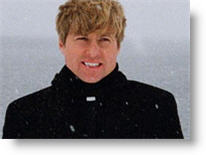
David Wall admitted that many people remind him of how much he looks like a young Robert Redford but was quick to say, “You have never seen Robert Redford fall on his butt in any movie he has ever made.” Wall may be the victim of Cape Cod’s blustering winter ice but he doesn’t fall at all in his performance as the emotionally troubled priest who Wall says is “struggling not only to discover who he is; but also; who he is not.”
Although the production has a clear pro-life message interwoven into it, David Wall said his original attempt was aimed at “dealing with hypocrisy” The secondary import of the message is one Wall welcomes and he is unafraid to make his pro-life position known.
The film is not in anyway limited in its appeal to just pro-lifers. Because upwards of forty million children have been aborted in the United States the numbers of people affected collaterally is much more. Forty million babies, mothers, fathers, friends and family have all had their lives changed in some way by a decision to abort. The film speaks to all of them. It offers a universal message across the board from the abortion advocate to the post abortion women who are so quickly forgotten. That message is the heart of the film.
The film is accessible to Christians, Catholics and the general public in any strata of society. It has a deeply human and universal appeal that starts at the heart but may end with a renewal of the mind and perhaps even the very fabric of society itself. Noëlle has the ear markings and promise of a classic film not just for Christmas but for all time and for any time. Dove Foundation says the film can be seen by 12 years old and up so it could possibly be the best family movie for this Christmas season and for many more to come.
Excellent! / 5
A movie of images and metaphors, this is not for someone wanting a lot of reality in their film going. For instance, when David Wall as the administrator priest is preparing communion—but spills it—and takes off for the bus station where he finds his “Mary” bleeding onto the snow. A friend went with me and commented on seeing the priest filmed looking out through narrow openings (confession booth, window). Although this bothered my friend—what a great way to show a narrow or limited view of whatever was on the other side of that opening! Photography and drama work together beautifully in what appears to be a low budget but beautiful little film.
Moral rating: Good / Moviemaking quality: 4
The drinking, even for Catholics bordered on ridiculous. Having a party where all adults drank heavily and children were in attendance, was distasteful.
The movie did have some good themes. For me, as the pastor of a small congregation like the one in the movie, I found the priest of this congregation and the love he had for his people refreshing. In spite of their elderly cranks and obvious spiritual shallowness he wants to remain as their shepherd. Overall a heartwarming and sweet film. Despite its thick catholic theology, it still has something for everyone to learn this Christmas Season.
Moral rating: Offensive / Moviemaking quality: 5
Moral rating: Offensive / Moviemaking quality: 3
My Ratings: Excellent! / 4