Alatriste
| Moral Rating: | Not Recommended |
| Moviemaking Quality: |
|
| Primary Audience: | Adults |
| Genre: | War Action History Adaptation |
| Length: | 2 hr. 25 min. |
| Year of Release: | 2006 |
| USA Release: |
December 22, 2006 (extremely limited) |
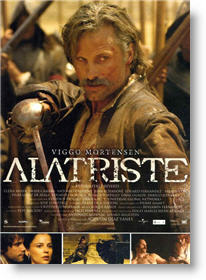
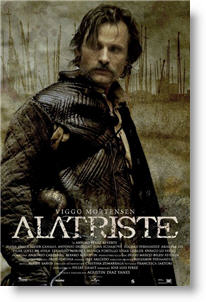
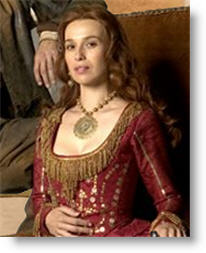
| Featuring |
|---|
| Viggo Mortensen, Elena Anaya, Javier Camara, Unax Ugalde, Blanca Portillo |
| Director |
|
Agustin Diaz Yanes |
| Producer |
| Inigo Marco, Belen Atienza, Antonio Cardenal |
| Distributor |

Here’s what the distributor says about their film: “Viggo Mortensen plays the Spanish soldier-turned-mercenary Captain Alatriste, a heroic figure from the country’s 17th century imperial wars.”
The story takes place during the 17th century in the Spanish Empire. Diego Alatriste is a soldier in the service of King Philip IV of Spain during the Eighty Years' War. The story begins in the Spanish Netherlands, where his tercio fights in the Dutch Revolt. His friend Lope Balboa is killed during the fighting, and Alatriste returns to Madrid where he takes Lope's young son Íñigo into his care.
Alatriste is hired along with a Sicilian assassin named Gualterio Malatesta to kill the Prince of Wales (the future King Charles I of England) and his companion, the Duke of Buckingham. The job is contracted by Emilio Bocanegra and Luis de Alquézar (uncle of Íñigo's love interest, Angélica de Alquézar).
Alatriste finally returns to the Netherlands in 1624 (although the movie states 1625) and participates in the final battles leading to Breda's surrender.
After returning to Spain, Íñigo wants to elope with Angélica, but she gets cold feet at the last moment. Alatriste has a romance with actress María de Castro. Because she was disappointed that she failed to marry him, she became the lover of Philip IV. Alatriste ends up crossing swords with Guadalmedina, a friend of the king.
In the end, the object of their attention falls ill with syphilis. The duel with his friend Martín Saldaña and the punishment of Íñigo in the galleys are part of the film's spectacular ending.
The last scenes are at the Battle of Rocroi (May 1643), described in the last book of The Adventures of Captain Alatriste saga. During the battle, Abel Moreno Gómez's “La Madrugá” is playing as the defeated army's march, and this is where it is assumed that Alatriste dies.

PLEASE share your observations and insights to be posted here.