What the #$*! Do We Know?!
Reviewed by: Richard Schmitz
CONTRIBUTOR
| Moral Rating: | Offensive |
| Moviemaking Quality: |
|
| Primary Audience: | Adults |
| Genre: | Documentary |
| Length: | 1 hr. 51 min. |
| Year of Release: | 2004 |
| USA Release: |
October 22, 2004 (limited) |




What is Monism and Pantheistic Monism? Answer
Who is J.Z. Knight (Ramtha)? Answer (off-site)
Breaking Through the “Relativity Barrier”: How to Make Points Effectively with New Agers (equip.org)
Can mysticism lead to God? Answer
Why I stopped following Buddha and started following Jesus Christ? Answer
Ten Questions I’d Ask If I Could Interview Siddhartha Gautama (Buddha) Today—GO
Jesus Christ 2, Buddha 0—a person testimony
| Featuring |
|---|
|
Marlee Matlin (Children of a Lesser God), Barry Newman, Armin Shimerman “SPIRITUAL TEACHERS, MYSTICS AND SCHOLARS”: Ramtha (JZ Knight), Dr. Miceal Ledwith PHYSICISTS: William Tiller, Ph.D., Amit Goswami, John Hagelin, Ph.D., Fred Alan Wolf, Ph.D., Dr. David Albert. PHYSICIANS: Stuart Hameroff, M.D., Dr. Jeffrey Satinover, Andrew B. Newberg, M.D., Dr. Daniel Monti, Joseph Dispenza (Doctor of Chiropractic). BIOLOGIST: Dr. Candace Pert |
| Director |
|
Mark Vicente Betsy Chasse William Arntz |
| Producer |
| William Arntz, Betsy Chasse (Lord of the Wind Films) |
| Distributor |
Promoting a fusion of science and New Age religion
Here’s what the distributor says about their film: “WHAT THE #$*! DO WE KNOW?! is …part documentary, part story, and part… visual effects and animations. The protagonist, Amanda, played by Marlee Matlin, finds herself in a fantastic Alice in Wonderland experience when her daily, uninspired life literally begins to unravel, revealing the uncertain world of the quantum field hidden behind what we consider to be our normal, waking reality.
She is literally plunged into a swirl of chaotic occurrences, while the characters she encounters on this odyssey reveal the deeper, hidden knowledge she doesn’t even realize she has asked for. Like every hero, Amanda is thrown into crisis, questioning the fundamental premises of her life—that the reality she has believed in about how men are, how relationships with others should be, and how her emotions are affecting her work isn’t reality at all!
As Amanda learns to relax into the experience, she conquers her fears, gains wisdom, and wins the keys to the great secrets of the ages, all in the most entertaining way. She is then no longer the victim of circumstances, but she is on the way to being the creative force in her life. Her life will never be the same.
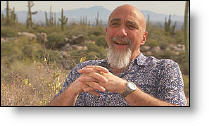
The …scientists and mystics interviewed in documentary style serve as a modern day Greek Chorus. In an artful filmic dance, their ideas are woven together as a tapestry of truth. The thoughts and words of one member of the chorus blend into those of the next, adding further emphasis to the film’s underlying concept of the interconnectedness of all things.
The chorus members act as hosts who live outside of the story, and from this Olympian view, comment on the actions of the characters below. They are also there to introduce the Great Questions framed by both science and religion, which divides the film into a series of acts. Through the course of the film, the distinction between science and religion becomes increasingly blurred, since we realize that, in essence, both science and religion describe the same phenomena.
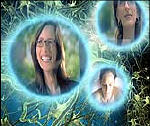
The film employs animation to realize the radical knowledge that modern science has unearthed in recent years. Powerful cinematic sequences explore the inner-workings of the human brain. Quirky animation introduces us to the smallest form of consciousness in the body—the cell… visuals reinforce the film’s message… Done with humor, precision, and irreverence, these scenes are only part of what makes this film unique…”
Among the practical benefits of being a believing Christian is the certainty of knowing you actually exist, with purpose, as the creation of a loving God. The makers of the independent film “What The (Bleep) Do We Know: A Quantum Fable,” starring Academy Award winner Marlee Matlin, do not enjoy such a luxury.
The Matrix trilogy toyed with the philosophical concept of whether or not we actually exist—versus whether we are simply electrical impulses in some vast cosmic ISP. This film, which is probably heading to a nearby art house cinema, is a low-budget docudrama which, as far as I could tell, is best described by the term “annoying,” although “boring” and “pretentious psychobabble” will work as well.
This film, made in Portland, Oregon, hangs on repeat, sped-up shots of the local light rail tunnels combined with computer generated colored bubbles in space, along with talking head interviews with a handful of professors and New Age charlatans, some of whom are embarrassingly drawn to the use of Star Trek jargon. You know, “beam me up” and “holodeck;” those are the ones I remember in any case.
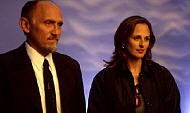
The plot (the term is used loosely) of the film follows newly-divorced and depressed Matlin as she moves from uptight urban professional to enlightened being with the help of a small basketball-playing child who seems to understand quantum physics—at least quantum physics as understood by the talking heads of the film. In one scene, Matlin, and the film’s viewers, and introduced—while waiting for the light rail to show up—to the work of a Japanese professor/mystic who claims mental thoughts can alter the pattern of ice crystals.
Whether one is a Christian or not, the subject of philosophy as it intersects with quantum physics is intriguing. PBS recently aired a series on “string theory” which, to me at least, seemed to lay some groundwork for mathematical proofs of the existence God—not that God needs such a proof to exist. The PBS series proved a lot more compelling than this film, and it didn’t cost me $8. What the (Bleep) has no intellectual base and quickly becomes repetitive. It’s spirituality is vague and pessimistic, or, as one mystic says: “There’s no “out there” out there.
As far as I can tell, this film is being pushed by the New Age community, which works hard through e-mail trees, etc., to get theater seats filled after the film is booked. The talking heads are not identified until the end of the film, which is when viewers learn one is JZ Knight, who channels the supposed 35,000-year old god of Atlantis, Ramtha. The film was written and produced by William Arntz, Betsy Chasse and Mark Vicente.
Christians know the answer the film poses. The film, on the other hand, is just plain clueless.
No sex or violence, but most teenagers and adults will be bored.
Editor’s note: All three directors of this film are students of Ramtha’s School of Enlightenment. Director William Arntz reports that the spiritual influences in his life include metaphysics, Rudolf Steiner, the Theosophists, Carlos Castaneda, Rama, various forms of Buddhism, and Ramtha. Director Betsy Chasse has attended SRF (Self-Realization Fellowship classes—founded by Paramahansa Yogananda). Mark Vicente says he “arrived on the planet as a Christian; performed a brief stint as a New-Ager”—until he realized that the latter was: “a bit like being a Democrat—well intentioned, politically correct but lacking balls.” He then became a student of Ramtha.
What does Ramtha teach?

Here are some statements that Ramtha, “the spirit” speaking through medium J. Z. Knight has said, as reported by Douglas Mahr in his book Ramtha, Voyage to the New World (Ballantine, 1987):
Ramtha says that the Christian God is an “idiotic deity” (p. 219).
About man
“You are God” (p. 61).
“God the Father is you” (p. 136).
“Everyone is what you call a psychic” (p. 139).
“Love yourself… live in the moment, to exalt all that you are” (p. 149).
About sin
“There is no such thing as evil” (p. 60).
- “For 2,000 years we have been called sinful creatures… [but] we are equal with God or Christ” (pp. 180-81).
About salvation
“Do not preach to this world… The world doesn’t need saving—leave it alone” (p. 130)
“Relinquish guilt… do not live by rules, live by feelings… You are the Lord of Hosts, you are the Prince of Peace” (p. 149).
About eternal judgment
“God has never judged you or anyone” (p. 62).
“No, there is no Hell and there is no devil” (p. 252).
About Satan and his demons
“Devil? I looked far and wide for the creature… I found him nowhere [but] I found him thriving in the hearts of frenzied entities in a fervor of madness to save the world from its sins… That is where he is. [Do] you understand?” (pp. 252-53).
“The devil is not really evil… because he’s really God… Who else would he be?” (p. 251).
Learn about DISCERNMENT—wisdom in making personal entertainment decisions
 Every time you buy a movie ticket or buy or rent a video you are in effect casting a vote telling Hollywood, “I’ll pay for that. That’s what I want.” Read our article


[Extremely Offensive/1]
[Good/2]
The filmmakers in this case would have you take them at face value. (that is if you could comprehend what some of them were saying. The film is a clever editing job, with comments interspersed between out of context scientific statements and a purported 35,000 year old warrior from Atlantis (Ramtha) and several of his appointed teachers (though they were not identified as such in the film.
My take is the film is meant to divide, not bring persons together. Ones who object to the film are viewed as “closed minded” or “limited” while those that are swept up in the films seductive notion that “we create reality” and think that it is science based are primed to accept further leaps of faith the film and some of the speakers desire.
I have listed below a series of to date undisputed facts about the film. I have been researching “Ramtha’s school of enlightenment “for quite some time…
- In addition to the films three directors, there were actors and others involved in the production who are long time “students” of Ramthas’ School of enlightenment.
- A disproportionate amount of time was given in voice and film to Ramtha, Dr. Joe dispenza, and Miceal Ledwith.
- Dr Joe Dispenza and Miceal Ledwith are both long time students and “appointed teachers at Ramthas’ school of enlightenment (RSE)
- Dr Joe Dispenza (the one who creates his day) has gone to court and testified that his teacher (ramtha) has told him that terrible times are coming and that he needs to protect his family. He also invested over $10,000.00 in an infamous scam that infected RSE and was touted by Ramtha as a vehicle to gain fabulous wealth and many of the schools membership lost substantial sums of money. Some lost their entire life savings. This is the person who teaches the brain science in RSE.
- Miceal Ledwith a clergyman with a rather dubious past (see http://unison.ie/irish_independent/stories.php3?ca=36&si=770458&issue_id=7565) is the one chosen by the film makers to be the theological spokesman. He is also the theologian in residence of RSE. He also has been marketing several products within the school and its followers. Guess that could not have been done to easily in the Catholic church.
- The following persons in the film have all spoken at RSE and sold books there.
Fred Allen Wolf
Dr Candice Pert
Amit Gotswami
John Haglin
Joe Dispenza
Miceal Ledwith
and of course the big guy himself, Ramtha - One of the scientists who was in the film and had never appeared at the school is Dr. David Albert Professor and Director of Philosophical Physics at Columbia university. He has stated in several venues that his views were totally misrepresented in the film. He claims that in over 5 hours of interviews he explained to the film makers why their concept of how Quantum Physics works has virtually no support in the scientific community. He even called in to a radio program the director was on to discuss this and was cut off. The host of the show said this was done because it was “negative” so much for no good or bad, that is unless it is convenient.
- To date, there has been no response as to where the information which lead to the story about the indians not being able to see the ships of Columbus originated from. There appears to be no evidence to support this claim. In addition, the film mentioned “clipper ships” which were not even in existence at that time. Perhaps that is why they couldn’t see them.
There were many more, but I will leave them for others. If anyone has any information to refute any of the facts laid out here, I will be more then willing to retract them.
They are relevant because of the deliberateness on the part of the film makers to keep certain facts unknown (ironically, it is I making the unknown know) and misrepresent others.
[Very Offensive/2]
[Better than Average/3]
My Ratings: [Very Offensive/1½]