The Great Dinosaur Mystery HOME
BackNext

Questions and Answers

Dragons and dinosaurs

Winged Serpents reported by Herodotus, Aristotle, and Strabo
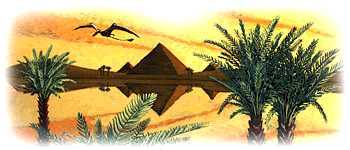
Rhamphorhynchus. Copyrighted by Films for Christ.

The respected Greek explorer Herodotus described small flying reptiles in ancient Egypt. These animals sound amazingly like the small Ramphorhynchus (RAM-foe-RING-kus). They had the same snake-like body and bat-like wings. Many had been killed near the city of Buto. He was shown a canyon with many piles of their back-bones and ribs. 1

Herodotus
Herodotus, Greek historian and geographer, 5th century BC

Herodotus said that these animals could sometimes be found in the spice groves. They were “small in size and of various colors.” Large numbers would sometimes gather in the frankincense trees. When workers wanted to gather the trees’ valuable sap, they would use smelly smoke to drive the flying reptiles away.

The well-respected Greek, Aristotle, said that in his time it was common knowledge that creatures like this also existed in Ethiopia. Similar animals (three feet long) were also described in India by the geographer Strabo.

Continue on the Discovery Trail

NEXT — Are any dinosaurs alive today?


FOOTNOTES & REFERENCES

  1. Herodotus, an ancient Greek historian and geographer, lived during the 5th century BC (484-425 BC).

    Quotation from the The History of Herodotus by Herodotus, translated into English by G.C. Macaulay…

    “There is a region moreover in Arabia, situated nearly over against the city of Buto, to which place I came to inquire about the winged serpents: and when I came thither I saw bones of serpents and spines in quantity so great that it is impossible to make report of the number, and there were heaps of spines, some heaps large and others less large and others smaller still than these, and these heaps were many in number.

    This region in which the spines are scattered upon the ground is of the nature of an entrance from a narrow mountain pass to a great plain, which plain adjoins the plain of Egypt; and the story goes that at the beginning of spring winged serpents from Arabia fly towards Egypt, and the birds called ibises meet them at the entrance to this country and do not suffer the serpents to go by but kill them.

    On account of this deed it is (say the Arabians) that the ibis has come to be greatly honoured by the Egyptians, and the Egyptians also agree that it is for this reason that they honour these birds.

    The outward form of the ibis is this: —it is a deep black all over, and has legs like those of a crane and a very curved beak, and in size it is about equal to a rail: this is the appearance of the black kind which fight with the serpents, but of those which most crowd round men's feet (for there are two several kinds of ibises) the head is bare and also the whole of the throat, and it is white in feathering except the head and neck and the extremities of the wings and the rump (in all these parts of which I have spoken it is a deep black), while in legs and in the form of the head it resembles the other.

    As for the serpent, its form is like that of the watersnake; and it has wings not feathered but most nearly resembling the wings of the bat.”

    Buto is the town that Herodotus visited. This ancient place is located at Tell el-Fara'in (aka Tell el-Farein), 8 miles (13 km) northeast of Desouk, Egypt. The modern village of Abtu, carries within it the name of the ancient city. Many artifacts bearing the name Buto have been found at this site.

    The Eqyptians came to worship a flying serpent goddess at Buto, also named Wadjet. They depicted her as a winged cobra, or as a serpent-headed woman, or a woman-headed serpent, or occasionally as other creatures including a ichneumon wasp, as the mythology developed. The town of Buto came to be called Per-Wadjet, and became the cult center for her worship, centered on a renowned temple to this winged serpent goddess.

    Site of ancient Buto, at Tell el-Farein, (aka Tell el-Fara'in) — satellite view
  2. “The reliability of Herodotus as an accurate eyewitness is more and more being recognized. De Selincourt writes thus: ‘As to the reliability of Herodotus’ information about Egypt, one can safely say that he is accurate and trustworthy when he describes what he saw with his own eyes. …His turn of mind was skeptical; he was a born investigator. …Since Herodotus is said to have seen the flying serpents, it would follow that his account is ‘accurate and trustworthy’.” (William A. Springstead), “Herodotus, the Bible, and Flying Serpents,” Bible-Science News (May 15, 1971), p. 5.

  3. Perle S. Epstein, Monsters: Their Histories, Homes, and Habits (Garden City, NY: Doubleday, 1973), p. 43.

  4. Rhamphorhynchus gemmingi fossil in southern German’s Solnhofen Limestone

    Rhamphorhynchus gemmingi fossil found in Germany. Photo © copyrighted by Hannes Grobe, License: Creative Commons Attribution 3.0 (Generic).
    Photo © copyrighted by Hannes Grobe, License: CC by 3.0 Attribution

    Rhamphorhynchus is a flying reptile. It is about the size of a seagull, with a wingspan of up to 6 feet (1.8 meters). It had long, pointy wings made of skin stretched between its fingers, kind of like a bat’s wings. Its name means “beak snout” because it had a sharp, toothy mouth. It had a long, stiff tail with a diamond-shaped flap at the end, which may have acted like a rudder to help it steer while flying. Its eye sockets were huge, giving it big eyes and probably sharp vision.

The Great Dinosaur Mystery and the Bible - questions answered Creation SuperLibrary click for Kid Explorers

Copyright © Paul S. Taylor, ChristianAnswers. All rights reserved.

Article Version: June 11, 2025