
Whalefall
 for peril, violent content, bloody images, some strong language, and thematic content.
Reviewed by: Jim O'Neill
CONTRIBUTOR
| Moral Rating: | Average to Offensive |
| Moviemaking Quality: |
|
| Primary Audience: | Adults |
| Genre: | Adventure Survival Thriller Adaptation |
| Length: | 1 hr. 46 min. |
| Year of Release: | 2026 |
| USA Release: |
October 16, 2026 (wide release—3,065 theaters) |

This film is based on the 2023 novel by Daniel Kraus.
Father and son relatiohship
Man swallowed by a whale
How could Jonah survive three days in the belly of a “whale”?
What is the leviathan mentioned in the Bible? (sea monsters)
Answers about whales and the Bible
ORIGIN OF BAD THINGS—Why are they in our world if a good God created us?
Why does God allow innocent people to suffer?
If God knows I am hurting, why doesn’t He help me?


| Featuring |
|---|
|
Austin Abrams … Jay Gardiner Josh Brolin … Mitt Gardiner Elisabeth Shue … Zara Gardiner John Ortiz … Hewey Jane Levy … Eva Gardiner See all » |
| Director |
|
Brian Duffield |
| Producer |
|
Brian Grazer Brian Duffield Allan Mandelbaum See all » |
| Distributor |

“But Jonah rose up to flee into Tarshish from the presence of the Lord, and went down to Joppa, and he found a ship going to Tarshish; so he paid the fare thereof, and went down into it, to go with them unto Tarshish from the presence of the Lord.” —Jonah 1:3
“Consider once more the universal cannibalism of the sea, all whose creatures prey upon each other…and then turn to the green, gentle, and most docile earth; consider them both, the sea and the land; and do you not find a strange analogy to something in yourself?” —Herman Melville, Moby Dick, or the Whale
Brian Duffield has directed a film about a scuba diver, and it takes a deep dive into genres of body horror and survivalism but a shallow dip into an examination of the fifth and sixth commandments. Those themes blend well on occasion, but they often get in the way of each other, damping the impact of each.
The script is by Duffield and Daniel Kraus, the latter having written the novel on which the film is based. Since most of the action takes place underwater and the main character’s countenance is often hidden by goggles and an oxygen delivering mouthpiece, the film is short on facial expression and shorter on dialog. Most of the sound comes from the use of background effects and editing, brilliant in their interplay of eerie silences and roaring rumbles. The effects create an atmosphere that is gargantuan and claustrophobic at the same time. The art direction, the special effects design, the editing and the score converge to form a kaleidoscope of cascading, consuming and inescapable terror.
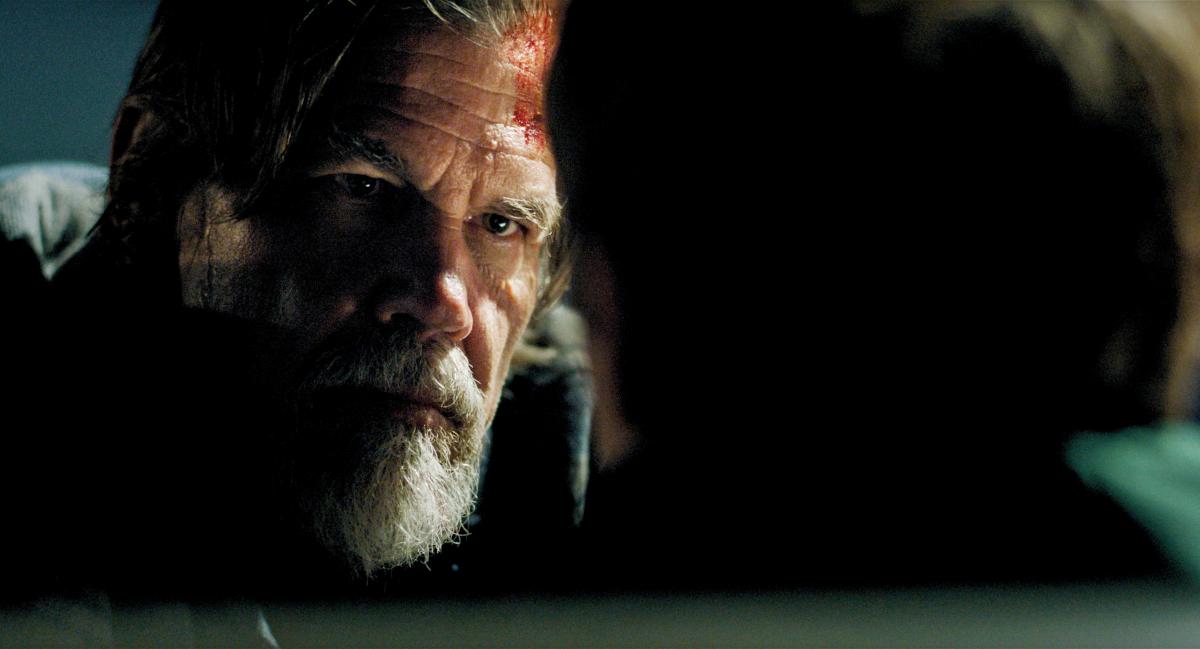
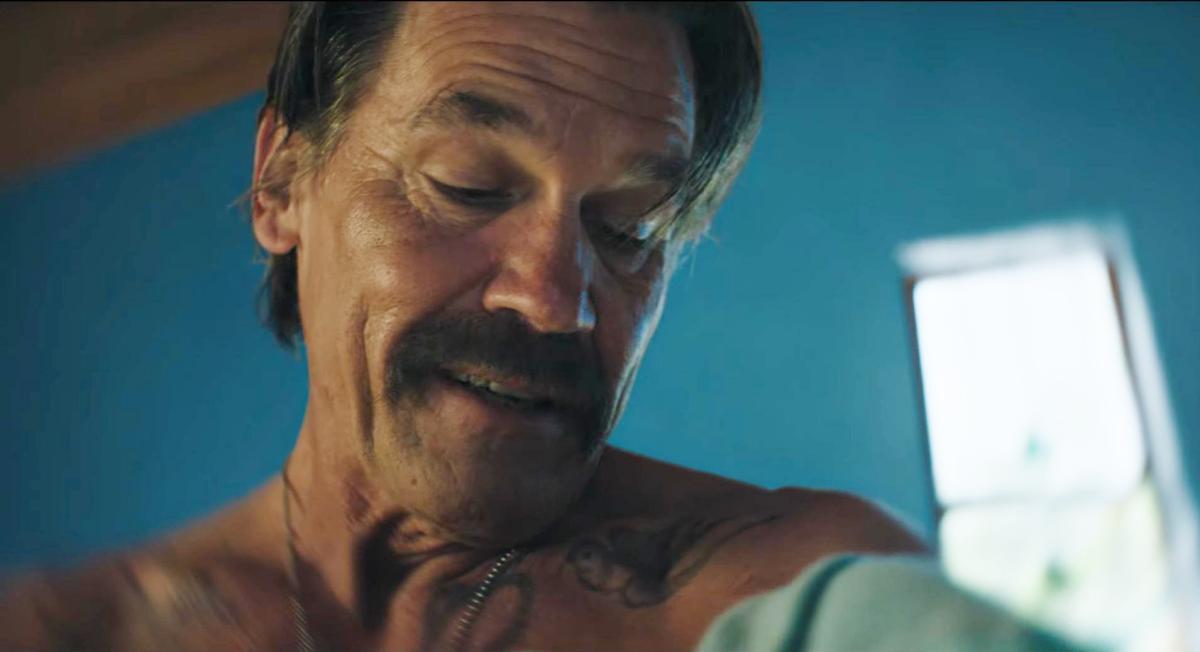
“Whalefall” opens with a suicide. An accomplished diver and boatsman, Mitt Gardiner (Josh Brolin) ties weights to his waist and jumps off a boat, drowning himself. He was suffering from terminal lung cancer and decided to end his life “on his terms” instead of “on a hospital bed.” His best friend, a dentist, assisted him in the task.
The film explores on a surface level what Mitt’s decision to bestow upon himself a “taketh away” authority does to those he leaves behind, a wife and three children, but it goes gooey when it excuses not just the suicide but the doctor’s assistance. Their actions mute the intensity of the story’s horror and dilute its moral gravity.
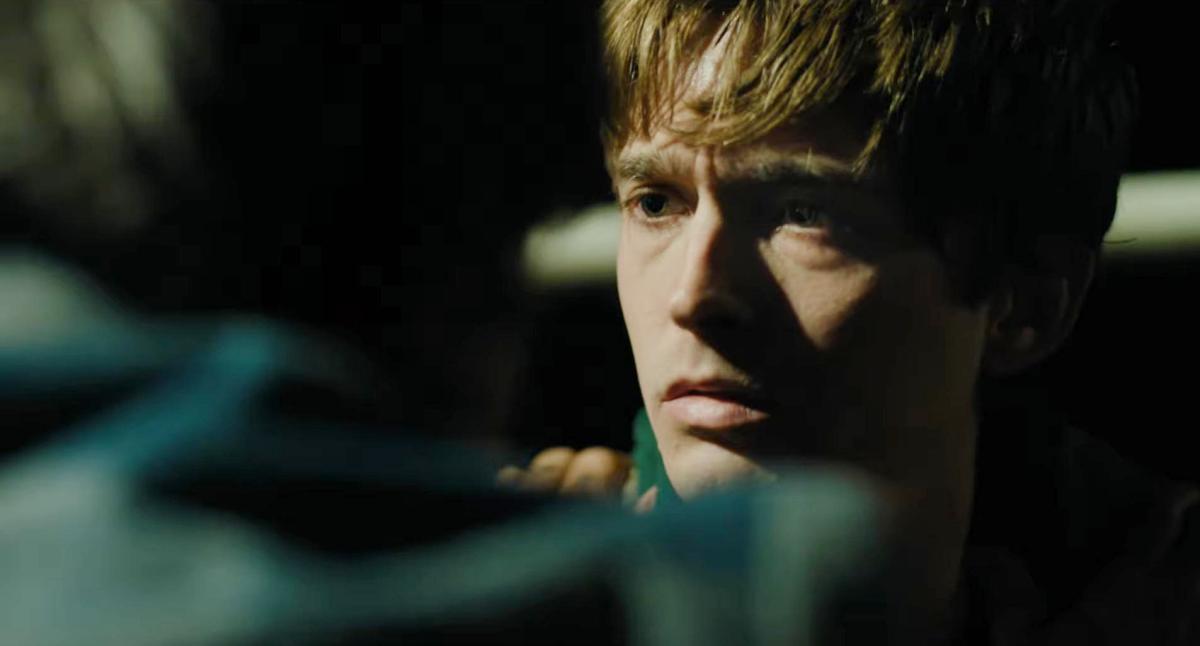
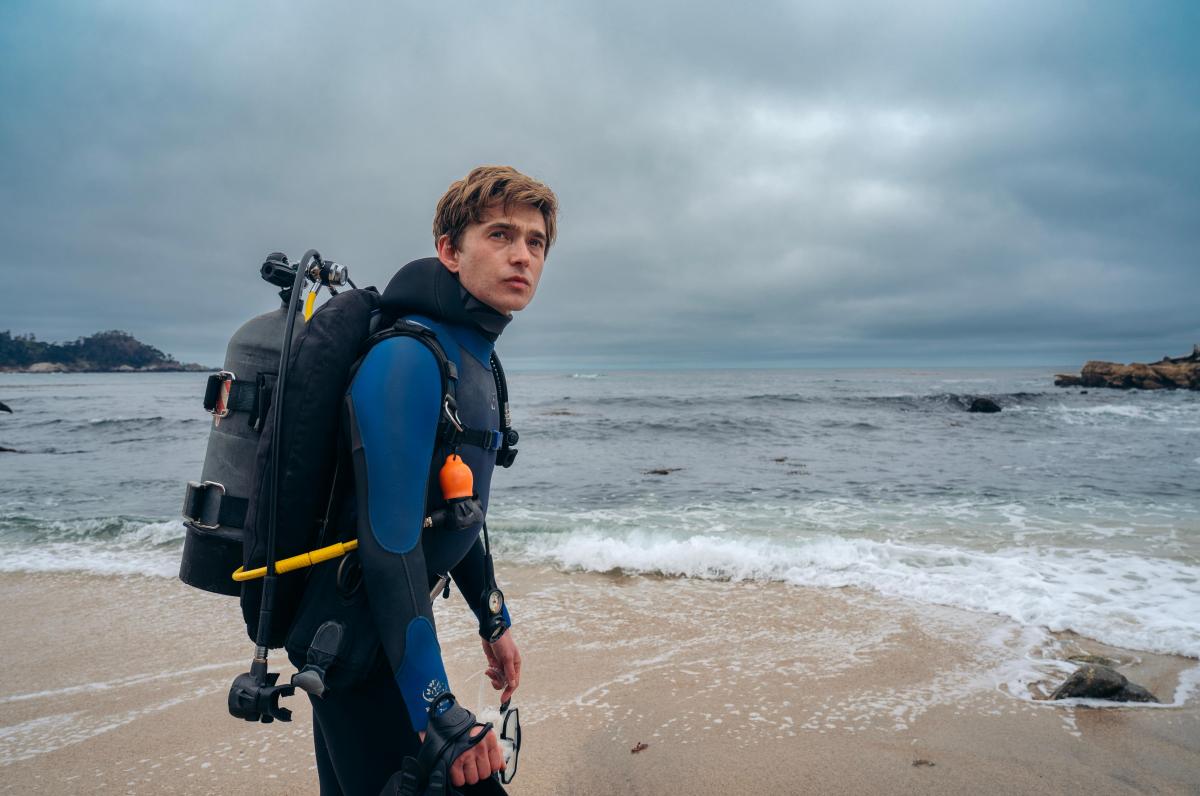
Mitt’s son, Jay (Austin Abrams) is not the expert seaman that his father was. Small, sensitive, and somewhat awkward, Jay had a contentious relationship with his father (“I needed to get away from you”), saying no to his entreaties to follow in Mitt’s fin-fitted footsteps. Jay chooses a divergent path, accepting a scholarship to a midwestern inland university.
When his father dies at sea, Jay decides to seek out his father’s remains by donning newly bought scuba gear and searching for bones on the ocean bottom. His descent into the underwater depths is more blinding than eye-opening. The ocean floor is dark and murky, its vegetation unwelcoming, threatening and predatory, a far cry from the enchanted underwater vision that Jacques Cousteau gave us on TV.
Jay comes upon what he thinks is a skull, perhaps his father’s, but when he lifts it from the sea’s mud, he discovers it’s not bone but sponge, a decaying piece of ocean dredge, a “quintessence of dust” that comes apart in his hand and floats away.
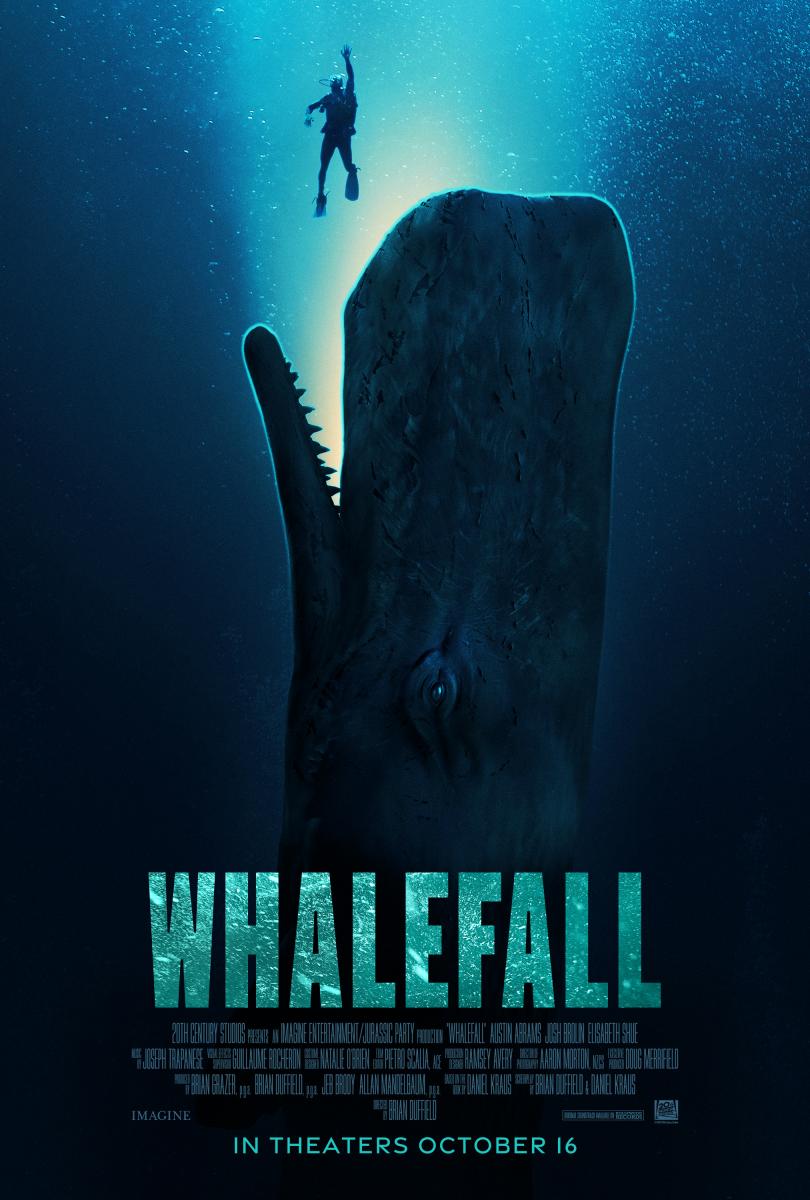
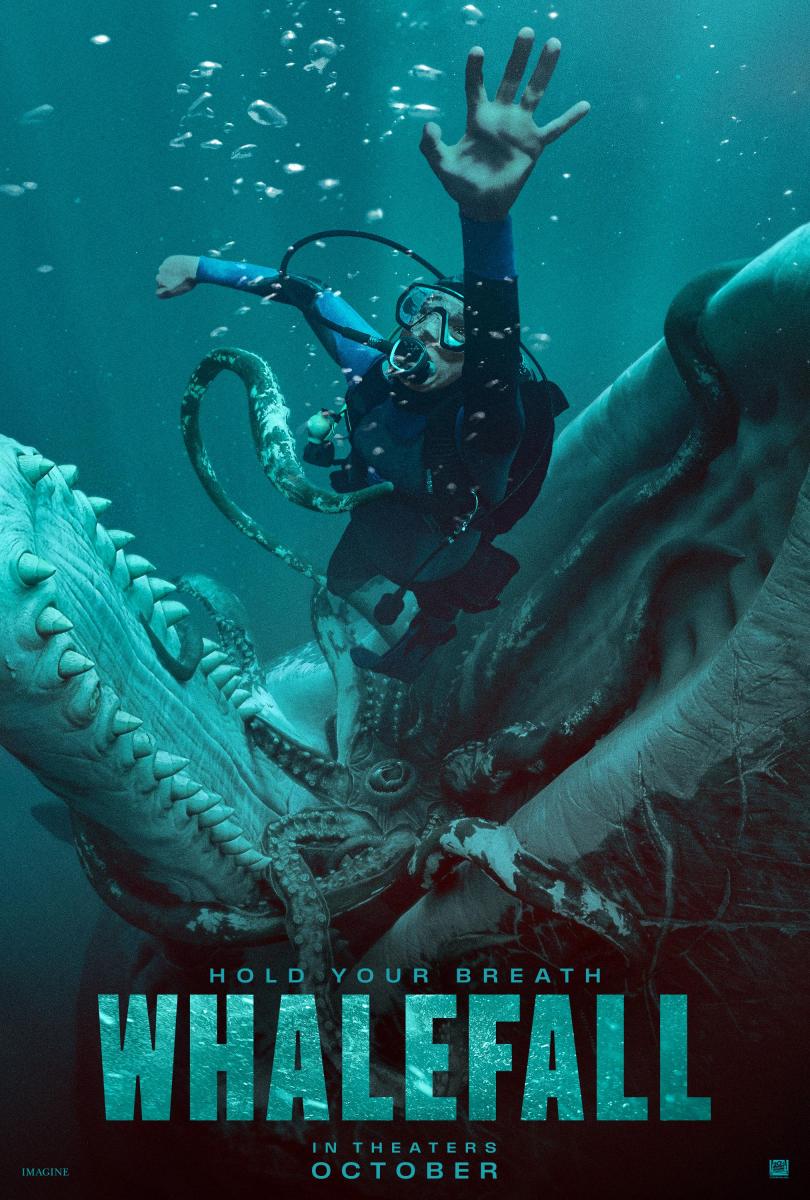
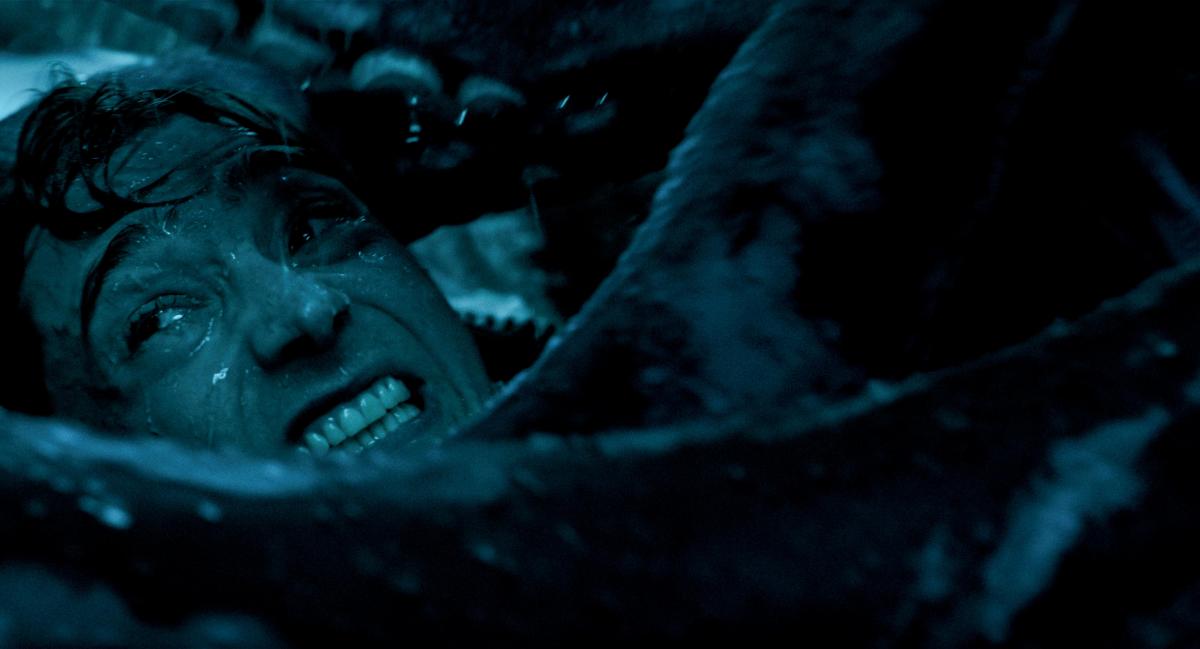
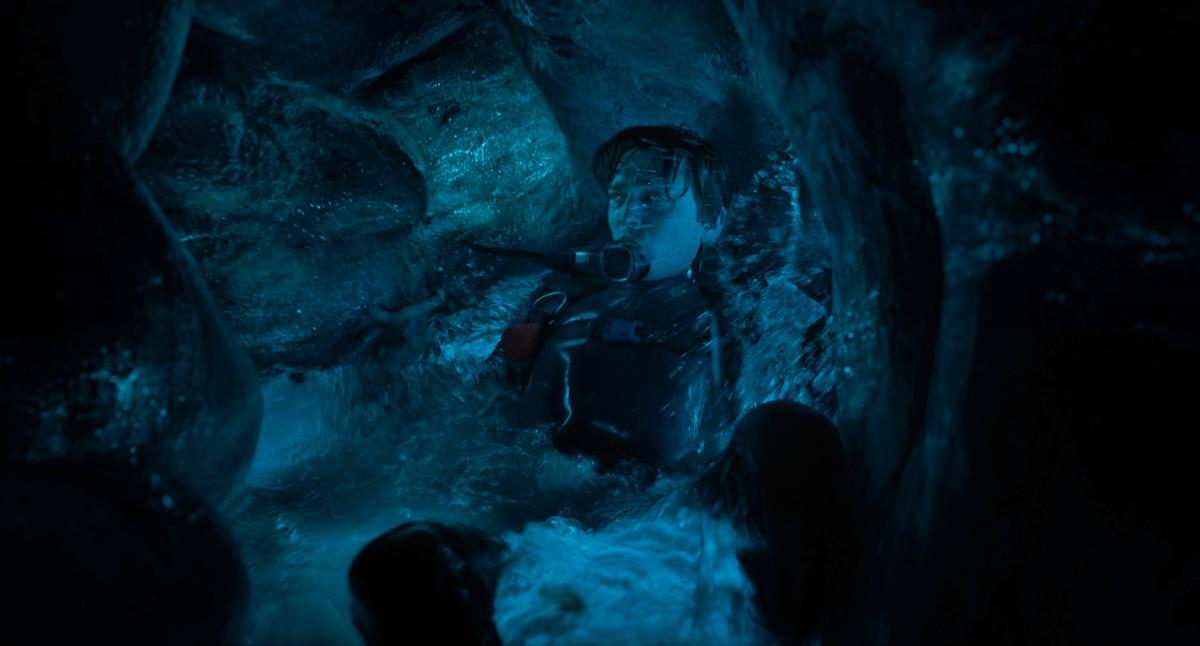
After resuming his search, Jay is swallowed alive by a sperm whale. The ingestion scenes are remarkable in their artful construction and their keen attention to anatomic detail. The whale’s coarse tongue, flapping epiglottis, and undulating stomach lining whose acidic gastric juices severely burn Jay’s ungloved hand are spot-on.
This is not the magic fantasy world of Twenty Thousand Leagues Under the Sea or Fantastic Voyage. Duffield’s scenario is the real deal. He drops you inside the beast’s belly, a cavern whose immensity cannot mask the oppressive crush of the pulsating surroundings. You get tossed by the stomach’s peristaltic rumbles, wetted by its secreting mucus, and blinded by its unforgiving darkness.
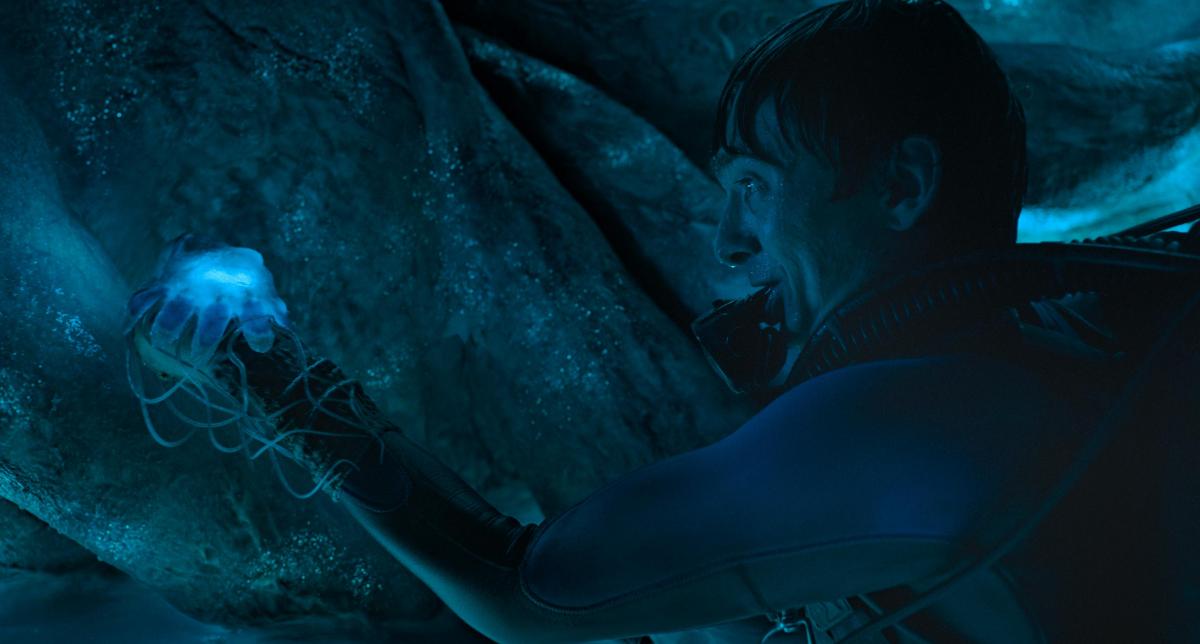
Jay isn’t scarfed up by himself. He’s the side dish to a giant squid whose eight arms, each equipped with Velcro-like suckers, and sharp-toothed beak fight against Jay as much as they do the giant whale. The only ally he finds in his attempt to survive in the whale’s gut and to ultimately entice the whale to “puke me out” is a luminescent jellyfish whose light beam beckons him to an open mouth and an open sky.
“Behold, I am sending an angel before you to protect you along the way and to bring you to a place I have prepared.” —Exodus 23:20-23
Throughout his ordeal, Jay has flashbacks to past conversations he had with his father who warned him how the sea can harm as much as it can nourish. By recalling and applying those teachings, his survival chances go from no-way to maybe. Those lessons also allow Jay to reach out, atone to and mourn for his father. In essence, he is discerning his role as a son and accepting the graces that derive from honor and obedience to a parent.
Like Jonah the prophet, he is reluctant to take on a task, has resentments toward the world he inhabits, and, and convinces himself that he alone is the master of his destiny. The whale responds to such pride with a blast of mist from its rebuking snout.
Q & A
There are several brief sequences that show the exterior of the massive whale gliding through the ocean depths, rising out of the water to the amazement of gawking whale watchers, and fighting off hordes of killer orcas. The whale is so large that it becomes possible to view him only from one side and to get a glimpse only of one eye, a single large, punishing globe, an iconic image that Ishmael in Moby Dick joked about:
“Ah my gallant captain, why did ye not give us Jonah looking out of that eye?”
“Whalefall” is flawed when it lets its eye wander from a focus on how suffering and struggle bring understanding and purpose to life, but recovers when it returns to the parent-child dynamic. The father tells his son that “I want to pass things on that I know. I will give you all the tools, so you’ll know what to do.”
When the son returns without having found a trace of his father on the ocean floor, his father’s voice replies: “you are my remains.” Those moments temper the helter-skelter pandemonium taking place inside the whale’s stomach, as well as in Jay’s gut, and give the survival struggle a spiritual foundation.
Josh Brolin turns in a stern if somewhat grandiose performance as the father. He hits all the right notes for being the least flexible and most onerous paternal figure since Robert Duvall’s Bull Meechum in “The Great Santini.”
Austin Abrams shines as Jay when he is underwater but not so much when he finds himself on dry land. Beneath the waves, he projects fear, panic, pain, and even remorse all while wearing face coverings splattered by mucus and digestive juices. But he appears seasick when surrounded by other actors. In the family group scenes, he fades into the background, outshone and outpaced. He fares much better when he has a squid or a jellyfish as a co-star.
I was impressed, bowled over, by Abrams in another recent film, “Resident Evil,” a zombie extravaganza in which he portrays an everyday man who finds himself caught in a web of elite corruption. That horror film was one of the best of the late summer offerings, a cinematic allegory of how scientific fascism and political perversion devolve into a totalitarian state, one that ultimately destroys the people it claims to serve.
Bowing the head to the fashions of environmentalism, sexual identity roulette, and assisted suicide makes Whalefall’s inherent moral footing feel slippery; however, the film has a spiritual core, one that tells us that ultimate survival, the survival of the soul with God, depends on doing not “my will, but Thine.”
- Violence: Heavy
- Profane language: Heavy— G*d (9), G*d d*mn (1), D*mn
- Vulgar/Crude language: Heavy— F-word (1), S-word (10), A**, B*tch
- Wokeism: Moderate
- Drugs/Alcohol: Mild
- Nudity: Shirtless men
- Sex: None
- Occult: None
See list of Relevant Issues—questions-and-answers.