
About…
colors in the Bible
also known as: colours
The subject of colors holds an important place in the Scriptures. White, purple, blue, and scarlet were used in the textures of the tabernacle curtains (Exodus 26:1, 31, 36), and also in the high priest’s ephod, girdle, and breastplate (Exodus 28:5-6, 8, 15).
Scarlet thread is mentioned in connection with the rites of cleansing the leper (Leviticus 14:4, 6, 51) and of burning the red heifer (Numbers 19:6). It was a crimson thread that Rahab was to tie on her window as a sign that she was to be saved alive when the city of Jericho was taken (Joshua 2:18; 6:25).
Red
- blood (2 Kings 3:22)
This color is symbolical of bloodshed (Zechariah 6:2; Rev. 6:4; 12:3).
- wine (Proverbs 23:31)
- red heifer without spot or blemish (Numbers 19:2)
- pottage of lentils (Genesis 25:30)
- red horses
• Vision of “a man riding on a red horse, and it stood among the myrtle trees in the hollow; and behind him were horses: red, sorrel, and white” —Zechariah 1:8 NKJV
• “With the first chariot were red horses…” —Zechariah 6:2
• “Another horse, fiery red, went out. And it was granted to the one who sat on it to take peace from the earth…” —Revelation 6:4 NKJV) - “…breastplates of fiery red…” —Revelation 9:17
- the complexion
• Esau, born red —Genesis 25:25
• “My beloved is dazzling and ruddy…” —Song of Songs 5:10 NASB) - Red Sea
Scarlet or Crimson
Scarlet robes were worn by the rich and luxurious (2 Samuel 1:24; Proverbs 31:21; Jeremiah 4:30; Rev. 17:4). It was also the hue of the warrior’s dress (Nahum 2:3; Isaiah 9:5).
The Phoenicians excelled in the art of crimson dyeing (2 Chronicles 2:7). The small parasitic insects from which this dye was obtained somewhat resembled the cochineal which is found in Eastern countries. It is called by naturalists Coccus ilics. The dye was procured from the female grub alone.
In Isaiah 1:18, a Hebrew word is used which denotes the worm or grub from which this dye was procured.
“…Though your sins are like scarlet,
They shall be as white as snow;
Though they are red like crimson,
They shall be as wool.” —Isaiah 1:18 NKJV
The only natural object to which this color is applied in Scripture is the lips, which are likened to a scarlet thread (Song of Songs 4:3).
In Genesis 38:28-30, the word translated as “scarlet” means “to shine,” and expresses the brilliance of the color.
The “Great Harlot” of the Great Tribulation is dressed in scarlet and purple (circumdata purpura et coccino) and rides a scarlet beast (besteam coccineam) (Revelation 17:1-6).
More information
Vermilion
a brick red; compared to scarlet, this color is slightly more orange
Vermilion was used for drawing the figures of idols on the walls of heathen temples (Ezek. 23:14), and for decorating the walls and beams of houses (Jeremiah 22:14).
color source: ground cinnabar (bright red mineral consisting of mercury sulfide)
Purple
Purple is a color obtained from the secretion of a species of shellfish (the Murex trunculus) which was found in the Mediterranean, and particularly on the coasts of Phoenicia and Asia Minor.
The coloring matter in each separate shellfish amounted to only a single drop, and hence the great value of this dye.
A Christian woman named Lydia, from the city of Thyatira, was a seller of purple fabrics.
Robes of purple were worn by kings (Judges 8:26) and high officers (Esther 8:15). They were also worn by the wealthy and luxurious (Jeremiah 10:9; Ezek. 27:7; Luke 16:19; Rev. 17:4).
Purple was associated the idea of royalty and majesty (Judges 8:26; Song of Songs 3:10; 7:5; Dan. 5:7, 16, 29).
King Belshazzar clothed Daniel with purple and put a necklace of gold around his neck as symbols of making him the third most powerful ruler in his kingdom.
Jesus was mockingly dressed temporarily in a purple robe with a crown.
“And when the soldiers twisted together a crown of thorns, they put it on His head, and put a purple robe on Him” —John 19:2
The color purple is mentioned in 52 verses of throughout Scripture.
- Exodus (tabernacle fabrics)
- Numbers (“spread a purple cloth over” the tabernacle altar)
- Judges (“purple robes…on the kings of Midian”)
- 2 Chronicles (temple fabrics)
- Esther (“cords of fine purple linen on silver rings”)
- Proverbs (“Her clothing is fine linen and purple”)
- Song of Songs (“a sedan chair…its seat of purple fabric;” “the flowing locks of your head are like purple threads”)
- Jeremiah (“blue and purple are their clothing”)
- Ezekiel (purple clothes, blue and purple awning, payment with purple)
- Daniel (clothed with purple and a necklace of gold as symbols of being made the third ruler of the kingdom)
- Mark (Jesus dressed up in purple by mocking soldiers)
- Luke (a rich man habitually dressed in purple and fine linen, living in splendor every day)
- John (Jesus dressed up in purple by mocking soldiers)
- Acts (seller of purple fabrics)
- Revelation (the great harlot “clothed in purple and scarlet”)
More information
Blue
This color was emblematic of the sky, the deep dark hue of the Eastern sky. This color was used in the same way as purple.
The ribbon and fringe of the Hebrew dress were of this color (Numbers 15:38). The loops of the curtains (Exodus 26:4), the lace of the high priest’s breastplate, the robe of the ephod, and the lace on his mitre, were blue (Exodus 28:28, 31, 37).
This color was procured from a species of shellfish, the chelzon of the Hebrews, and the Helix ianthina of modern naturalists.
See more about BLUE
White
“White” occurs in Scripture as the translation of various Hebrew words.
- milk (Genesis 49:12)
- manna (Exodus 16:31)
- snow (Isaiah 1:18)
- horses (Zechariah 1:8)
- garments (Eccl. 9:8)
- Another Hebrew word translated “white” is applies to marble (Esther 1:6), and a cognate word to the lily (Song of Songs 2:16).
- A different term, meaning “dazzling,” is applied to the countenance (Song of Songs 5:10).
White was symbol of purity and innocence (Mark 16:5; John 20:12; Rev. 19:8, 14), of joy (Eccl. 9:8), and also of victory (Zechariah 6:3; Rev. 6:2).
The fabric hangings of the tabernacle court (Exodus 27:9; 38:9), the coats, mitres, bonnets, and breeches of the priests (Exodus 39:27-28), and the dress of the high priest on the day of Atonement (Leviticus 16:4, 32), were white.
See more about WHITE and Silver
Black
- hair (Leviticus 13:31; Song of Songs 5:11)
- complexion (Song of Songs 1:5)
- horses (Zechariah 6:2, 6)
- mourner’s robes (Jeremiah 8:21; 14:2)
- a dark clouded sky (1 Kings 18:45)
- night (Micah 3:6; Jeremiah 4:28)
- raven (Song of Solomon 5:11)
- a brook rendered turbid by melted snow (Job 6:16)
- It is used as symbolical of evil in Zechariah 6:2, 6 and Rev. 6:5.
- In Job 30:30 “black” means dirty, blackened by sorrow and disease.
Black was also an emblem of mourning, affliction, and calamity (Jeremiah 14:2; Lam. 4:8; 5:10).
The word translated “brown” in Genesis 30:32 KJV (Revised King James Version, say “black”) properly means “scorched,” i.e., the color produced by the scorching of the sun’s rays.
See more about BLACK
Yellow

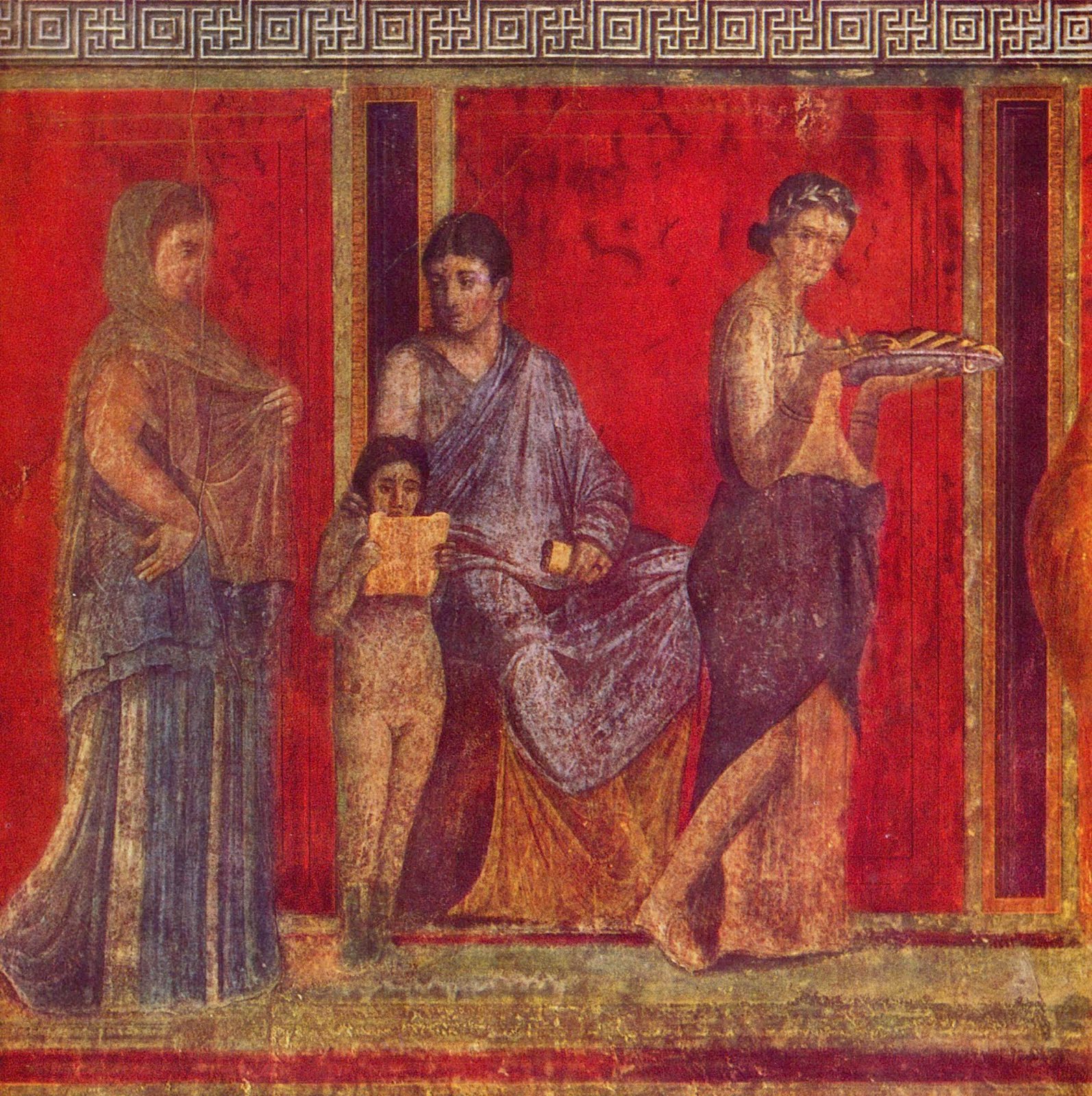
Yellow ochre based paint was commonly used in ancient times, and can still be seen in wall paintings in ancient Roman villas and cities. Ochre is clay mixed with some form of iron oxide, such as hydrated iron hydroxide.

Yellow is commonly seen in ancient Egyptian paintings and pottery decorations.
Another source of yellow pigment is orpiment (yellow arsenic blende) found in hot springs, volcanic fumaroles and hydrothermal veins. The Persian name is zarnikh. Some yellow pigments were also made using lead.
Various precious and semi-precious stones are also found in yellow colors, such as citrine, chrysoberyl, yellow topaz, amber, yellow zircon, golden beryl (heliodor), yellow tourmaline, yellow moissanite, yellow fluorite, yellow pearls, yellow-green, peridot, and yellow garnet.
Though you lie down among the sheepfolds,
You will be like the wings of a dove covered with silver,
And her feathers with yellow gold.” —Psalm 68:13 NKJV
Yellow is an indication of disease in the book of Leviticus (Lev. 13:29-37).
then the priest shall look at the infection, and if it appears to be deeper than the skin, and there is thin yellowish [tsahob] hair in it, then the priest shall pronounce him unclean; it is a scale; it is leprosy of the head or of the beard. —Lev. 13:30
Hebrew: יְרַקְרַק —transliteration: yeraqraq —meaning: yellowishness, greenish-yellow, greenish, pale green
The above Hebrew word is used in Leviticus.
if the mark is greenish or reddish in the garment or in the leather or in the warp or in the woof or in any article of leather, it is a leprous mark and shall be shown to the priest. —Lev. 13:49
Other yellow colors in the Bible
- GOLD
- SAFFRON
- CUMMIN (cumin)
- FRANKINCENSE
- BRIMSTONE (sulfur, sulfurous)
- WHEAT in the Bible
- Sun
- Fire
- Yellow is a color in the RAINBOW.
- Chalcedony (ground for use in yellow or green paint)
- Clay
Orange
More information
More information
- DYES in the Bible
- PAINT in the Bible
- dress/clothing
- precious stones
- spices
- high priest
- fuller
 Gospel for kids
- ETHNIC SKIN COLOR — How did different human skin colors come about? Answer
- About rainbows in the Bible
- Why is the sky blue, sunsets red, and clouds white? Answer