
Read and Listen

Sound always originates from as a vibrating object, whether a violin string, vocal chords, or a hanging leaf. The sound is carried to you by oscillating air molecules, which in turn set your eardrum vibrating.
There are several ways in which wind makes itself heard.
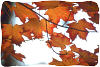 |
Listen to wind in trees Trees provide a natural outdoor instrument. As branches and leaves shake, they cause vibrations in the surrounding air. The faster the object moves, the higher will be the pitch that is heard. |
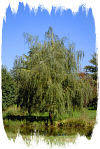 |
Listen to blustery wind Tree sounds are unique to those who stop and listen. The willow has been likened to a flute, the pine to a violin. |
 |
recorder instrument High pitch sound also arises when narrow objects cause changing eddy currents of air, similar to a recorder or whistle. whistling wind |
 |
A lower pitch results when large open objects resonate, like air blown across a jug bottle. whiskey jug blowing Different objects vibrating in the can make whistling, whirring, or moaning sounds—the combination of many frequencies. hurricane wind swirling hurricane winds |
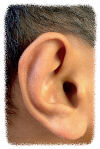 |
 Air rushing directly past your ear itself can also resonate and play its music. We can tend to take these delightful sounds for granted or miss them altogether. However, they are an enjoyable part of the creation. |
 How is wind like the Holy Spirit? Learn how, and watch an exciting scene from our online video!
 Listen to SOUNDS OF THE RAINFOREST
Information for teachers and parents
- Does God control the weather? Does He send deadly storms? Are “natural disasters” truly ordained by God, even though they sometimes kill thousands? What does the Bible teach?
- Has our atmosphere evolved over time? How should we who believe in Creation by God understand the formation of Earth’s atmosphere?
