

- HOW TO RESPOND when someone says, “God is all loving. He would never send me to Hell.”
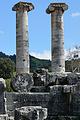
- SARDIS— What is this biblical city?
- HORSE EVOLUTION?— Did horses really evolve from a small fox-like animal?
- NON-CHRISTIAN PARENTS— How do I respect the wishes of my non-Christian parents while still following God’s will?
- SATAN’S STRATEGY— What is one of Satan’s most successful strategies in dealing with followers of Christ?



- Captain America: Brave New World
- Paddington in Peru
- Love Hurts
- Flight Risk
- Wolf Man
- Survive
- A Complete Unknown
- Maria
- Sonic the Hedgehog 3
- Mufasa: The Lion King

 Dennis Quaid, age —American actor—“Reagan,” “The Intruder,” “Soul Surfer,” “I Can Only Imagine,” “The Day After Tomorrow,” “The Express,” “Vantage Point” • Faith: Christianity since about 1990 (vocal, Protestant); had studied and dabbled in Eastern religion; raised in Baptist faith • Worldview: Independent with Conservatism-leaning; wrote Christian song “On My Way to Heaven” (2017)
 Henry Cavill, British actor—“The Ministry of Ungentlemanly Warfare,” “Argylle,” “Batman v Superman: Dawn of Justice,” “Man of Steel,” “The Man from U.N.C.L.E.” • Faith: Unclear, raised in Catholicism • Worldview: Liberalism, Environmentalism
Please take a moment now to pray for these influential people (PRAYER SUGGESTIONS).
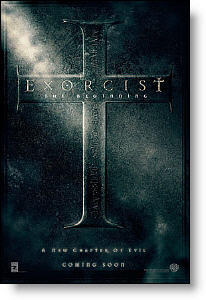
Exorcist: The Beginning
 for strong violence and gore, disturbing images and rituals, and for language including some sexual dialogue.
Reviewed by: Kenneth R. Morefield, Ph.D.
CONTRIBUTOR
| Moral Rating: | Very Offensive |
| Moviemaking Quality: |
|
| Primary Audience: | Adults |
| Genre: | Supernatural-Horror Sequel |
| Length: | 1 hr. 54 min. |
| Year of Release: | 2004 |
| USA Release: |
August 20, 2004 |
What are DEMONS?
DEMON POSSESSION and Influence—Can Christians be demon possessed? In what ways can Satan and his demons influence believers? Answer
What is an exorcist?
Who is Satan, the enemy of God and all people?
Is Satan a real person that influences our world today? Is he affecting you? Answer
Hell—Why was it made? Answer
Learn about spiritual light versus darkness
What is the “unpardonable sin?” How does sin become “unforgivable?” Answer
| Featuring | Stellan Skarsgård, Gabriel Mann, Clara Bellar, Billy Crawford, Ilario Bisi-Pedro |
| Director |
Renny Harlin |
| Producer |
James G. Robinson Morgan Creek Entertainment See all » |
| Distributor |

“God Is Not Here”
See our review of The Exorcist (first movie)
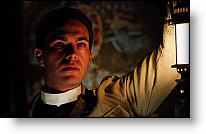
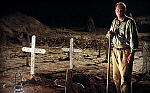
Plot: A former priest who has lost his faith after witnessing nazi atrocities during World War II has turned to archaeology. He is called to East Africa to excavate a church found buried in the sand. Rated R for horror violence, very brief nudity, sexual themes, and language and profanity.
WARNING: MAJOR PLOT SPOILERS IN THE REVIEW.
In C.S. Lewis’s classic The Screwtape Letters, a senior demon advises a junior demon on how to tempt his human “patients.” At one point, Wormwood, the junior devil has asked Screwtape if his human patient should be made aware of his existence. Screwtape explains that there are advantages and disadvantages of living in a materialist society. If a culture, or a person in it, does not believe in the spiritual realm at all, then it will reject God out of hand, and the demon must only patiently wait to claim his prize. On the other hand, Screwtape argues, the materialist culture is less susceptible to manipulation or influence from fear and magic. One day, perhaps, Screwtape notes, they may be able to forge a “materialist magician,” someone who denies God but is open to spiritual or demonic forces. For the time being, though, Screwtape notes that they should remain hidden since the western cultures that they are trying to influence are already predominantly materialist.
The original Exorcist film was released in 1973, based on William Peter Blatty’s 1971 novel. Its power and effectiveness, its success at being creepy and horrific, came from its central innovation—its refusal to wink at the audience; its insistence that its content was real. The modern horror film has its roots in the gothic novels that arose in the late neoclassical age, a time also called the Age of Reason. One convention of the gothic novel was that the appearance of the supernatural would eventually be explained and shown to have a natural cause. The supernatural voice turns out to be a ventriloquist, the ghost a sleepwalker or burglar.
“The Exorcist” took an audience weaned on the expectation that the explanation for what appears to be supernatural will end up being psychological (as it is, for example, in “Psycho”) and turned the tables on it. Rather than having a superstitious protagonist who was too quick to believe, we had a skeptic who took more to convince him than it did the audience, thus making the audience fear for his safety and that of the girl he was trying to help. The horror, in short, was mostly psychological; it came from our reflection on the ideas the film presented as being true rather than on the special effects or editing.
Thirty-one years later, the audience watching “Exorcist: The Beginning” has been doubly immunized from being horrified by a psychological thriller in the style of the original. This is a post “Hellraiser,” post-“South Park”, heck, post-“The Mummy Returns” audience that is conditioned to see Satan not as a real spiritual entity that exists in the real world but as a clichéd movie villain for the hero to defeat. When the demon possessing Regan in the original film speaks in lewd blasphemies, there was still a visceral shock at hearing such guttural obscenity coming from the mouth of a child. For a 2004 audience that has watched South Park’s nursery school protagonists sing along to Terence and Phillip’s “Shut Your F__ing Face Uncle F__er” and can contemplate the sexual exploitation of children fairly regularly on the evening news or “Law and Order: SVU,” the profane and obscene may no longer carry the same capacity to shock.
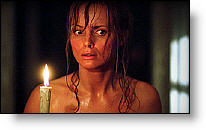
At one point in “Exorcist: The Beginning,” the character possessed by the demon rips open her shirt and says: “What’s the matter Father? Don’t you want to f___ me anymore?” The majority of the audience in the auditorium where I saw the film actually laughed at this scene, finding more more humor in the grossness of the idea of sex with animated but putrid flesh than horror at the idea of being possessed by a demon.
The 2004 audience also differs from the 1973 audience in that it has been inundated with so many more images on cable television, in newspapers, and even in the news. It is a truism of horror film criticism that as films have been allowed to show more, the audience has become increasingly desensitized to violence. As a result the gore factor needs to be increased. At a certain point, the imagination either becomes saturated or retreats to black humor.
“Exorcist: The Beginning” is a horror movie, not a psychological thriller. It depends upon graphic images to disgust the audience: a stillborn baby covered in maggots, a child being ripped to pieces by a pack of wild hyenas, mutilated bodies on the field of battle, crows plucking the eyeballs out of dead bodies. It was widely reported in entertainment magazines that the original director of the film, Paul Schrader, was fired after turning in a version of the film that was not violent enough. (See for example Movieweb’s report at: http://movieweb.com/news/news.php?id=1545)
Renny Harlin has succeeded in making a bloody, violent, and disgusting film, but he has done so by using generic horror film clichés that startle rather than truly scare. A character looks behind her, turns around and abruptly runs into something she thought she was running away from. The audience jumps and lets out a squeal, but it is a generic fear; it makes no difference whether the thing she runs into is an anaconda, a velociraptor, Hannibal Lector, or Satan. Another character stands by a well and something jumps out of the shadows. The audience screams, but only because it was not set up with the requisite creepy music to alert it that something bad was about to happen.
Christian viewers may find one aspect of “Exorcist: The Beginning” to be preferable to the original. The actual exorcism appears to be successful. I have commented about the original film that the exorcist itself fails. Regan is freed from the devil not by Father Merrin casting out the demon in Christ’s name but by Father Karras inviting the demon into himself.
While the original is less objectionable in that it treats its subject matter as real, it is more objectionable (from a Christian perspective) in treating Christianity as impotent in the face of demonic power. “The Beginning” is slightly less problematic here, although the theme of impotence is underscored by Father Merrin’s unanswered prayer when the Nazis (in a flashback) require him to select which prisoners will be executed and by a Christian father being paralyzed by fear or horror while his son is being torn to shreds by the hyenas. Even the Catholic church is presented as being impotent, choosing to try to bury the evil at the profane spot rather than confront it.
There is also a false ending to the exorcism in which the demon appears to leave its host so that Merrin will let his guard down. Since the host dies immediately after the exorcism succeeds, it is unclear whether Merrin’s pronouncement that the woman who has had the demon exorcised is in heaven is meant to be taken as a definitive statement by the movie that the exorcism succeeded or a hopeful statement by Merrin that the second time the woman appeared to be released was real.
Even accepting the exorcism as successful, though, does not strip the film of all of its ambiguity in its presentation of the theme of power. At one point during the exorcism, the demon says that it will kill Sarah rather than release her. She survives the exorcism long enough to say “Thank you” to Merrin, and promptly dies. Is the film saying that the power of Christ is sufficient to cast the demon out of Sarah but insufficient to keep it from killing her? Does Merrin’s pronouncement that Sarah is in heaven because the demon was cast out before she died mean that Father Karras (in the first movie) is in hell because he died in a state of possession? The film offers no evidence that Sarah had ever made a statement of faith prior to being possessed. Why is Merrin able to exorcise the demon from Sarah but not (in the earlier film but chronologically later ceremony) able to cast out the same demon from Regan? (If, in fact, this is the same demon, as the film implies.)
“Exorcist: The Beginning” ends much like the Mel Gibson film “Signs.” A priest who has lost his faith as the result of witnessing some act of suffering, regains it. A happy or triumphal resolution is implied by Gibson putting the collar back on in “Signs” or Merrin finally re-accepting the title of “father” at the end of “The Beginning.”
The triumph of faith in both films is a triumph of faith, not of faith in Christ. The suffering and death of innocents is indirectly justified by directly liking it to the resurrection of faith on the part of the protagonist. The problem with presenting the renewed faith of the protagonist as a triumph is that it treats all others in both movies as means God uses to interact with the special protagonist rather than as ends in themselves.
I also pointed out of Graham Hess’s faith in “Signs” that it was so personal and particular as to not be a foundation for evangelism. Both films mistakenly think that faith in God means faith that God exists. While this faith is positive, it is not, in and of itself, good news. The Scriptures say even the demons believe—and shudder.
The good news of the Gospel is not merely that God exists, it is that He is benevolent and omnipotent. Because He loves humanity, He provided salvation for man through the incarnation, death, and resurrection of His only begotten Son, Jesus Christ. Because He is omnipotent, he triumphed and triumphs over Satan.
The clerical heroes of “Signs” and “Exorcist: The Beginning” have a message that God is real and that he loves them—but the foundation of their faith, their evidence of God’s love, is that He saved them from aliens or demons—not that he saves humanity from sin.
Like “Signs,” “The Beginning” also ducks the questions that it raises about the character, providence, and omnipotence of God that led to its protagonists apostasy to begin with. A lot of people die in “Exorcist: The Beginning” so that Merrin can rediscovers his faith in God’s existence. That he finally comes to believe in God is nice. That what he, or the film, believes about God is left very, very fuzzy, should be a point emphasized by Christians who wish to view the film so that they can talk intelligently about it and its themes.
Violence: Extreme / Profanity: Heavy / Sex/Nudity: Minor
See our review of The Exorcist (first movie)
Is SATAN a real person that influences our world today? Is he affecting you? Answer


The Exorcist prequel, has to in all honesty be the most vile, overly grotesque, blasphemous film I’ve ever experienced. I would not recommend this film to anyone no matter who you are. There is nothing to gain from this film, you walk away with only a feeling of sheer disgust. I walked out just a little over half way through. A warning to all parents, this film contains inexplicable violence towards children such as being shot, and still births. It is very disturbing and serves no point what-so-ever. From what I was told the language also becomes very sexually explicit at the end of the film.
I haven’t seen a good review of this film yet, and I doubt I will ever. This movie is very demoralizing and very disturbing. I would have been very ashamed to have had anything to do with the production of this film. It honestly is just disgusting.
I feel very strongly about this film and hope that all will take what I am saying to heart. I am only 19 and consider myself pretty liberal and pro-free speech. So I can with good intentions only recommend that you not see this movie, and DO NOT allow your children (of any age) to see it.
[Extremely Offensive/1]
From my view as a Christian, I saw quite a few spiritual themes. In the African tribes and their rituals, you see that the tribes are lost and confused. They have no notion of Christ and the fact that He died for them in an act of love. The African tribes seek their own answers to the purpose of life by relying on their own rituals. It’s sad and heartbreaking to see the outcome of their Godless lives. There’s also the people who become demon possessed. The theme that you see in them is the following: without Christ as your savior, you walk according to the prince of this world. You are subject to do the devil’s work and not to the Lord’s. Since you are not ruled by the Holy Spirit, there is room for the devil to occupy you. Granted, Hollywood has their version of demon possession.
Their version is enough to scare you in a very drastic way. The demon possession (as portrayed in the movie) may not happen in real life; however, it can take similar forms. People who murder, molest, and who commit other sick crimes may be demon possessed. The devil has control over these people’s actions. A person ruled by the Spirit of God would not deliberately do these type of things. A person who belongs to God has been delivered from the power of darkness and has been delivered to the kingdom of light.
The final thing to address is the exorcism. In the movie, exorcism is seen as the solution to demon possession. In real life, exorcism is merely a ritual. It is just a series of repeated phrases. As Christians, we know that the real power to delivering people from Satan’s power is Christ himself. All we Christians can do is pray that God will save a person from Satan. It’s not the prayer itself that saves one from Satan power; rather, it is up to God on whether he wants to grant the prayer. God is the ultimate one who saves people from the kingdom of hell.
[Average/3]
[Very Offensive/3½]
Disclaimer: The opinions expressed in Christian Spotlight reviews are those of the reviewers themselves, and do not necessarily reflect the opinions of Christian Answers.





This was more violent than “The Passion of the Christ,” but unlike the former, doesn’t have any important message. The movie shows that God is stronger than evil, which is true, but not something anyone really needs to see a movie to figure out. I’d say you’d be nuts to take a child to this. I saw this movie with my sister, father, and a (mature) 15 year old family friend. We all pretty much came to the same conclusion, that God would never ALLOW the devil to be as powerful as the movie shows, but then again, nothing in this movie is meant to be an accurate portrayal of what could really happen (at least I certainly hope not), just a way to further cash in on a popular old movie.
If you’re into gory movies, I would say wait for “Seed of Chucky” which at least should have some comical moments. Still, this movie is a nail biter that keeps you on the edge of your seat, and if you really enjoyed the first three “Exorcist” films, you might be interested in seeing how it all began. I’m not sorry that I saw this, but I certainly don’t think it’s a movie everyone should see, or one that anyone NEEDS to see.
My Ratings: [Very Offensive/3½]