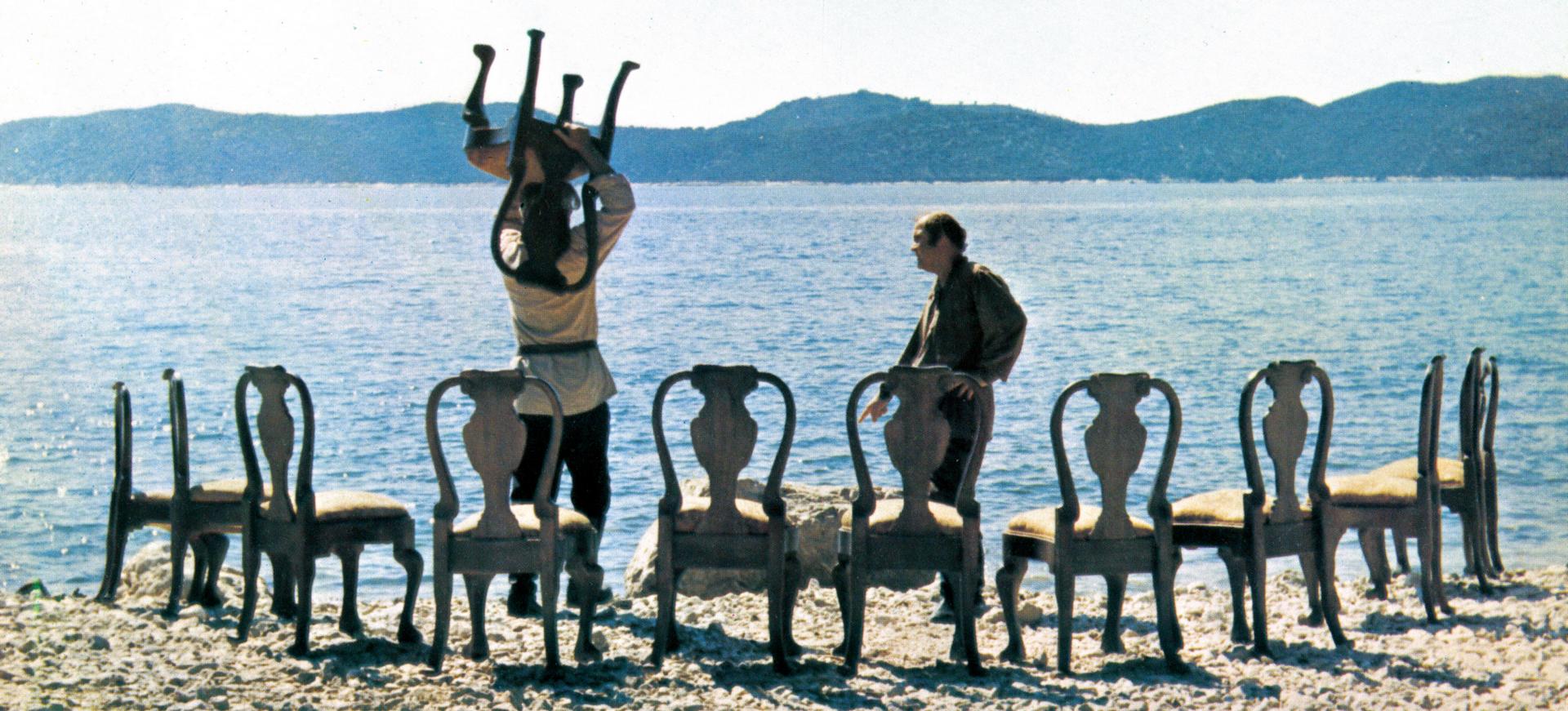
The Twelve Chairs

Reviewed by: Judith Lebel
CONTRIBUTOR
| Moral Rating: | Good |
| Moviemaking Quality: |
|
| Primary Audience: | All Ages |
| Genre: | Comedy Drama Adaptation |
| Length: | 1 hr. 34 min. |
| Year of Release: | 1970 |
| USA Release: |
October 28, 1970 |
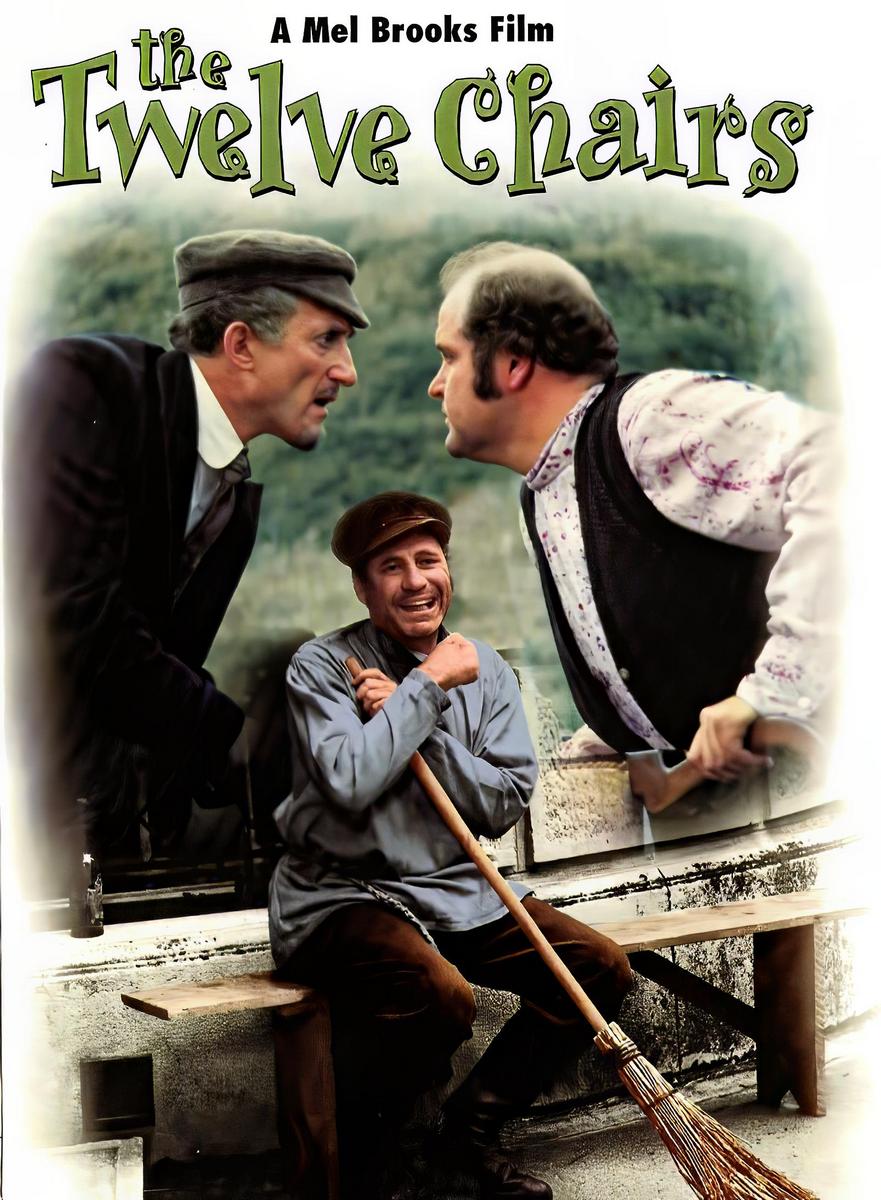

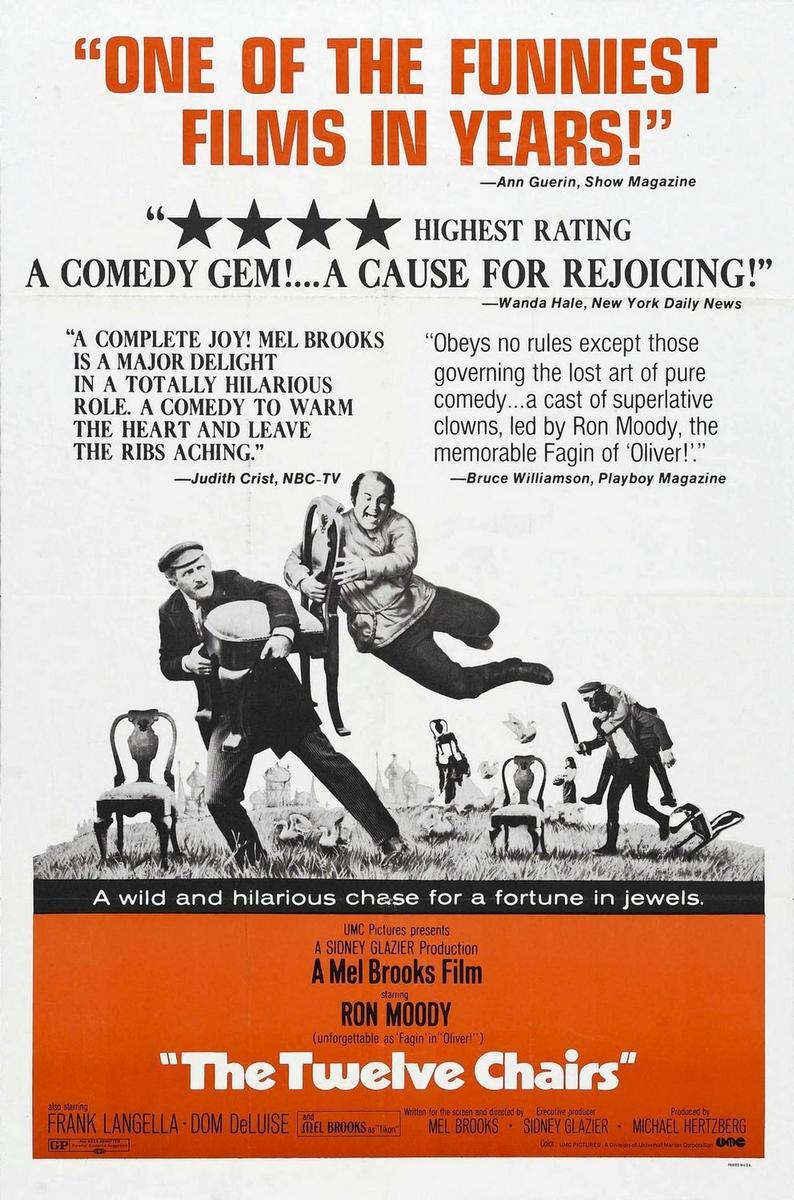
Film adapted from the novel Dvenadtsat stulyev / Diamonds to Sit On
1920s Soviet Russia
| Featuring |
|---|
|
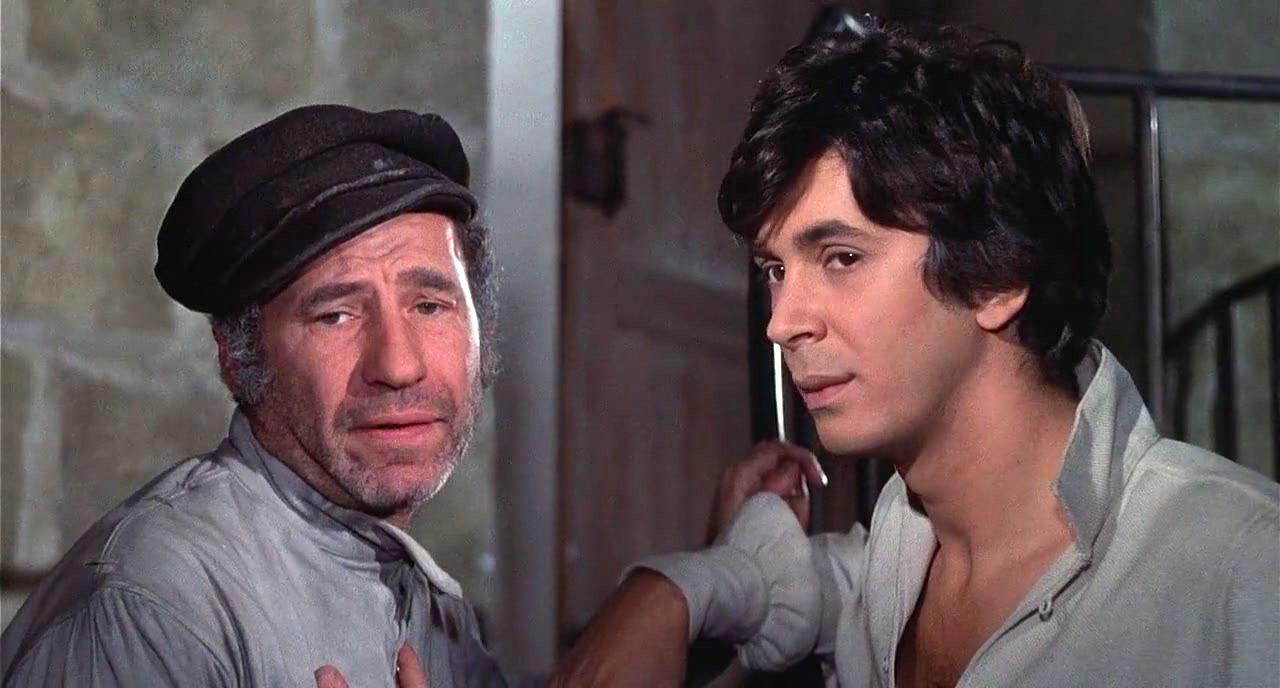
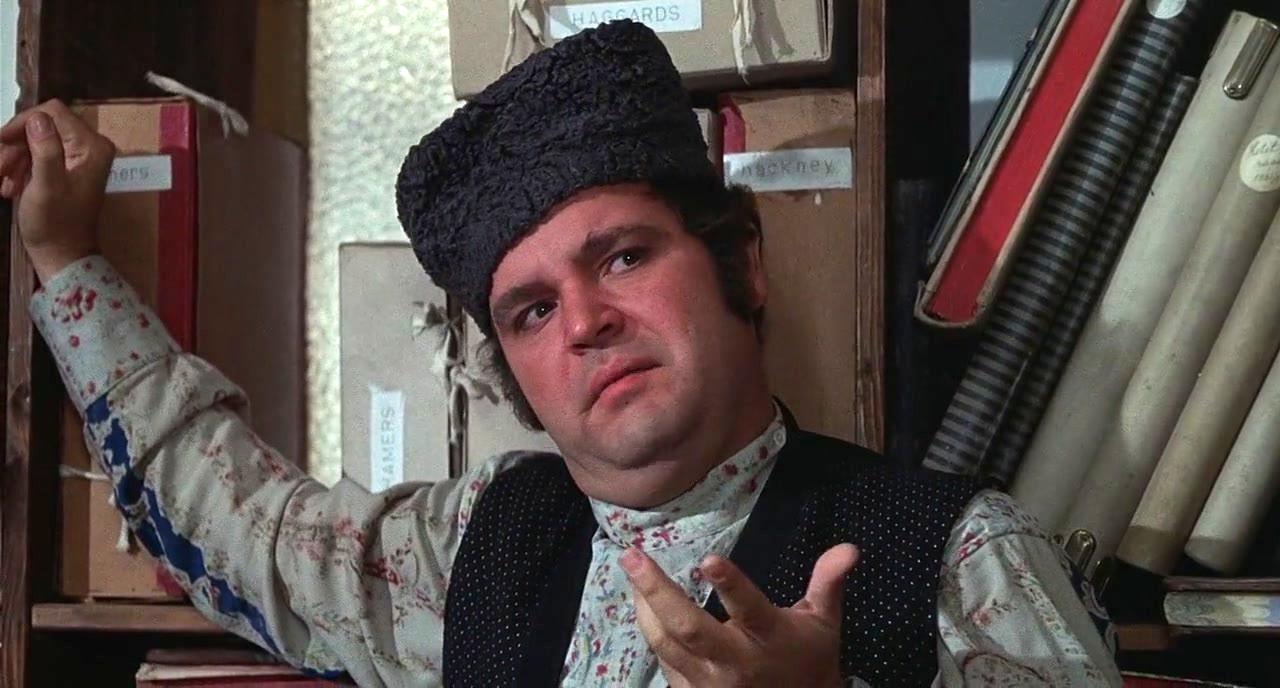
Frank Langella Dom DeLuise Mel Brooks Ron Moody |
| Director |
|
Mel Brooks |
| Producer |
|
Michael Hertzberg Crossbow Productions The Twelve Chairs Company |
| Distributor |
| Universal Marion Corporation (UMC) |
This is a funny Mel Brooks movie without all the morally offensive material which is usually found in his other films.
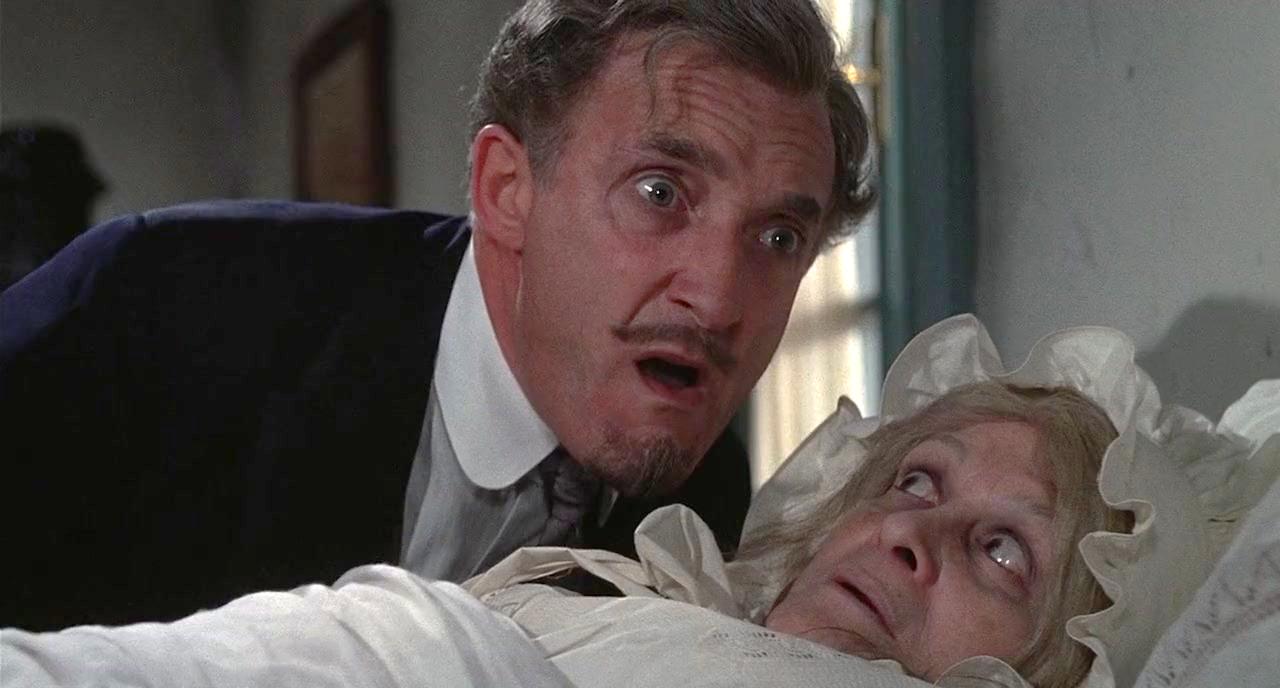
“The Twelve Chairs” is set in Russia in 1927. The story is centered around a former aristocrat (Ron Moody) who learns from his dying mother-in-law that she sewed a fortune in family jewels into one of her twelve dining room chairs. Unfortunately, the chairs have been scattered throughout Russia, and the son-in-law leaves everything to go off in search of them. Little does he know, his mother-in-law also told the local priest (Dom DeLuise) about the fortune and he, too, has decided to find the chair for himself.
I enjoyed this film because it showed how greed can turn the best of us into crazy, self-centered maniacs. By the end of the movie, those in search of that one chair have definitely “hit bottom” and their lives are a wreck.
There are only two cautions I would give to parents from a Christian perspective. The priest is portrayed as a greedy, good-for-nothing individual—however, Dom DeLuise is terrific in the part and actually is responsible for some of the most funny scenes in the movie. There was one scene where the priest was angry and may have taken God’s name in vain, though you might be able to explain it away as the priest praying in his own special way.
It was nice to be able to sit and watch a Mel Brooks film without having to worry about “adult” situations and language.
All in all, this is a movie that I would feel comfortable watching with my family.

Ippolit Vorobyaninov’s mother is on the verge of dying. But as he goes to comfort her on her deathbed, she reveals to him that she has fortune sewn into the bottom of one of her 12 dining room chairs. As much as the news excites him, he also realizes that the chairs have been scattered throughout Russia after their confiscation in the Bolshevik revolution. Not only that, but the same chairs are also being pursued by a priest by the name of Father Fyodo. So with the help of a thief, Ostap Bender, Ippolit sets out across the country to find them and hopefully find his family fortune.
Mel Brooks is known for creating movies filled with wacky characters, wacky gags, and wacky plot lines, and The Twelve Chairs is no different. That all being said, the plot line and gags are more grounded than the likes of Blazing Saddles or Robin Hood: Men in Tights. That works for the story, though, because it only highlights just how extreme the lengths are that these men will go to for the prized chair. Does it make you laugh?
Yes, but not as much as most of the other Mel Brooks’s comedies, not even his other well-known character-driven film The Producers. Of course, this film is naturally less controversial. And while it is funny to see these men chase after these chairs throughout the 90 minute runtime, by the end, you feel as if it’s all saying less than the other films besides that greed drives men mad. The hijinks do make you laugh and giggle when you watch it. But by the end, the characters don’t quite stick with you the same way Max Bialystock and Leo Bloom do, nor do their shenanigans. I have a hard time seeing it as the 4 out of 4 star movie Roger Ebert makes it out to be. None the less, it does have enough of that Mel Brooks zaniness to work enough for the time being, and just as Mel uses comedy to attack some of the worst aspects of humanity (for Blazing Saddles, it’s racism. For The Producers, it’s corruption and love of money), this one shows greed for all its fundamentally absurd colors.
Content-wise, it’s clearly the cleanest of Mel’s entire library. It got by with a G rating back in the day, but that’s primarily because PG didn’t mean general audiences like it does today (the rating system has gotten inconsistent over the years). It doesn’t have too much that’s offensive outside of a couple of minor profanities, some occasional self-inflicted head-bashing by the priest, a make-out session that occurs early on, and some drunkenness. I have a feeling if it were rated today, it would most likely get a PG for “brief violence, a suggestive moment, and brief mild language.” Enough to warrant a bit of caution for children? Possibly. But kids have seen and heard worse nowadays. And considering this is a Mel Brooks movie, I’m surprised it decided to stop there.
Morality-wise, though, while the film does serve as a funny object lesson that highlights how the relentless pursuit of greed makes you look insane, by the film’s end, it doesn’t fully condemn some of the rule-breaking and ethically-unsound lengths the men go to for the chair. The last shot of the movie still has Ippolit and Ostap pulling off a scam to raise money, just like they did earlier in the film.
Story-wise, it does work to show how the two men are now working alongside each other as friends and not just co-thieves, but they are still ultimately thieves none the less. It doesn’t sink the movie beyond acceptability by any stretch. It just means I’m giving this one an “average” rating instead of a “good” rating like the reviewer did.
Bottom line: The Twelve Chairs is one of the less talked about Mel Brooks movies out there. Is that because some of his other films stirred up controversy back in their days and the ones that didn’t were often parodies of something popular like Star Wars or Frankenstein, and thus they naturally drew attention? Maybe. I also think it’s because this one just simply isn’t as funny as his other works. Still, even with that, the characters are wacky enough and the plot does keep you invested throughout, so it’s still a fun time for everyone (outside a few minor caveats). If you want to get your kids into Mel Brooks films and they aren’t old enough for some of his more mature outings, “The Twelve Chairs” is a solid option.
Moral rating: Average / Moviemaking quality: 3½