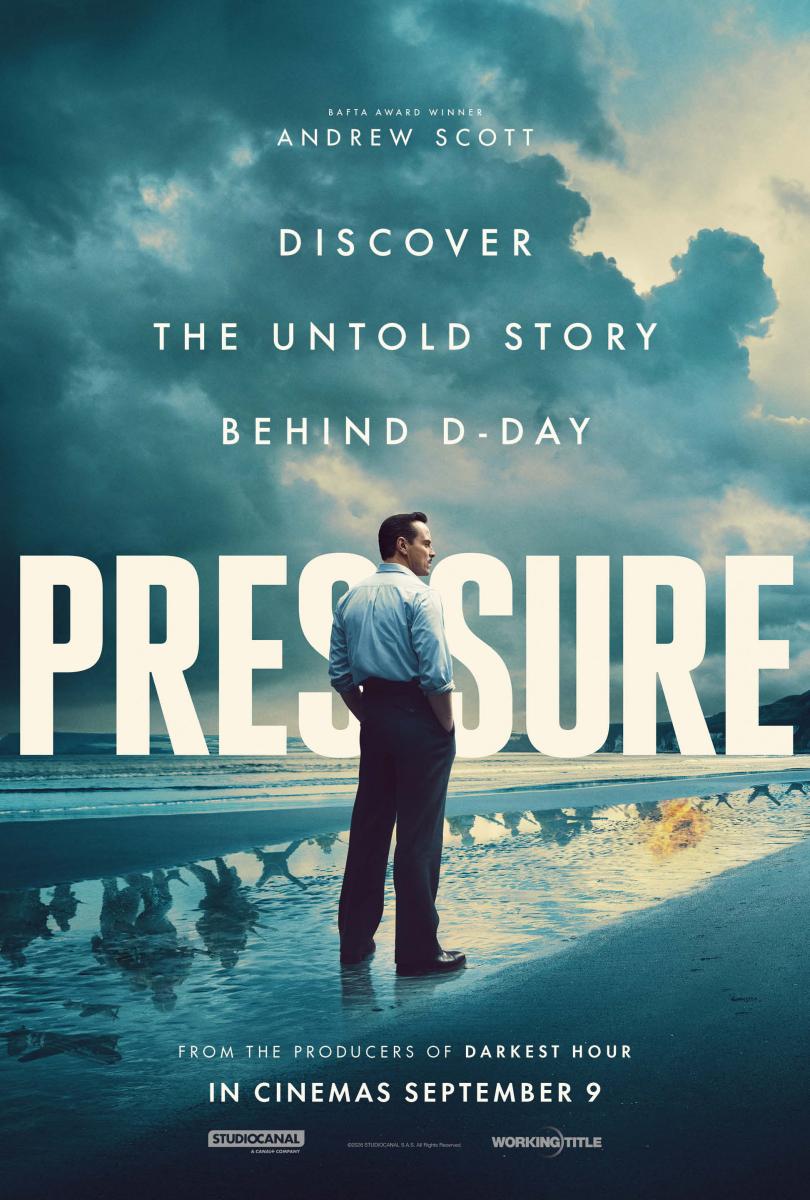
Pressure
 for war violence, bloody images, some strong language, and smoking.
Reviewed by: Jim O'Neill
CONTRIBUTOR
| Moral Rating: | Average |
| Moviemaking Quality: |
|
| Primary Audience: | Adults Young-Adults |
| Genre: | History War Thriller |
| Length: | 1 hr. 40 min. |
| Year of Release: | 2026 |
| USA Release: |
May 29, 2026 DVD: July 28, 2026 |

Won 2026 “Truly Moving Picture Award” Heartland Film festival
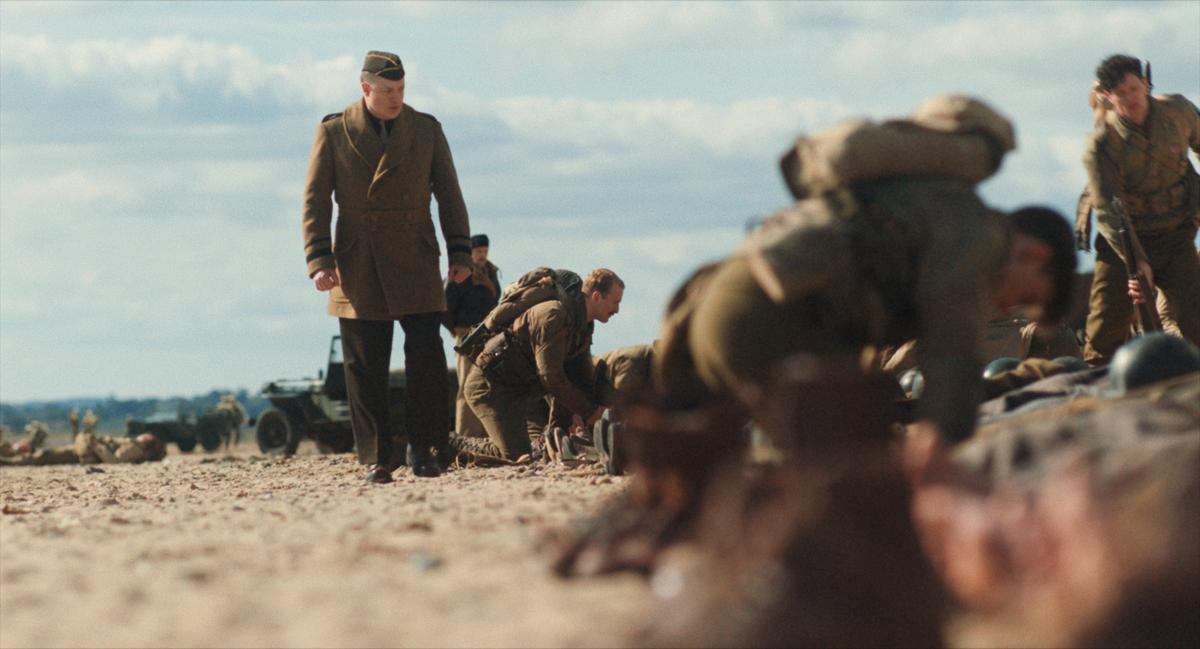
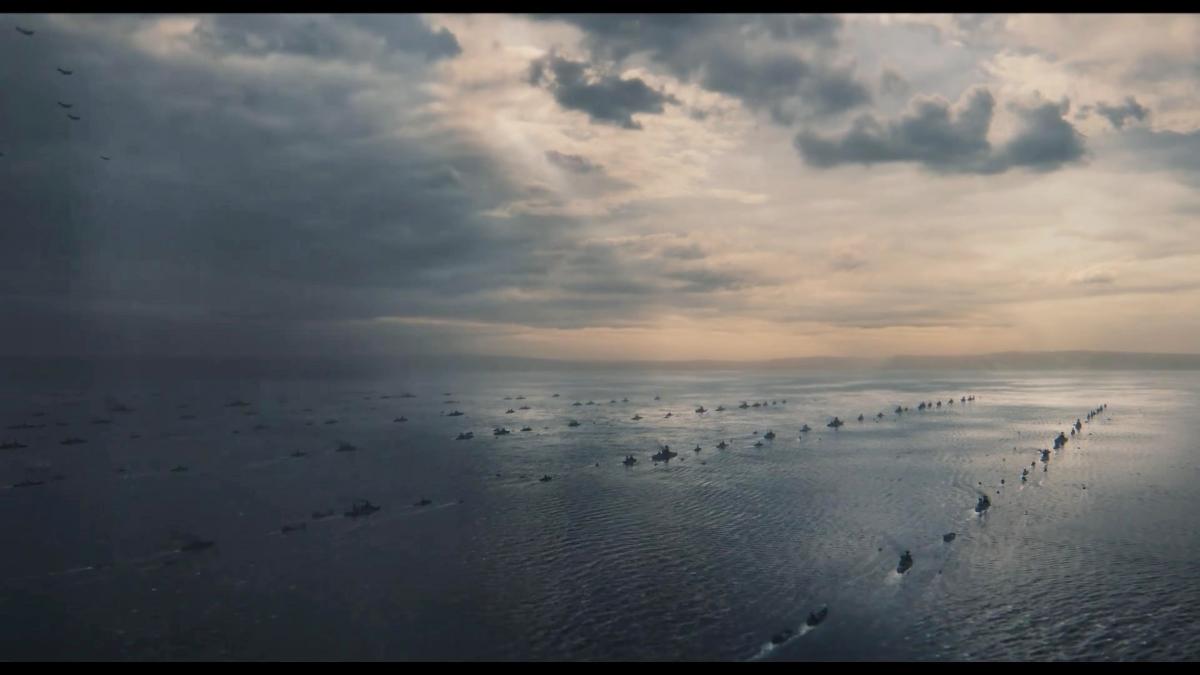
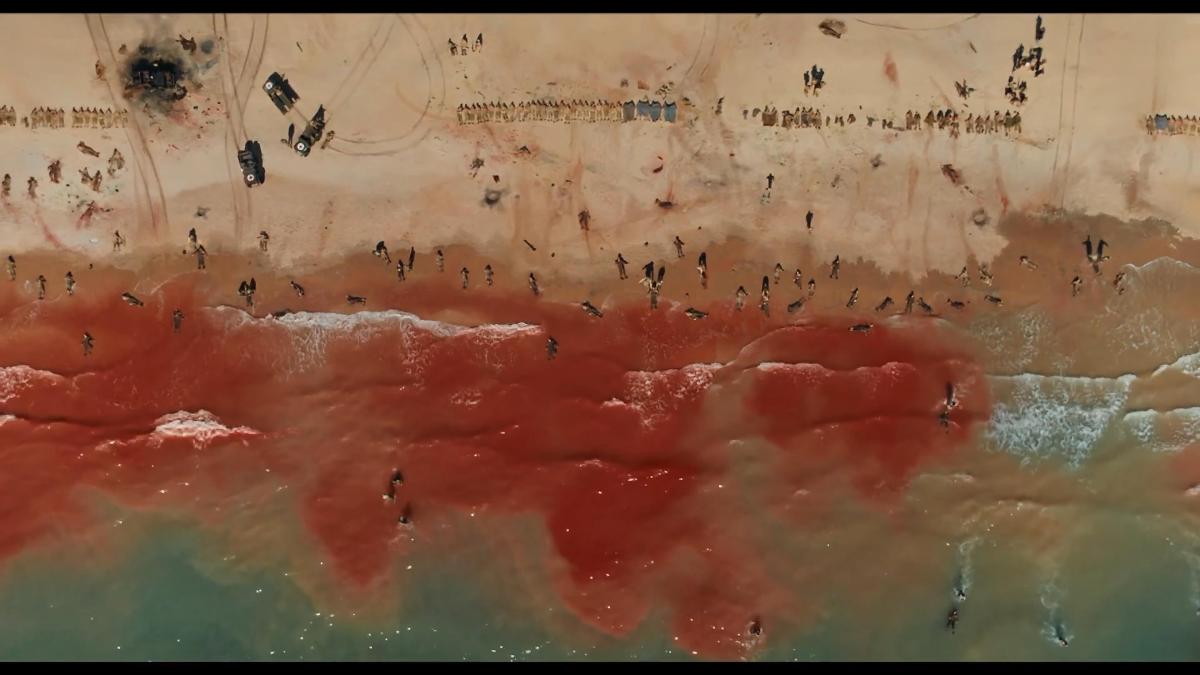
1944: D-Day, the Allied Normandy landings in Operation Overlord against Nazi Germany during World War II
The invasion planners determined a set of conditions involving the phase of the moon, the tides, and the time of day that would be satisfactory on only a few days in each month.
The Allied invasion began shortly after midnight on the morning of 6 June with extensive aerial and naval bombardment as well as an airborne assault—the landing of American, British, and Canadian airborne troops, soon followed by Allied amphibious landings on the coast of France. The target 80-kilometre (50 mile) stretch of the Normandy coast was divided into 5 sectors: Utah, Omaha, Gold, Juno, and Sword.
Answers about war in the Bible
What is the Biblical perspective on war?
 Answers about rain in the Bible
| Featuring |
|---|
|
Andrew Scott … James Stagg Brendan Fraser … Dwight “Ike” Eisenhower Kerry Condon … Kay Summersby Chris Messina … Irving Krick Damian Lewis … Marshall Bernard “Monty” Montgomery See all » |
| Director |
|
Anthony Maras |
| Producer |
|
Tim Bevan Eric Fellner See all » |
| Distributor |

“One decision changed the world”
“He says ’You are My war-club, My weapon of war;
And with you I shatter nations;
And with you, I destroy kingdoms.’” —Jeremiah 51:20
“Almighty and most merciful Father, we humbly beseech Thee, of Thy Great Goodness, to restrain these immoderate rains with which we have had to contend. Grant us fair weather for battle.” —General George Patton’s prayer to his Third Army (prepared by Chaplain James H. O’Neill), 1944
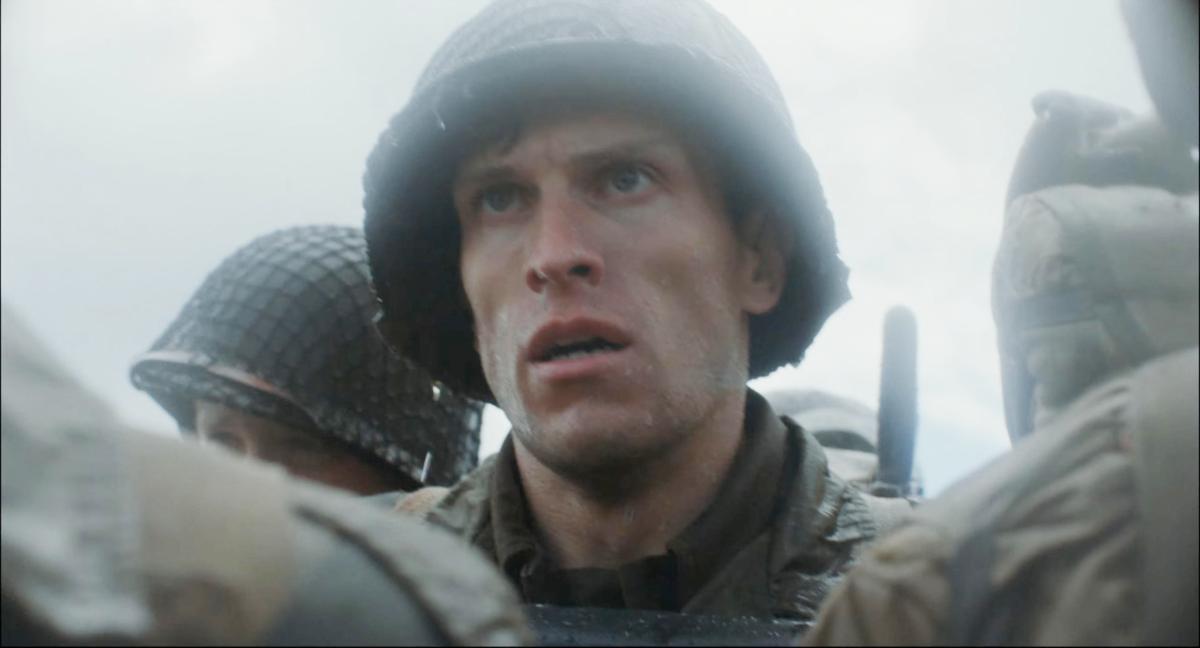
Before the release of Andy Maras’ “Pressure” I had been mostly disappointed by cinema’s depiction of the 1944 D-Day invasion. I do, however, like some of the re-tellings. Each Memorial Day I watch 1962’s “The Longest Day,” a pre-sixties verité blend of docudrama and dazzling Hollywood bombast, and the 1975 British film, “Overlord.” (Please stay away from the 2018 American film of the same name which also takes place on D-Day but after an impressive opening devolves into camp body-horror trash.). “Overlord’s” intimate realism melds an historical event with a personal drama that becomes soaring in scope and searing up close. With regret, I’ve grown tired of Spielberg’s “Saving Private Ryan” whose first half hour is remarkable, but whose second two hours are a muddle and ultimately a bust.
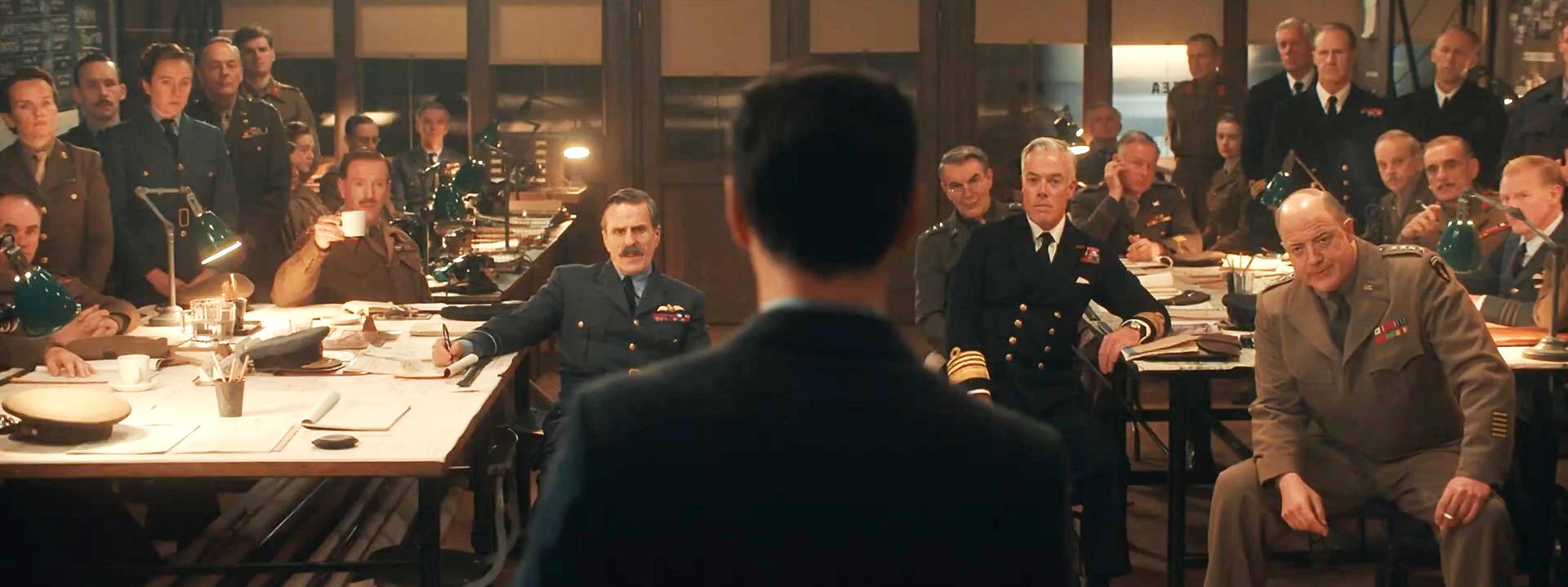
There are few climactic battle scenes in “Pressure.” Its suspense is not derived from marching battalions, rolling tanks or surging LCVP boats, but from tension that builds inside sweltering close-quartered situation rooms. Most of the film’s action takes place during D-Day’s planning stages before a single boot steps onto Omaha Beach or before one shot is fired.
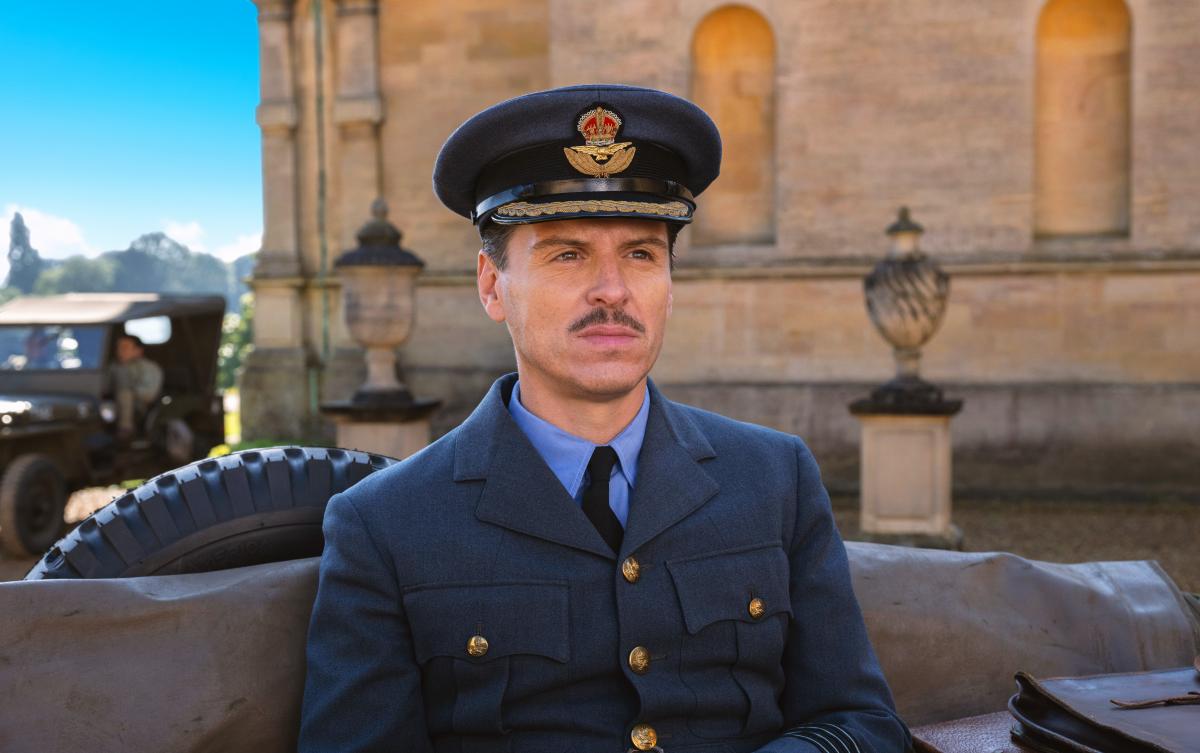
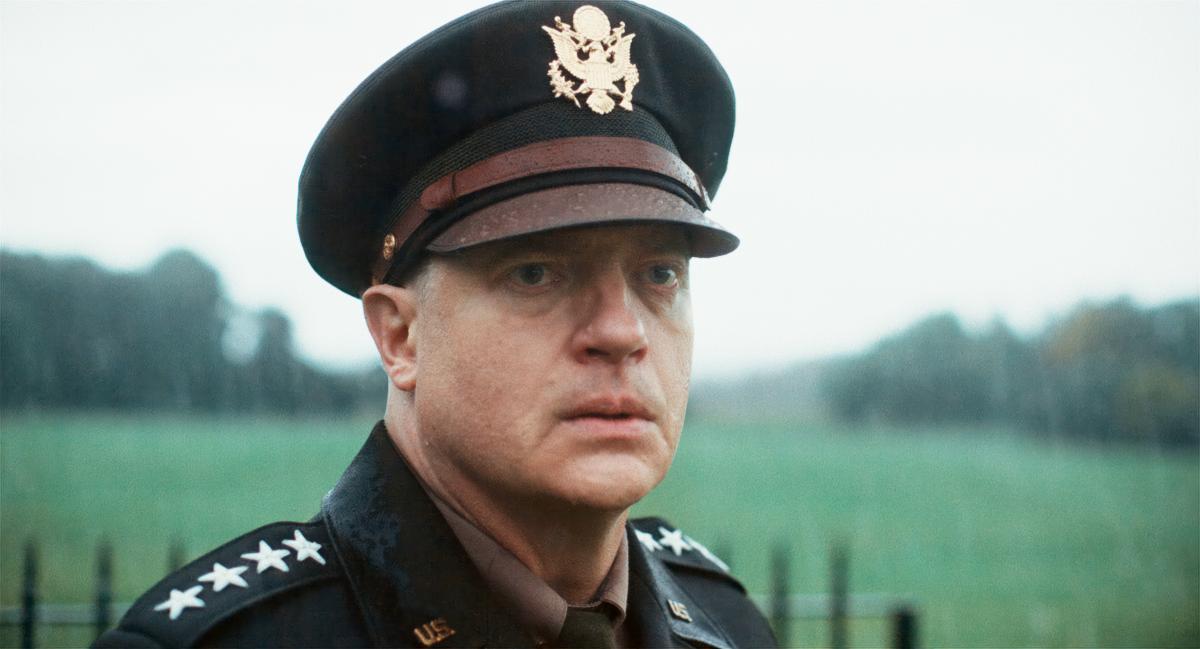
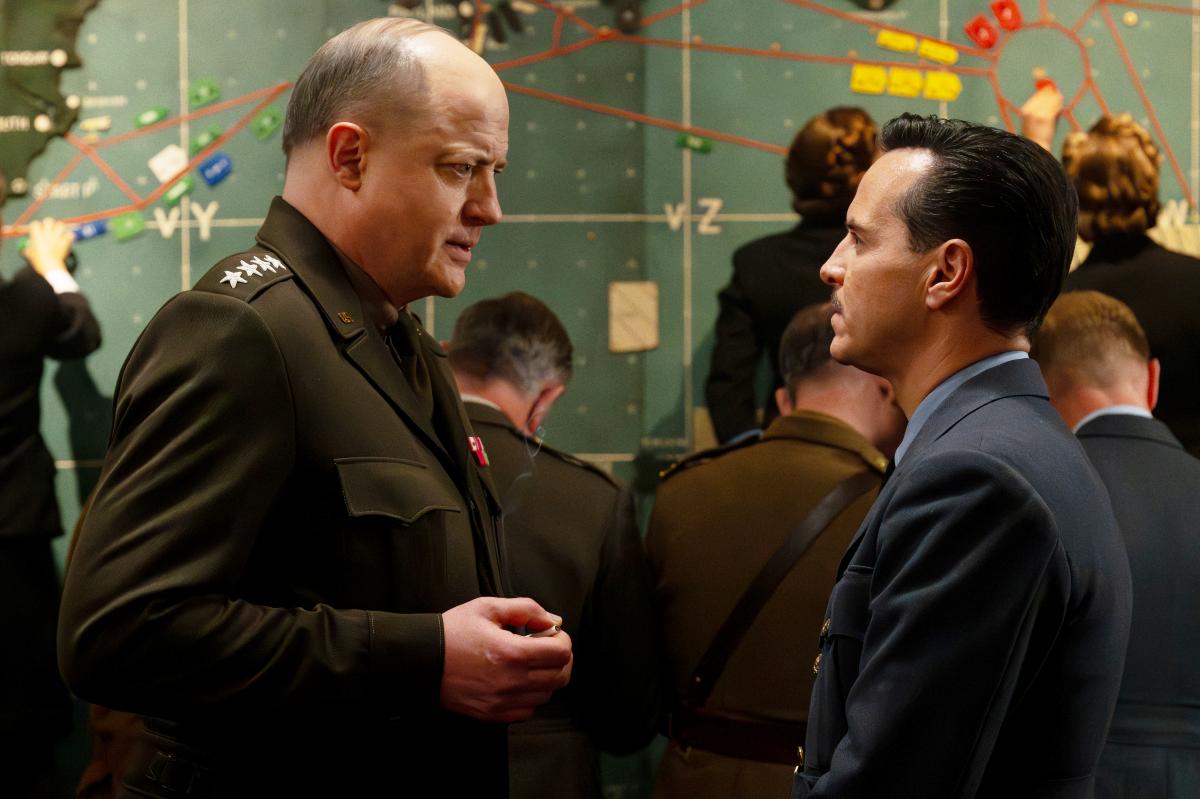
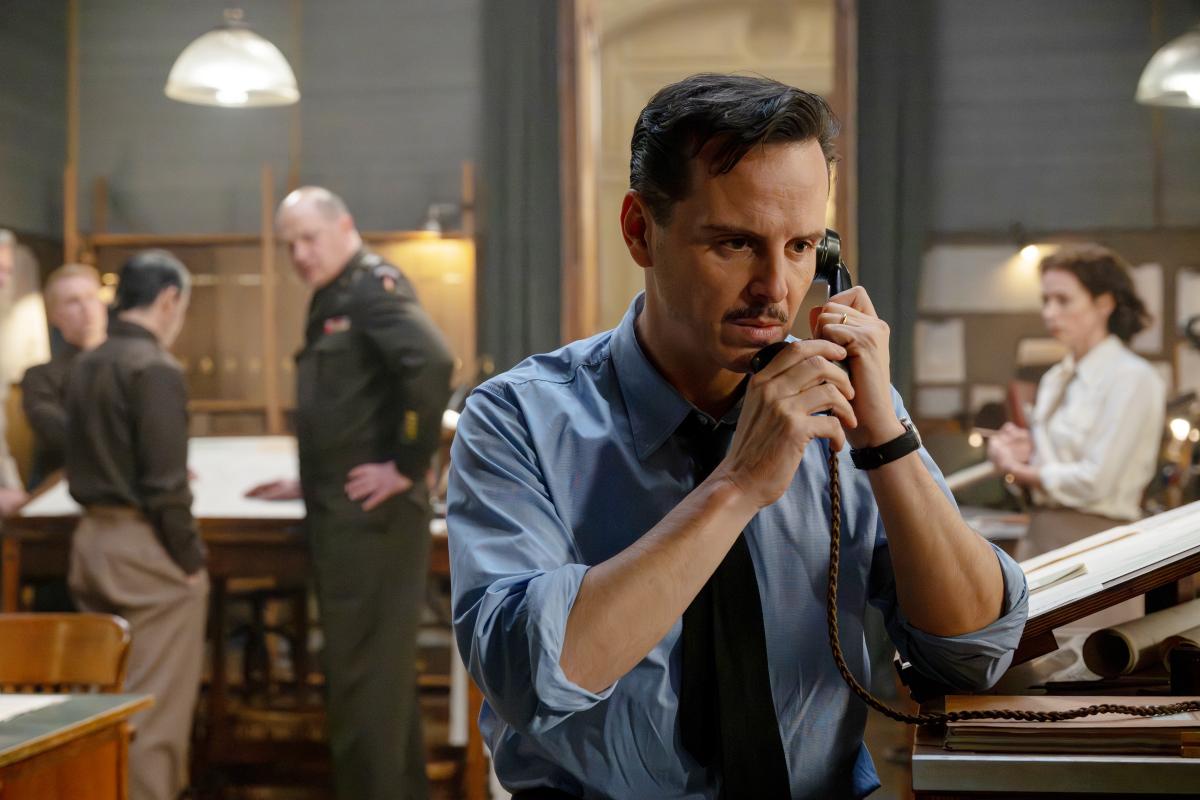
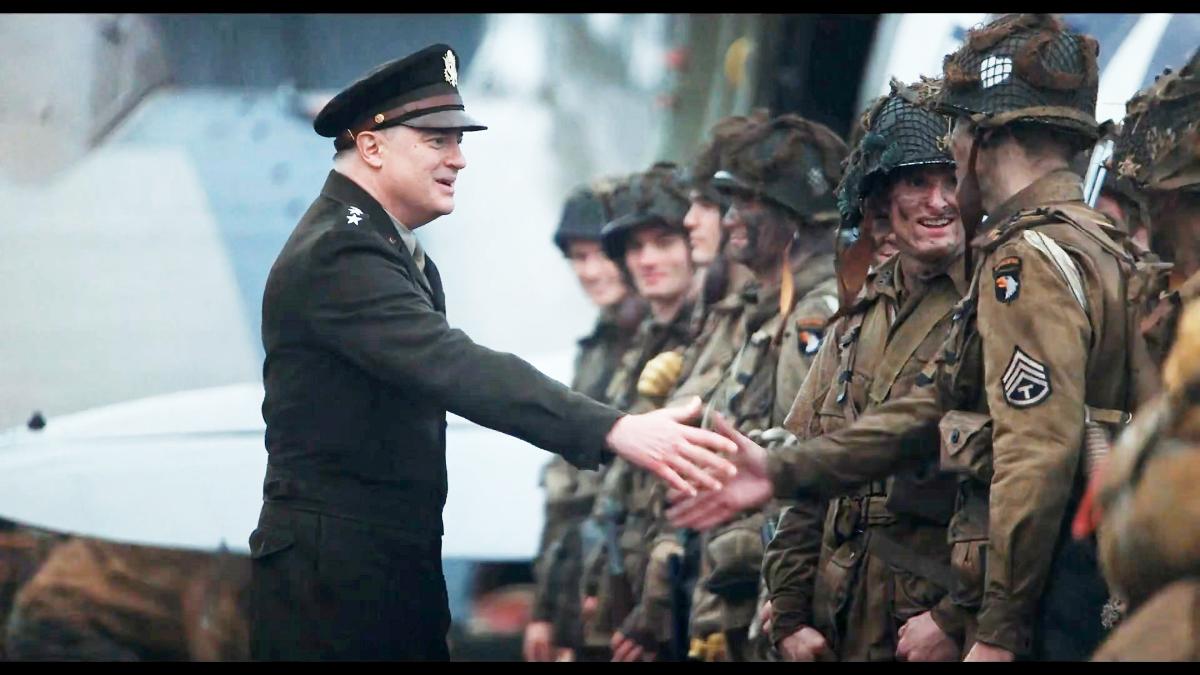
Seventy-two hours prior to the Normandy invasion launch, General Dwight D. Eisenhower (Brendan Fraser) enlists the assistance of meteorologist Captain James Stagg (Andrew Scott) to study and evaluate weather patterns that could make or break the invasion. Storm conditions in the English Channel, always erratic and hard to predict, could, if they accelerated, foil the operation, sinking the boats and drowning the soldiers aboard them.
Stagg’s synopsis of weather patterns defy the optimistic predictions of Eisenhower’s other climate experts. Stagg predicted a disaster should the mission proceed on the day it was planned. However, he later detected a break in the English Channel’s storm patterns, a shift that would give the general the information he needed to move forward. The odds were still bad, just less bad.
Maras’ film (he co-wrote the script with David Haig based on Haig’s 2014 stage play) builds momentum and tension by contrasting the analytical and administrative styles of Eisenhower and Stagg: one, military; one, scientific. Their personalities may be disparate, but their fundamental characters are in league as reflected in their sense of judgment, justice and prudence.
Stagg, calling himself “never certain, but always confident” is ready to tell his superiors things they don’t want to, but need to, hear. Eisenhower, ever the strategist in political as well as military matters, understands that he himself must make the final choice on whether to use Stagg’s data to move ahead with military action. That choice, the commander knows, is fraught with danger for him, for the men who serve under him, and for the fate of the free world. He must invoke the virtue of courage to put that decision into action, trusting in a natural sense of confidence as well as in a supernatural sense, a faith, that acknowledges that there are and always will be forces outside his control.
“For the Spirit God gave us does not make us timid, but gives us power, love and self-discipline.” —2 Timothy 1:7
Maras doesn’t need to keep his audience guessing. The viewer knows the outcome of the battle, but the behind-the scenes decisions that were key to the mission’s victory may not be so well known. The director, who also edited the film, maintains tight control by contrasting open outdoor spaces with small dark interiors, expanding and shrinking time sequences, and making frequent use of close-ups to emphasize insight, fear, doubt and grief.
By assembling an ensemble of ace actors Maras succeeds in presenting singular personalities who are part of a world-wide drama.
Brendan Fraser, although not a physical ringer for Eisenhower, strikes the general’s balance of reserve and magnanimity. He also reveals his subject to be a man quick to anger, easily hurt (as when reminded that he never actually fought in combat), and dismissive of those who are most faithful to him. Fraser fuses the great man’s flaws with his considerable strengths, fleshing out a military leader who is an exceptional man, but still a man.
Andrew Scott, whose work I have long admired on stage and on screen, is a giving actor who cedes major moments to his co-stars. Scott steals scenes by not stealing them. He did so recently in Richard Linklater’s “Blue Moon,” playing devoted friend and respectful rival to a too-emotive Ethan Hawke. In “Pressure,” he is taciturn and straight to the point: “unlike men, weather never replicates its history.” Stagg is a stick-in-the-mud and not much fun (to the astonishment of his American co-workers, he confessed to not having seen “Gone with the Wind”), but he is never petty, never self-absorbed. When a personal tragedy looms, he responds: “immaterial.” He never forgets that he is part of something bigger than himself.
Irish actress Kerry Condon gives Lieutenant Kay Summersby her due as Eisenhower’s chauffeur, secretary and confidant. I’m pleased that the movie did not sink to stoking the innuendos regarding the lieutenant’s relationship with her boss. Condon respectfully plays Summersby as a perspicacious and astute military operative. She warms up and rounds out each of the scenes she plays with Fraser and Scott while still adding the muscle needed to pack a punch and rev a pulse.
Damian Lewis plays General Bernard “Monty” Montgomery as comic, caustic, and huffy. He’s as self-assured, and sometimes just as delusional, as Don Quixote. Monty’s determination might be admirable if it wasn’t so scary: “it is already a loss when doubt enters the mind.” Lewis seems to be letting loose and having fun playing a member of a military team whose suggestions go mostly unheeded. His jaunty slapstick is what keeps his rather irksome character not just watchable but almost endearing.
Amidst the pounding action and the dogged pursuit of victory there is a sense that greater powers are at work, that faith and prayer are as important to an outcome as human effort. Four months after D-Day, General Patton would commission the prayer I quoted above, one that he passed out to all the soldiers in the Third Army before going into battle. He is quoted as saying:
“Between the plan and the operation there is always an unknown. That unknown spells defeat or victory, success or failure. Some people call that getting the breaks. I call it God.”
“Pressure” tells the true story of men and women who changed history not by “following the science,” but by using science as a tool. They collected data, observed it, analyzed it, and they made up their minds based on evaluation and discernment. They hoped and they prayed that their choice was the right one. And they were willing to accept the consequences of that choice. Maras’ film is something of a gamble as well. But it’s paid off. “Pressure” ranks as one of the best of cinema’s D-Day movies, and certainly one of this year’s finest films.
- Violence: Moderate
- Profane language: Moderate
- Vulgar/Crude language: Moderate
- Drugs/Alcohol: Moderate
- Nudity: None
- Sex: None
- Occult: None
- Wokeism: None
See list of Relevant Issues—questions-and-answers.

PLEASE share your observations and insights to be posted here.