Project Hail Mary
 for some thematic material and suggestive references.
Reviewed by: Keith Rowe
CONTRIBUTOR
| Moral Rating: | Better than Average |
| Moviemaking Quality: |
|
| Primary Audience: | Adults Young-Adults Teens |
| Genre: | Sci-Fi Thriller Drama Adaptation IMAX |
| Length: | 2 hr. 36 min. |
| Year of Release: | 2026 |
| USA Release: |
March 20, 2026 DVD: August 11, 2026 |
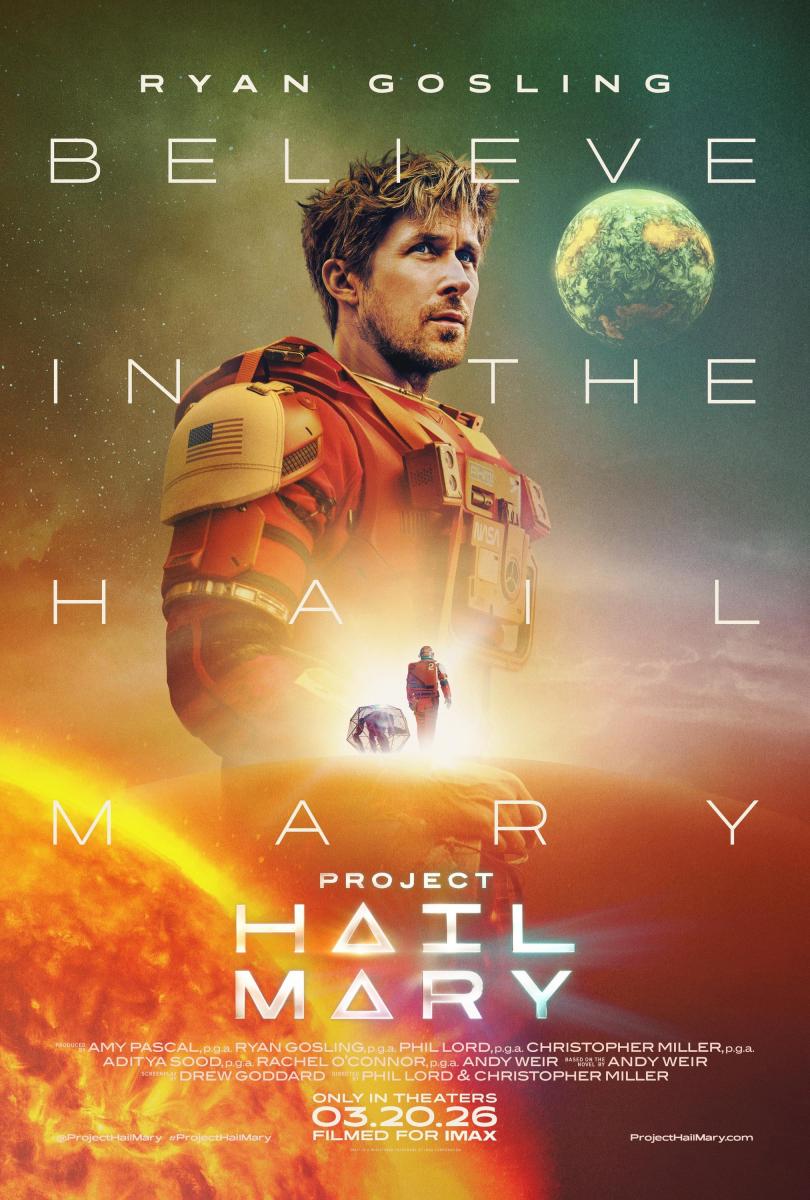



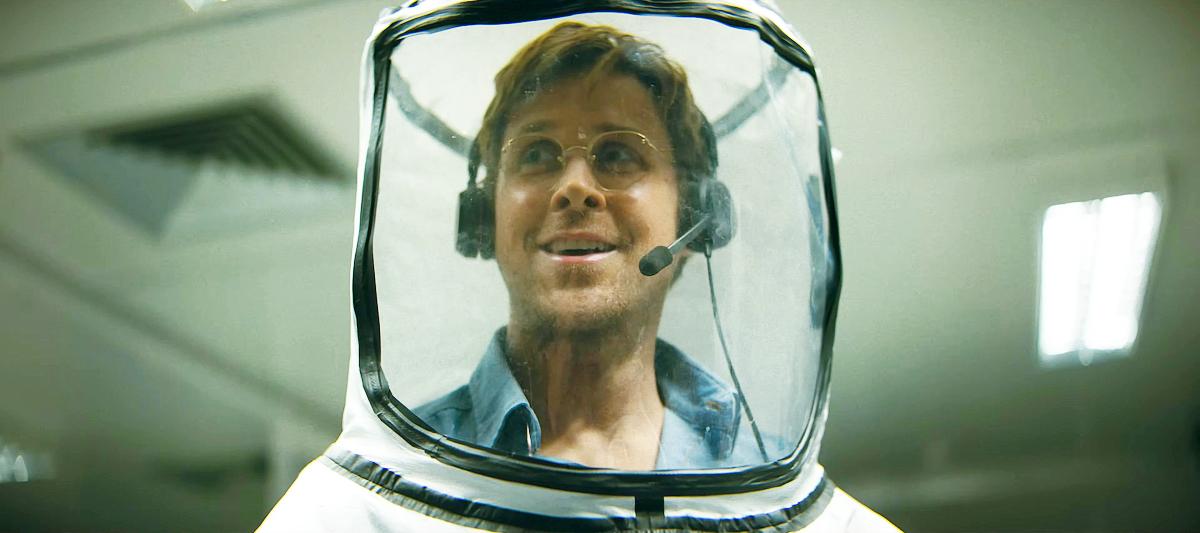
This film is primarily about the power of friendship.

Film based on a 2021 science fiction novel by American writer Andy Weir that centers on middle school teacher and former biologist Ryland Grace, who wakes up aboard a spacecraft afflicted with retrograde amnesia—no memory of himself or his mission
Threat of catastrophic global cooling of Earth within 30 years
Sent in deep-space to the star Tau Ceti system on a suicide mission to save Earth from disaster
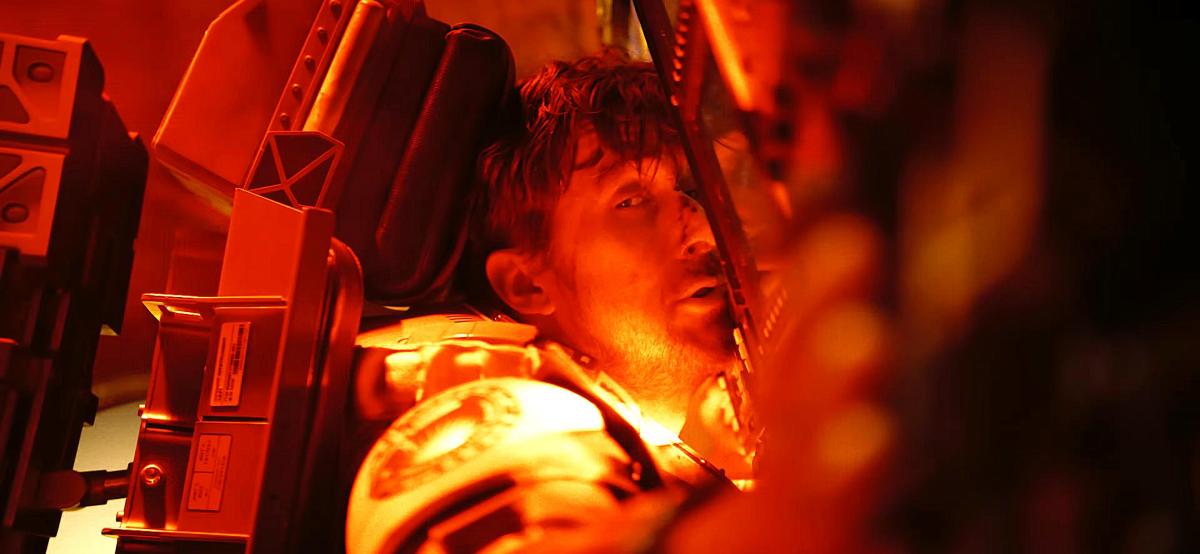
Survival using one’s scientific knowledge, ingenuity, and human will
Learns he is not alone; there is an alien with the same mission
Bravery, courage, determination
Overcoming fears in life, anxiety and worry— What does the Bible say?
What does the Bible say about intelligent life on other planets?
Does Scripture refer to life in space?
Questions and answers about the origin of life
| Featuring |
|---|
|
Ryan Gosling … Dr. Ryland Grace Milana Vayntrub … Olesya Ilyukhina Ken Leung … Yáo Li-Jie Sandra Hüller (Sandra Huller) … Eva Stratt Liz Kingsman … Shapiro See all » |
| Director |
|
Phil Lord Christopher Miller |
| Producer |
|
Amy Pascal Ryan Gosling Phil Lord Christopher Miller Aditya Sood Rachel O'Connor Andy Weir |
| Distributor |

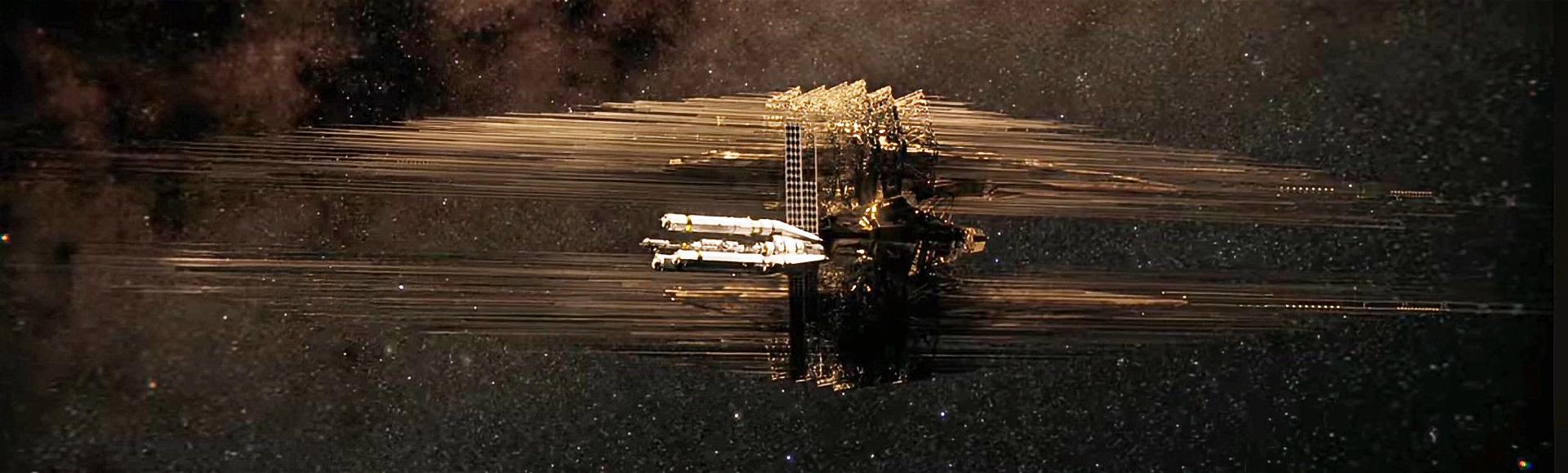
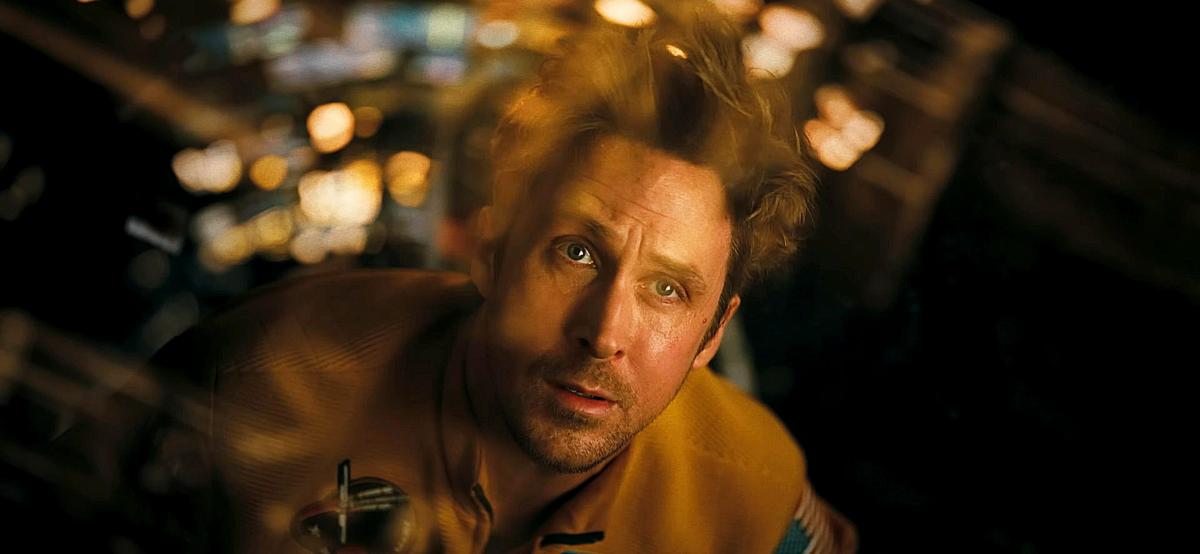
A man awakens from an induced coma to find himself in a sleek hospital room, where fussy robotic arms tend to his every medical need. He has no idea where he is, and more importantly, who he is. Ripping himself free from myriad IVs and wires, the man climbs a ladder and opens a circular hatch door. Now he’s in a high-tech lab. He continues exploring the various rooms until he comes to a cockpit—his jaw drops when he looks through the windows and sees the inky black expanse of space.
Occasional moments of clarity break through his muddled mind; these flashbacks reveal his identity and his involvement with a top-secret project to save the Earth. The brightest scientific minds were tapped. Multi-national financing was secured. A gigantic spaceship was constructed and launched to determine what’s killing our sun and how to stop it. But why he’s on the ship, which is presently hurdling through deep space, remains a mystery. As the only surviving member of the expedition, the man quickly realizes the fate of humanity hangs on what he does next.
Based on the 2021 sci-fi novel of the same name by Andy Weir (“The Martian”), “Project Hail Mary”—an epic scale, hard science space capade—came ready-made for the big screen. Practically from the moment the book was released, there was interest in adapting it into a movie. But, to do the story justice, who in the universe could bankroll such an FX-heavy venture? In stepped Amazon MGM Studios, who put up a staggering $108 million (estimated) to bring Weir’s vision to life…a massive gamble considering the diminishing box office returns over the past few years (really, ever since COVID).
Having read the book a few years ago, I was ecstatic when I saw the trailer during the Super Bowl. Not only was it exciting to see that Weir’s brainchild was finally going to be adapted into a movie, but it also looked amazing. I hooted and hollered more at the trailer than the entire lackluster (yes, Cris Collinsworth, we get that it was a “defensive struggle”) gridiron championship.
Weir’s novel boasts the best opening of any novel I’ve ever read. As the reader, I had no idea what was going on. Due to his retrograde amnesia, neither did Ryland. As he learned things about his past, and vital clues about why he’s in space, so did I. It’s a tricky narrative device. Revealing things too quickly ruins the mystery and fun; revealing things too slowly runs the risk of boring the audience. In the hands of a lesser writer, Ryland’s adventure would’ve been a colossal wreck. But, fortunately, Weir is an exceptional craftsman who delivered a masterful cross-cutting story structure that’s effective both in print and on film.
Though slight in size, the entire cast delivered exceptional performances. While Ryan Gosling as Ryland Grace (kudos to the casting director for matching the initials of the star with the story’s protagonist) wasn’t really what I envisioned of the lead character, based on descriptions of him in the book, I wasn’t averse to the casting choice. After viewing Gosling’s sometimes quirky, sometimes brilliant acting choices (especially the way he uses his eyeglasses), it’s hard to imagine anyone else in the role. Gosling, who’s no stranger to the sci-fi genre (“Blade Runner 2049”), imbues Ryland with just the right balance between reticence and courage, self-doubt and competence, and stoicism and emotionalism. Despite his flaws, or perhaps because of them, Ryland is an excellent representative of the human race—and Gosling’s deft portrayal of the reluctant hero is spot-on.
The cast is rounded out with some familiar faces: Ken Leung (of “Lost” fame) and Milana Vayntrub (of AT&T commercial fame) both play astronauts. There are also unfamiliar faces, like German actress Sandra Hüller, who plays the leader of the titular project, Eva Stratt. The voice of alien Rocky, so named by Ryland, is provided by James Ortiz. In a clever cameo, we briefly hear the voice of Meryl Streep.
“Project …” is co-directed by Phil Lord and Christopher Miller, the tandem who brought us such animated delights as “Cloudy with a Chance of Meatballs” (2009) and “The Lego Movie” (2014). Fans of the “galaxy far, far away” will also remember that the duo were in the middle of directing “Solo: A Star Wars Story” (2018), when, due to creative differences, they were replaced by Ron Howard. One of the reasons Lord and Miller were relieved of their directing responsibilities on “Solo” was that they kept veering off script (Howard averred this in an interview). Perhaps it’s due to the author’s involvement in this project—Weir co-wrote the script with Drew Goddard—but the directors have shown the upmost reverence in hewing close to the source material.
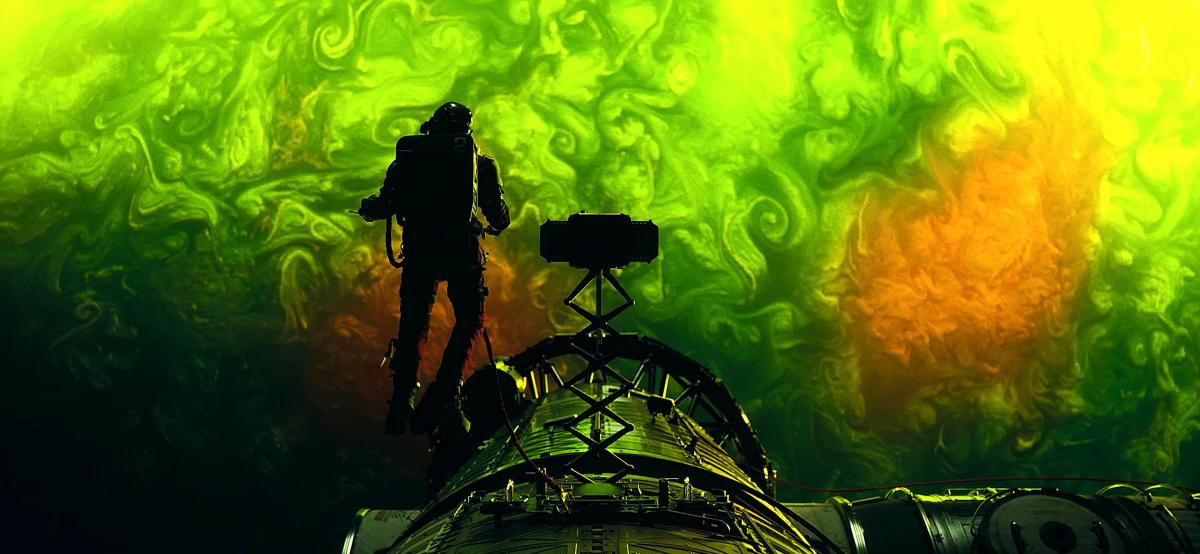
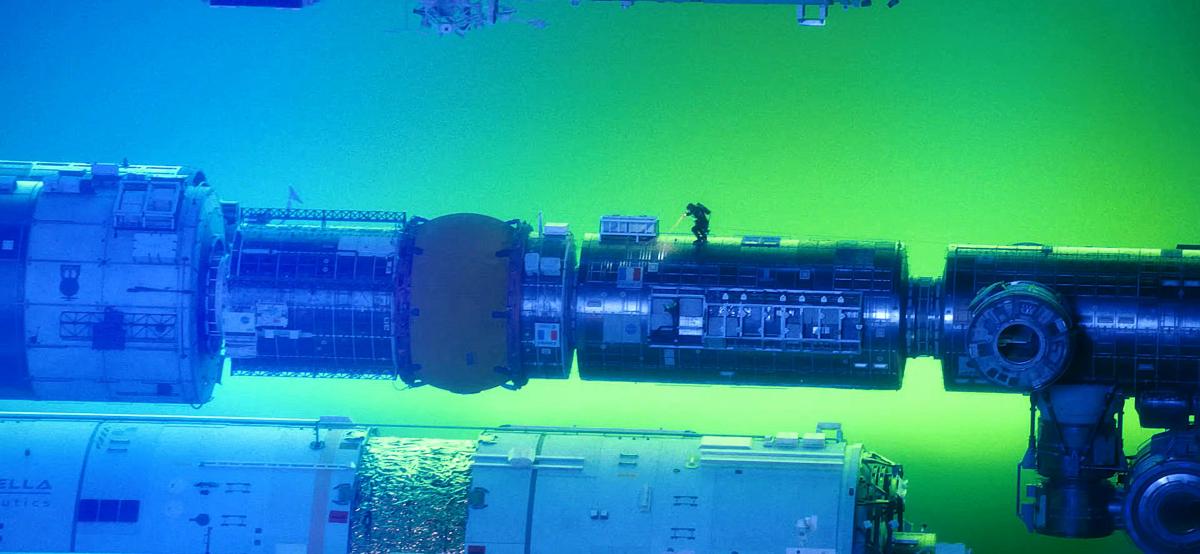
Lord and Miller’s extensive background in animation has paid huge dividends in “Project …,” a movie that’s largely told with sounds and visuals. Though it never quite reaches the stature of the deep space exemplar, “2001: A Space Odyssey” (1968), there’s some real art here, like when Ryland meets Rocky and when Ryland takes a spacewalk.
British composer, Daniel Pemberton, has delivered a diverse and textured soundtrack for “Project….” One minute we’re listening to a country tune, the next a classical number, followed by a rock jam. Particularly effective are the choral sounds that the composer laces through moments of mystery and discovery, and the sprightly cues that accompany the scenes where Ryland works in the lab. Pemberton’s atmospheric, ethereal, and deeply-affecting score adds immeasurably to the film’s mood without upstaging the action.
Last general comment about the film before plunging into weightier topics: a recent trailer totally spoiled the film, right down to who Ryland is, who the alien is, what their mission is and how they’re going to save their planets. I was incensed when I saw it. Still am. I’ve railed against trailers before, but this was one of the most egregious examples I’ve ever seen. It literally disclosed everything about the story and left nothing to the imagination, except for the movie’s ending (See: Final Thoughts). As evidenced by my extremely restrained story synopsis at the top of this review, it is possible to tease a story without giving away all the details. Hollywood, please stop ruining movies by divulging the entire story in trailers!
As Mr. Gump famously stated, “That’s all I have to say about that.”
Spiritual Aspects
Spoiler Alert!
In a movie preoccupied with spaceships, aliens and the end of humanity, there isn’t much focus on spiritual principles. Still, there are a few moral matters we can explore here.
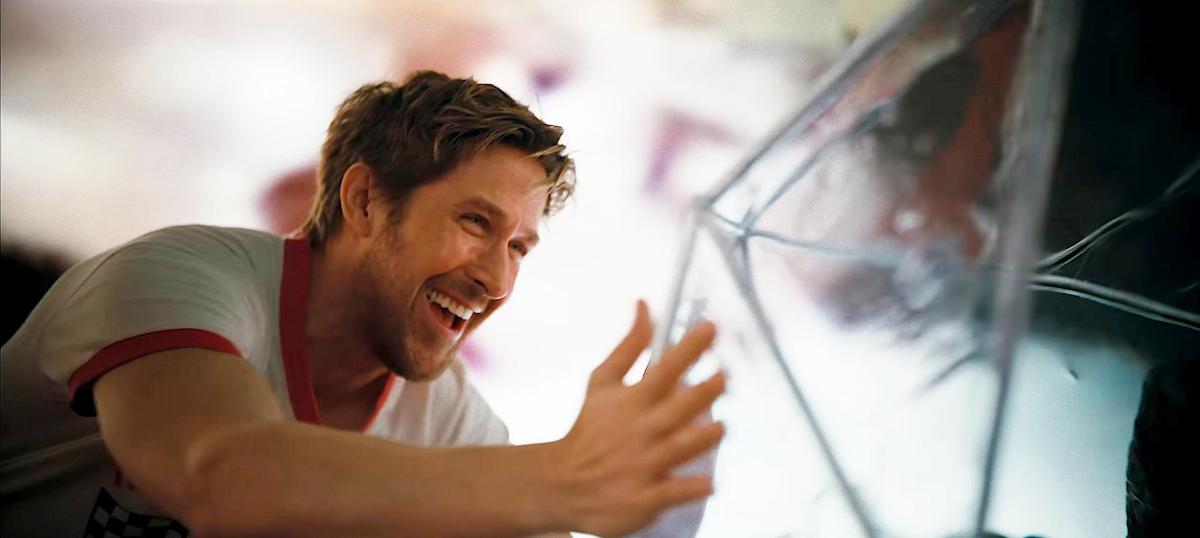
When Ryland meets and befriends Rocky, what unfolds is a kind of extra-species buddy movie. The mismatched partners must rely on each other in order to survive. Awkward teamwork eventually leads to deep friendship between the pair.
At different points in the story, both Ryland and Rocky are willing to sacrifice themselves for the other. As the Bible says in John 15:13, “Greater love has no one than this: to lay down one’s life for one’s friends.” The greatest example of this principle is when Christ sacrificed himself for us: “But God demonstrates his own love for us in this: While we were still sinners, Christ died for us” (Romans 5:8).
While helping Rocky build a habitat, Ryland says he feels like he’s being “trapped in hell,” so we know he’s familiar with the place of eternal damnation from the Bible. But even though he repeatedly employs the name of God (See: Offensive Language/Vulgarities), it’s uncertain if Ryland believes in God. Before the launch, he asks Eva if she believes in God. Her less-than-definitive reply is, “Beats the alternative.”
Strangely, with the many marvels Ryland is exposed to during the movie—aliens, stars, planets and a ribbon of red particles that he basks in, the science teacher gives no indication that he’s been transformed by the divinely-fashioned wonders he’s witnessed. It seems unfathomable that someone could remain agnostic after taking a spacewalk with a roiling, multicolored alien planet as the backdrop. Our world, and the universe itself, is a witness to God’s greatness. “For since the creation of the world God’s invisible qualities—his eternal power and divine nature—have been clearly seen, being understood from what has been made, so that people are without excuse” (Romans 1:20).
Q & A

Walking through a hallway, Ryland peruses a plaque that depicts Darwin’s ascent of man—apes gradually transforming into humans. Though in keeping with prevailing scientific thought, which is all too happy to remove God from the creation equation, it’s unfortunate that the Theory of Evolution is validated in this brief scene. This is how humans were actually created, “Then the Lord God formed a man from the dust of the ground and breathed into his nostrils the breath of life, and the man became a living being” (Genesis 2:7).
In one of the movie’s many heartwarming moments, Rocky calls Ryland brave. However, Ryland doesn’t see himself that way. He believes that some people are failures because they don’t rise to the challenge. He even jokes that he put the “not” in “astronaut.” Yet, when push comes to shove, Ryland always comes through. He’s the perfect definition of the everyday hero, the average person who prevails against all odds. There’s an old Sandi Patty song that goes, “In heaven’s eyes there are no losers.” The Bible reinforces this sentiment in Romans 2:11, “For God does not show favoritism.” Despite our brokenness, He loves us all.
A stark vision of human nature in crisis situations is posited by Eva, who projects that when the Earth starts freezing over, starving people will kill each other for food and supplies. It’s a sad commentary on the human predilection for extermination over cooperation in post-apocalyptic scenarios (look no further than dystopian movie series like “Divergent” and “The Hunger Games” and zombie TV shows like “The Walking Dead” for numerous examples of this). Though it might be convenient to excuse murder in such life-and-death situations, it’s still a violation of God’s righteous standard, “You shall not murder” (Exodus 20:13).
As with “The Martian” (2015), “Project…” features a man who uses his knowledge of science to survive. Also, like “The Martian,” nations from around the globe pool knowledge and resources to create a spaceship, which, in this case, represents the last, best hope for humanity. Though the circumstances and motivations were different than in “Project…,” the nations of the world came together to construct a tall structure in the Tower of Babel account in Genesis 11:1-9. While the world coming together for a common purpose would seem to be a good thing (definitely not the case with the evil Tower), such unity also could lead to the creation of a one-world government and give rise to the Antichrist (Revelation 13).
During a meeting with top scientists, someone mentions that the project name derives from the American phrase for when people are in a hopeless situation. Ryland agrees that it means a last-ditch attempt at achieving a goal.
Objectionable Material
OFFENSIVE LANGUAGE/VULGARITIES: For a PG-13 movie, “Project…” is kind of a white unicorn in the swearing department. There are no curse words in the film. It does contain some irreverent speech, such as, “Oh, my God” (5) and the borderline “God willing” (1). There’s also some mildly offensive speech like, “p*ssing people off” (1), “stupid” (1), and “fudge” (1) in place of the f-word. Though not expressly stated in the movie, the book gives us an explanation for why Ryland doesn’t swear. While his brain is still addled with amnesia, Ryland says “heck” or “darn” and wonders why he didn’t use a curse word. He assumes this means he’s a priest.
ALCOHOL/DRUGS: A beer is mentioned in a song. Ryland says he owes an astronaut three bags of vodka. At a party, we see bottles of beer, glasses of alcohol and glasses of wine. Many people are shown imbibing. One person mentions heroin in casual conversation.
NUDITY AND SEXUAL CONTENT: There’s no sex or nudity in the movie. A scientist says, “They’re going to Venus to breed,” which is a fairly inoffensive way of describing how a virus is procreating. At the party, it’s mentioned that some couples are “hooking up.” One character mistakenly says “fist my bump” instead of “fist bump,” which might be interpreted as something vulgar.
VIOLENCE AND GRAPHIC CONTENT: There’s very little violence in the film, save for a sequence where government security men chase and tackle Ryland to the ground. Kids talk about dying in one scene. We see the pale corpse of a woman in a couple scenes and then two dead bodies wrapped in blankets. The force from a large explosion knocks some people to the ground. There’s a passing reference to suicide in one scene, within the context of a “suicide mission.” There are a few suspenseful scenes when Ryland first meets Rocky. Some of the action sequences—like when Ryland goes out on a spacewalk or when Ryland passes out after pulling the ship out of a planet’s atmosphere—might be too intense for some viewers. In another potentially disturbing sequence, Rocky drags Ryland into the medical bay; the alien leaves behind a trail of black ash where oxygen has charred his physical structure.
Final Thoughts
“Project Hail Mary” is a high-stakes, high-octane thrill ride with terrific performances, stellar direction, and mind-blowing production design and visual effects.
But does the ending do justice to the movie’s strong setup?
My greatest concern with the translation from novel to script was that the ending would be botched. The book leaves things open-ended, allowing the reader to draw their own conclusion as to which fate Ryland chooses. Something about the novel’s ending reminded me of the resolution in Bradbury’s “The Martian Chronicles.”
As “Project” wound down to its final scene, I held my breath in a mixture of worry and anticipation…and then experienced a euphoric release when the story stuck the landing. The movie’s perfectly-executed coda is the ultimate grace note in one of the finest examples of sci-fi high art in cinema history.
Project completed.
- Drugs/Alcohol: Moderate
- Violence: Mild
- Sex: Mild
- Profane language: Minor
- Vulgar/Crude language: Minor
- Wokeism: Minor
- Nudity: None
- Occult: None
See list of Relevant Issues—questions-and-answers.

Moral rating: Good / Moviemaking quality: 5
PHM is based on the book by Andy Weir, who also wrote The Martian. It was one of the movies I looked and thought “Hey, this might be good.” Then after reading the book, my thoughts turned to “Wow! If they know what they have here, this could actually be a better movie than The Martian.” Leading up to the movie, I had pretty high hopes, especially considering the duo who directed the Spider-Verse flicks were behind this. There was no way it could fail.
Well, would you believe me if I told that even with my high expectations, this film still exceeded it? Yep. They knew what they had here. PHM, like Lord and Miller’s other films, manages to balance humor, spectacle, and heart each to such extreme degrees it feels like a cinematic magic trick, leaving you guessing as to how they did it.
I won’t delve too much into the plot. But what I will say is the relationship between Grace and Rocky becomes the real driving force behind the story and it’s storytelling. As their characters unwind throughout the film, we see them bond, work together, and come to realize the real value of sacrifice. It’s perfectly handled, leading to some fun comedy and unique interactions, but also some very strong emotional beats. It really says something when a flick about a guy and a rock manages to get you to care more about a rock than most protagonists of modern-day films.
Besides that, the film is fast-paced without losing detail, perfectly complex without being confusing (at least to me, though I have read the book beforehand), and it’s gorgeously filmed. I saw this on an IMAX screen and it was breathtaking to look at, the universe in all its glory, along with the green and salmon planet they visit and the enormous alien spaceship.
This would be a perfect 5/5 movie, but there are a couple of small details that I felt the movie kinda glossed on that really propelled the book. The biggest being how as a schoolteacher, Grace thought of his students as his children and states outright that he doesn’t want them to perish in a post-Apocolyptic winter wasteland. That provided the book with some emotional investment in the first third of the film.
Still, those things are mainly just nitpicks. And they’re forgivable because they needed the film to stay at 2 1/2 hours, yet they still kept all the important parts intact. Otherwise, this is about as good a movie adaptation you can get out of an already expertly crafted, emotionally moving book. Like Lord of the Rings, it says something when your film adaptation still “rocks” even if it doesn’t fully live up to the source material.
From a Christian perspective, there’s not much I can delve into without spoiling it. But what I can say is it deals with themes of sacrifice, loneliness, friendship, and teamwork in a way that’s both human and morally grounded. You’ll know what I mean when I see the film. Grace isn’t a perfect man, but his development, and the story he’s in, really do exemplify the words of John 15:13 that there is no greater love than for a man to lay his life down for his friends, even in unfortunate, and even unfair, circumstances.
There are some surprisingly overt Christian elements here too, besides the ship’s name, of course, which we know is there because “Hail Mary” means essentially a “long shot.” In one scene, Grace asks Stratt if she believes in God and she says she does because it’s better than the alternative. And the movie ends with a gospel song. Neither of those things are huge. But in the book, God isn’t brought up except in one conversation with a colleague to briefly tap into how faith is good for some people. And it got easily overshadowed by the many references to evolution as to how the story’s world worked. I’m not sure if toning down virtually most of the evolutionary references made the film’s tone more “Christian” per se, but it did allow those few faith-inspired bits to stick out more than they did in the book, which as a Christian I appreciated, though I guess a few might take an image of people looking up to the “Hail Mary” spaceship or Grace giving Rocky a p
Content-wise, I was actually taken aback by how much the film restrained itself, especially considering it’s source material. The film is rated PG-13 for “some thematic material and suggestive references, ” which is fair. The emotional gravitas can be a bit much for kids, and there are a couple stray, but humorous, sex-related comments such as when Grace is discussing how astrophage find a place to breed and say “Whoop. There it is” or when Rocky tries to say “fist bump” and accidentally says “fist my bump” a couple of times.
Outside of that, though, the language is only as strong as one instance each of “p*ss, ” “bugger, ” and “fudging fudge.” Plugged In and Movieguide heard a few OMGs. I personally didn’t, but I’ll take their word for it. There is some peril, but no graphic injury. And there’s no nudity or drug use anywhere.
And that’s a little surprising because the book it was based on had content a little more in line with the previous Andy Weir film, The Martian. It had infrequent moderate to heavy language including instances of “*ssh*l*”, “g*dd*mn, and the s-word. There were also 4 f-words. The sexual references were also more frequent and typically less “suggestive.” They could also be a little crude too. And like I said before, the constant evolutionary references weren’t spiritually uplifting.
A movie accurate version to the book would’ve likely been an R on technically due to the language bordering on a PG-13 (and would’ve gotten an “offensive” rating from me). Meanwhile, the film version is a PG-13 mainly due to its subject matter and a few off-color quips bordering on a PG. This is actually one of the cleanest PG-13 movies I’ve seen in quite some time and while parents might want to use caution with kids, I have no problem recommending Project Hail Mary to teens and adults.
On top of that, PHM is just flat out one of the best movies of the year so far. Lord and Miller really know how to cook up a masterpiece. And considering they already had a lot to live up to considering its source material was as intellectually and emotionally engaging as it was, to see that they actually almost match it is downright miraculous. If you can, I highly suggest you see PHM whenever you can, especially while it’s playing in IMAX. It’s the best space movie to come out in recent times maybe since “The Martian” and deserves all the hype.
Moral rating: Better than Average / Moviemaking quality: 4½
PLEASE share your observations and insights to be posted here.
My Ratings: Moral rating: Better than Average / Moviemaking quality: 4