A Great Awakening
 for brief violence.
Reviewed by: Rev. Bryan Griem
CONTRIBUTOR
| Moral Rating: | Good |
| Moviemaking Quality: |
|
| Primary Audience: | Adults Young-Adults Teens |
| Genre: | History Drama |
| Length: | 2 hr. 9 min. |
| Year of Release: | 2026 |
| USA Release: |
April 3, 2026 (wide release—1,289 theaters) Amazon Prime Video: May 5, 2026 DVD: June 2026 (Sight-Sound) |
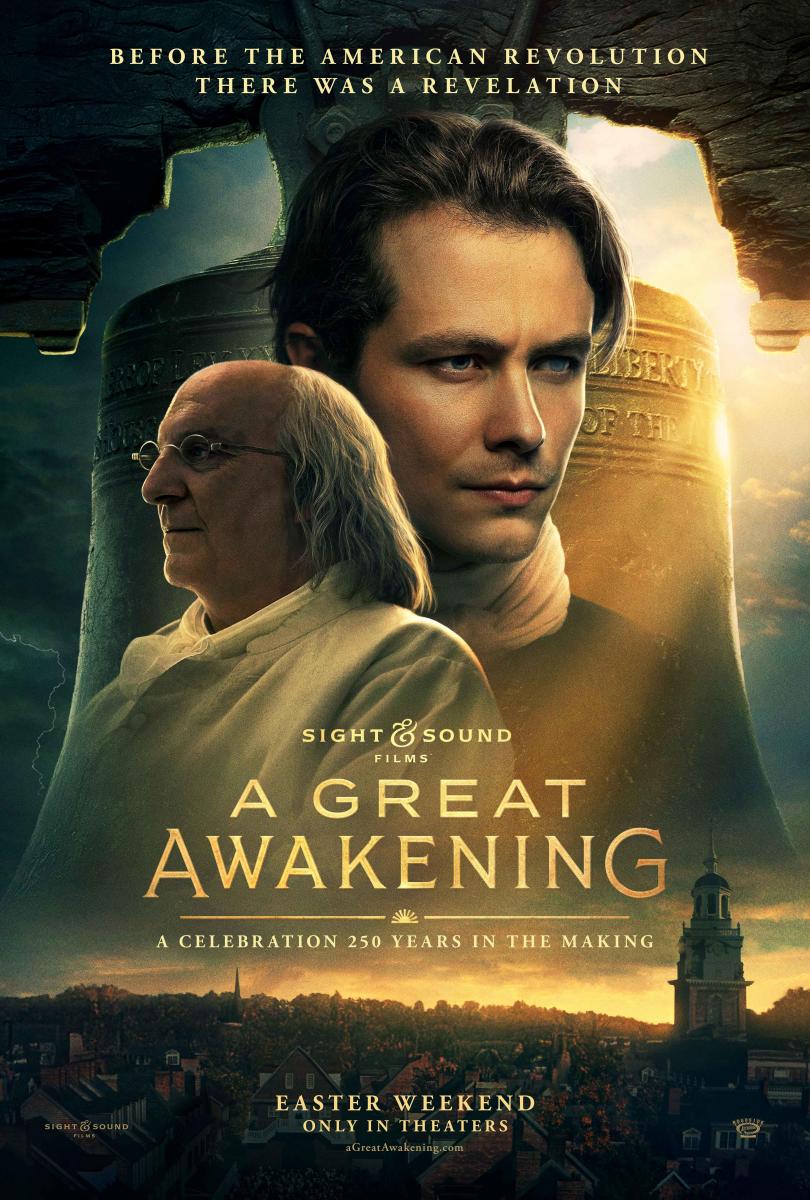


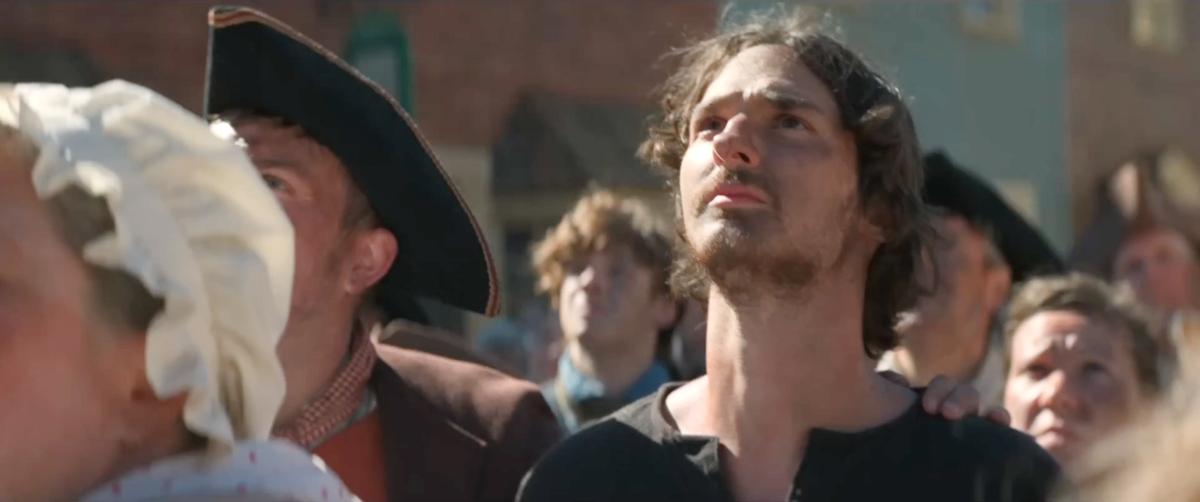
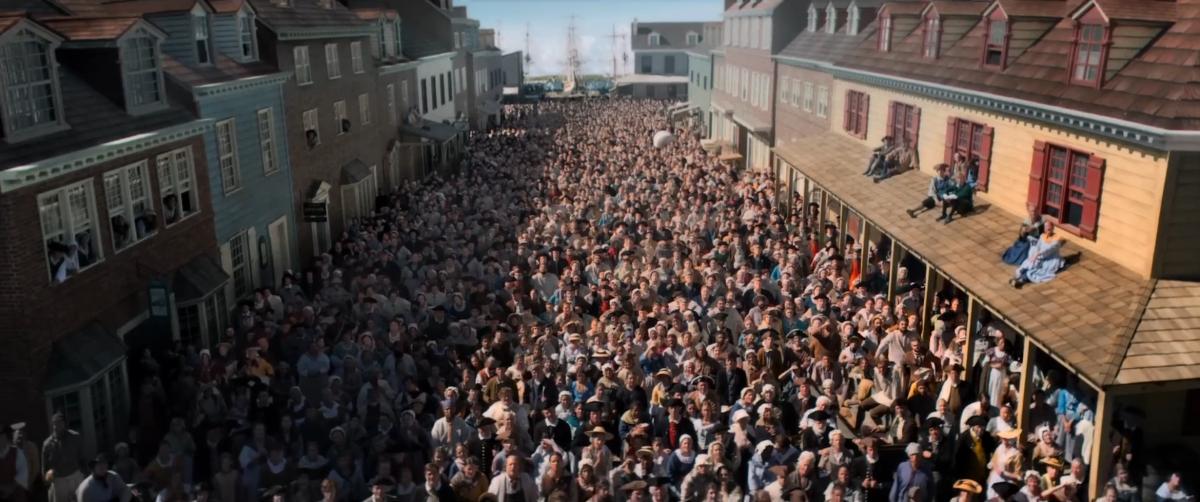
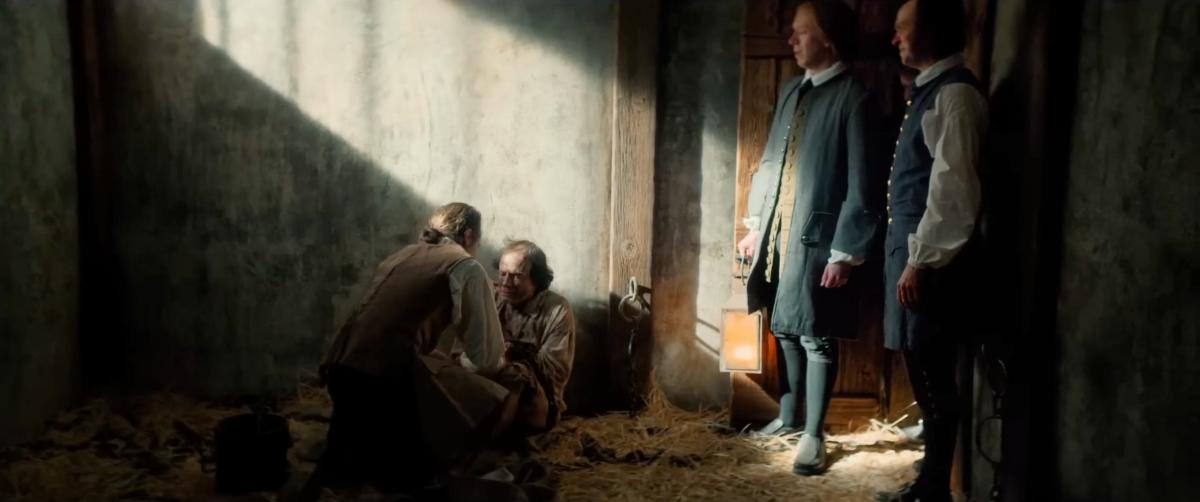
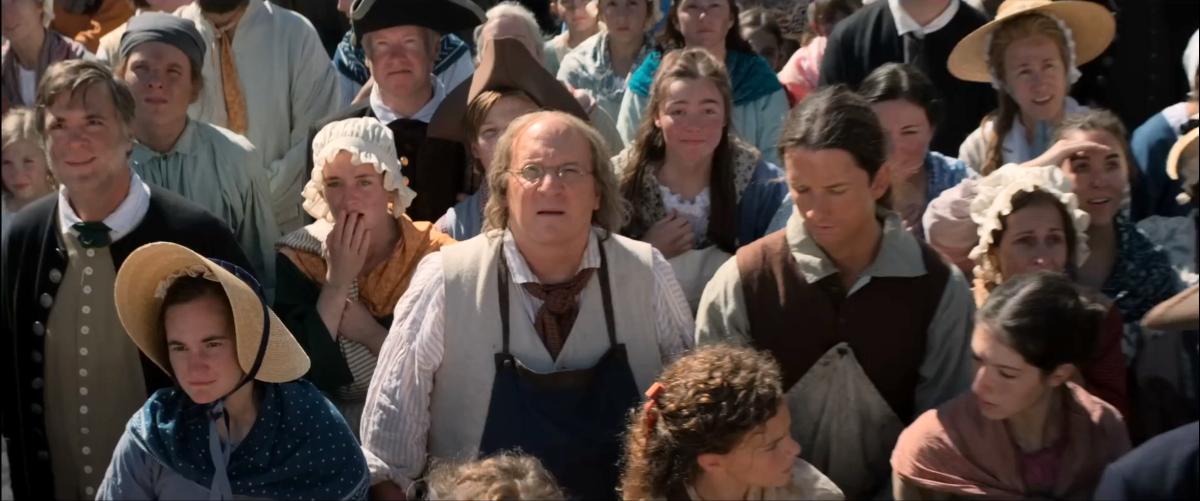
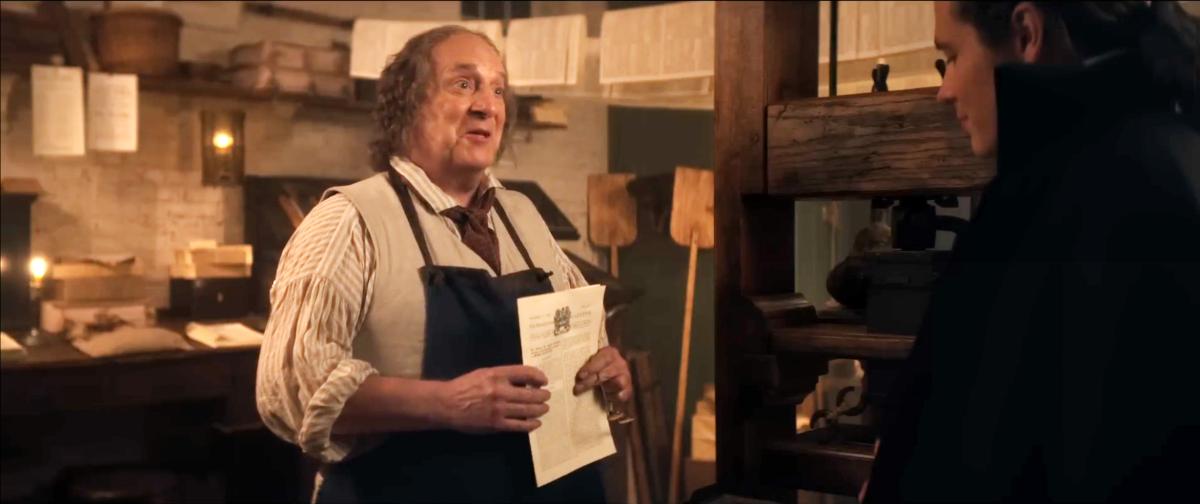
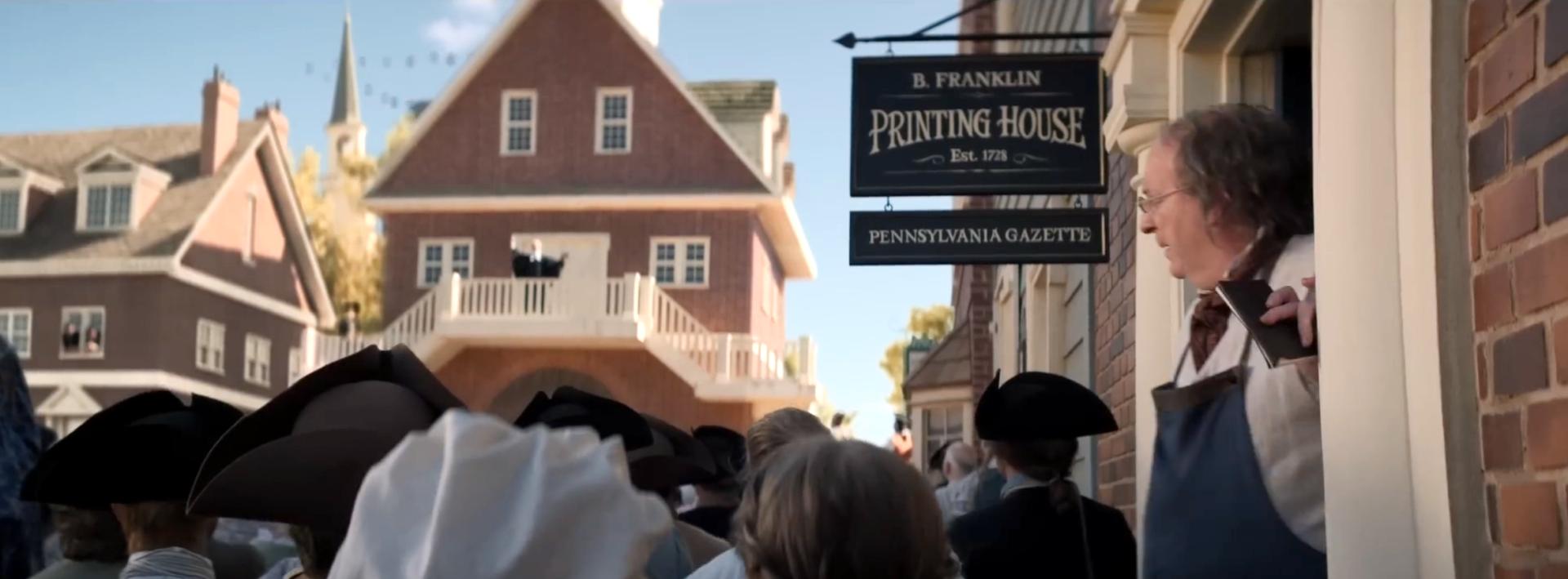
The friendship between Rev. George Whitefield and Benjamin Franklin, and Whitefield’s impact during the Great Awakening religious movement—one of the most defining moments in American history

What is sin and wickedness? Is it just “bad people” that are sinners, or are YOU a sinner?
Are you good enough to get to Heaven?
How good is good enough to receive entrance to Heaven?
What is repentance, and why is it very important?
THE FEAR OF THE LORD—What is it? Why is it very important?

 Why is our level of humility important to God?
What is faith and why is it very important to God?

What is a true Biblical Christian?
What is spiritual regeneration (being born-again)?

| Featuring |
|---|
|
John Paul Sneed … Benjamin Franklin Jonathan Blair … George Whitefield Carson Burkett … John Wesley Caleb Hughes … Charles Wesley JT Schaeffer … Benny Franklin Bache Josh Bates … Alexander Hamilton Stephen Foster Harris … William Blount Zac Johnson … Caleb Strong Matt Meyer … Robert Yates Zachary Amos … Oxford Servitor See all » |
| Director |
|
Joshua Enck |
| Producer |
|
Sight & Sound Films Steve Buckwalter Troy Thorne |
| Distributor |

This is a great movie that certainly awakens the heart. It begins in the childhood of the two main characters, Benjamin Franklin and George Whitefield, who are separated in age by about nine years. Ben worked in the chandler shop of his father in Boston, who hoped the boy would grow up to be a preacher, while “Georgie” worked in his mother’s tavern in Gloucester, England (where there were stage performances) and so it was presumed the boy would grow up to be an actor. But the actor got Born-again and became a dramatic preacher, while the candle-maker became a master communicator through the printed word, and one of our country’s greatest Founding Fathers.
The movie touches on the decades leading up to and through the American Revolution, and the persuasive preaching of Whitefield was most influential to that end. Depicted is the spirit of those times, when child labor was a fact of life, slavery was in full swing, and the nation’s future was not so certain. The period of the film helps present a nice time frame for many famous characters of history: in Franklin’s political circle were the likes of Washington, Jefferson, and Hamilton, and in Whitfield’s were the Wesley brothers and Edwards.
The film is not especially violent except for some pushing and bullying, but one uncomfortable scene has some miners hurling chunks of coal at the unwelcomed preacher’s face. He bleeds, shakes it off, and then winds up baptizing them.
I counted two scenes of Franklin imbibing; they are brief, and he is not intemperate. The credits list one drunken sailor character that must have just flown past because I was unaware. Then, there is the aforementioned tavern, so patrons drank, but no smoking or drug use is depicted. There were also prostitutes identified in the credits, but the one I suspect is included was not lewd or obviously of that occupation, she was simply leaning against a post in the middle of the bustling town. There is little sexual anything in this movie, except that Franklin’s infidelity is suggested when he appears at the theater with a woman not his wife. He also invented a collapsible catheter which made for an awkwardly amusing moment when someone asked its purpose.
Franklin was a person who found God seldom in anything, if at all, as everything to this polymath could be explained without Him. But in the end, after a whole film of Whitefield’s thunderous evangelism, Franklin yielded to the possibility that America’s problems could best be remedied by invoking his distant god’s aid, and so it was. The minced oath of “Blast it” was uttered by Franklin, and “Dear God” as an expletive also. “Dung, ” too, was mentioned at some point. The films rating is PG-13.
The actor who played Whitefield was compelling and believable, repeatedly calling for people to be “Born-again, ” and to “Awaken.” Nobody was sleeping in our local Wanee movie theater, and I pray this production not only strengthens believers, but stimulates unbelievers to faith. Oh, and I project the new hymn introduced on the soundtrack will soon be sung in churches everywhere; it’s wonderful.
- Violence: Moderate
- Alcohol: Moderate
- Profane language: Mild
- Vulgar/Crude language: Minor
- Nudity: None
- Sex: None
- Occult: None
- Wokeism: None
See list of Relevant Issues—questions-and-answers.

PLEASE share your observations and insights to be posted here.
So when I heard from my friends and family, and eventually Ray Comfort, that “A Great Awakening” was actually fantastic, I approached their claims with a grain of salt. Just recently, though, I got a chance to experience this Great Awakening for myself. So trust me when I say it was actually pretty good.
This story follows the story of George Whitefield and his evangelical journey through the colonial days of America, preaching to thousands, something street preachers at the time couldn’t hope to accomplish, empowered by the grace of God and the Holy Spirit.
It starts out with his early life and how he came to Christ through John Wesley. Then, when he moves to America with his new divine purpose, he starts up a partnership with Benjamin Franklin at a local printing press, who helps him to spread the word about Whitefield’s whereabouts and teachings.
Ben considers himself a virtuous man, although he does not confess Christ as Lord and Savior. But through his relationship with George, he eventually is brought to just how little works actually do in the process of salvation. And finally, the film covers how the realization of the true Birth of the Holy Spirit leads Ben to later form join Congress and advocate that the new country of America join under the authority of Jesus Christ…
This film leaves a lot to discuss in its spirituality, but from a filmmaking quality, I have to give credit where its due. The cinematography is strong, bright, and vibrant. It actually gets creative with its shots at times and utilizes sweeping camera movements, colors, and the deliberate placement of people in the frame to convey the themes and scope of its story, something a shocking number of Christian films tend to forget can even be done.
The score is wonderful. And the characters’ acting is all around great. Johnathan Blair specifically is a standout, who sells Whitefield’s passion and commanding presence perfectly. The story is well told and well paced, the spiritual discussions are genuinely convicting and powerful, as they should be, and the emotional moments land.
That’s not to say that the movie is perfect, though. Sight and Sound is best known for their stage productions, and so I think some of their storytelling techniques haven’t come through on-screen as strongly as they think they would, that is to say as they would have come through on stage.
One big thing that stands out is how overly expressive and loud its characters are. For George Whitefield, it’s understandable, and I believe creating a story where he’s one of the main characters helps the movie out. But to see people in cabinet meetings get extremely passionate, to see Benjamin Franklin lash out like he does on George seems like overkill and feels like a place where some letting the dialogue and some tonal subtlety carry the picture would’ve done it some good. This also goes to the cinematography which is also bright and colorful throughout, but could’ve stood to probably lose its vibrancy in the darker moments. On stage, the set design, lighting, and acting have to carry off the
Actually, there is one other small issue I had with the film, and it was closer to the end when the focus turned from being between the George and Ben’s relationship to being about the Revolution and the formation of America. While this was technically where we all knew the story was leading, its connection to the foundation of America wasn’t built up enough during the first three quarters of the film, so it felt like the ending kinda came out of nowhere.
The longer you ponder it, the more you realize how the film’s scope should’ve honestly been a little bigger to fit this theme and brought up patriotism more often as well. But thankfully, by that point, the film is already wrapping up, not allowing the film to get too unfocused.
Now, the film’s gospel message is what really makes “A Great Awakening” stand out, even among other Christian movies. If anything, it brought to my attention how strange it is that people call America a Christian nation, and yet the call to quit relying your own righteousness and simply receive the free gift of salvation through repentance and faith in Jesus Christ is just as radical now as it was back then.
We saw it in both George Whitefield in his early days and through Benjamin Franklin in most of his life how easily men are drawn to the idea that salvation is something you must earn. And it’s easy to see why for different reasons. For George Whitefield, it was because he followed the command to repent which is given to all believers (Matthew 3:8, Luke 3:8) and tried his best to crucify the flesh (Galatians 5:28). But he didn’t understand that what puts us in right relationship with God isn’t how much we crucify our flesh, but through our faith that Jesus Christ has paid it all…
Meanwhile, Benjamin Franklin chooses to rely on his own righteousness mainly because of pride. He’s grown up in a Bible-thumping environment, where his father told him he was destined to become a preacher. And without the love of Christ that comes from being born again (John 3 is a passage referred to a lot in this film), he ran from it, choosing to take a vague deist route where the more virtuous he can be, the better shot he has of letting his works speak for the way he led his life. This is the same mindset the Pharisees had that Jesus spent much of his time rebuking, and even the false teachers that the Apostle Paul rebuked in passages like 2 Timothy 3:5.
Thankfully, Ben changes his ways, albeit after George Whitefield’s death, and uses it being America under a new authority (more on that later).
Some people I know read into this movie that the message is that you can’t work for salvation. No, absolutely not. George Whitefield clearly taught that repentance unto salvation is an active lifestyle of turning from sin, not merely a mindset. And as Jesus taught, whether the individual chooses to abide by that decision each and every day is what proves whether or not you are truly His (Matthew 24:13, Luke 8:4-15). But the movie’s message is the same as Jesus in John 3 when he states that “unless one is born again” and “unless one is born of water and the Spirit, he cannot enter the kingdom of God.” The issue is in trusting that those works will add up to something that’ll “impress God” enough for Him to save us. We don’t take the credit for God’s salvation for us. Jesus paid it all, and the only thing we can do to to receive the grace of God is to repent from sins and believe that Jesus is the Savior He says He is. …
Now, while the film’s view of God and America is brief, it is interesting. Benjamin Franklin’s appeal at the Constitutional Convention that daily prayer must be held before every meeting to seek God’s wisdom in running the new nation is an absolutely great one. And while I haven’t done enough research to determine if the colonist’s view of unalienable rights came from George Whitefield’s teachings and his view of man through God’s eyes. But if it did, it has also become a fortunate source of godly values in American government. The fundamental problem with America, though, is that it’s founded on a clear violation of the commands of Romans 13 for Christians to follow government even when we disagree with its leadership, unless they require us to denounce Christ, of course.
I hate to sound like the kind of Puritan legalist Whitefield was fighting, but you’d think of the colonists truly had a spiritual awakening, they would’ve realized that. I’m sure they were convinced in their own minds that rebellion from the British was biblically justified since the British were mistreating them. And if you ask me, I would say that God was using the formation of America as a wake-up call the British government to their mistreatment of those under their rule. After all, as they bring up in the movie, “there is no authority except from God, and those that exist have been instituted by God” (Romans 13:1)
But that would be the equivalent of saying God was using Joseph’s brothers selling him into slavery as a good thing. Yes, He did. But Joseph’s brothers still committed an act of pure evil. Paul does not give exceptions to Romans 13 for Christians being mistreated by those in higher power. In fact, that passage was written during the reign of Nero…
I’m sure many others have debated with Christianity and American patriotism on this point and have come to different conclusions. But this is where I stand.
Content: A Great Awakening is rated PG-13 “for brief violence” by the MPA and honestly, it could’ve easily been a PG in this reviewer’s opinion. The only act of violence I saw was when Whitefield tried to preach to a group of miners and got rocks thrown at him, causing him to spit blood a few times. There was no sexual content to my knowledge, except the verbal implication that Ben Franklin might’ve been with someone other than his wife for one night in France. Drinking was present, but only in minor portions. There was no drug use or profanity. At one point, while hearing the Gospel from George (while not being totally convicted), Ben Franklin says “Dear God,” though it’s unclear whether or not he’s using God’s name in vain. The reviewer, Rev. Bryan Griem, didn’t give him the benefit of the doubt, so I won’t either. Under most circumstances, even one misuse of God’s name is enough for me to knock the moral rating down to only a “better than average” in the best case scenario, even in
Bottom line: As you can tell, “A Great Awakening” left me with a lot to say about its worldview and lessons on pride, humility, repentance, and salvation. But what it does even better is that it doesn’t do it through the kind of cheesy, preachy, low-effort affair. It gives a genuinely intriguing story about two men who in time, became radicalized for the gospel. I get onto Christian movies for being preachy, but “A Great Awakening” escapes that criticism for two main reasons:
1. It’s a movie about a preacher. It'd be off-putting if there was no preaching, and 2. It offers to show the impact these two men had on their new nation instead of just having people constantly talk about it. For that reason alone, I believe this film to be worth a Christian’s time.
I could go on about the production quality and how it succeeds in many surprising manners (even if it could’ve been better in a few areas), but in the end, “A Great Awakening” allows the Gospel to shine for the true power that it contains…
My Ratings: Moral rating: / Moviemaking quality: