Who is…
Jeroboam
also known as: Jarobam
Hebrew: יָרָבְעָם —transliteration: Yarobam —meaning: the people increase, or people will contend —occurrences: 104
This is the name of 2 wicked kings of the Kingdom of Israel.
-
King Jeroboam I
King Jeroboam I is the son of Nebat (1 Kings 11:26-39).
Jeroboam is “an Ephrathite” and “a mighty man of valor” (1 Kings 11:28).
He became the first king of the 10 tribes of the Kingdom of Israel, over whom he reigned 22 years (976-945 BC).
He was the son of a widow of Zereda (Zeredah), and while still young was promoted by Solomon to be chief superintendent over all the labor force of the house of Joseph (forced laborers).
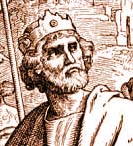 Artist’s impression of King Jeroboam I
Influenced by the words of the prophet Ahijah, he began to form conspiracies with the view of becoming king of the 10 tribes; but these having been discovered, he fled to Egypt (1 Kings 11:29-40), where he remained for a length of time under the protection of Shishak I.
On the death of Solomon, the 10 tribes, having revolted, sent to invite him to become their king. The conduct of Rehoboam favored the designs of Jeroboam, and he was accordingly proclaimed “king of Israel” (1 Kings 12:1-20).
King Jeroboam rebuilt and fortified the city of Shechem as the capital of his kingdom.
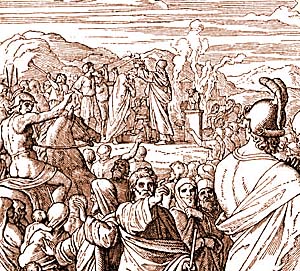 Golden calves erected by Jeroboam.
He at once adopted means to perpetuate the division thus made between the two parts of the kingdom, and erected at Dan and Bethel, the two extremities of his kingdom, “golden calves,” which he set up as symbols of Jehovah, enjoining the people not any more to go up to worship at Jerusalem, but to bring their offerings to the shrines he had erected.
Thus he became distinguished as the man “who made Israel to sin.” This policy was followed by all the succeeding kings of Israel.
While he was engaged in offering incense at Bethel, a prophet from Judah appeared before him with a warning message from the Lord. Attempting to arrest the prophet for his bold words of defiance, his hand was “dried up,” and the altar before which he stood was torn asunder.
At his urgent entreaty his “hand was restored him again” (1 Kings 13:1-6, 9; compare 2 Kings 23:15); but the miracle made no abiding impression on him.
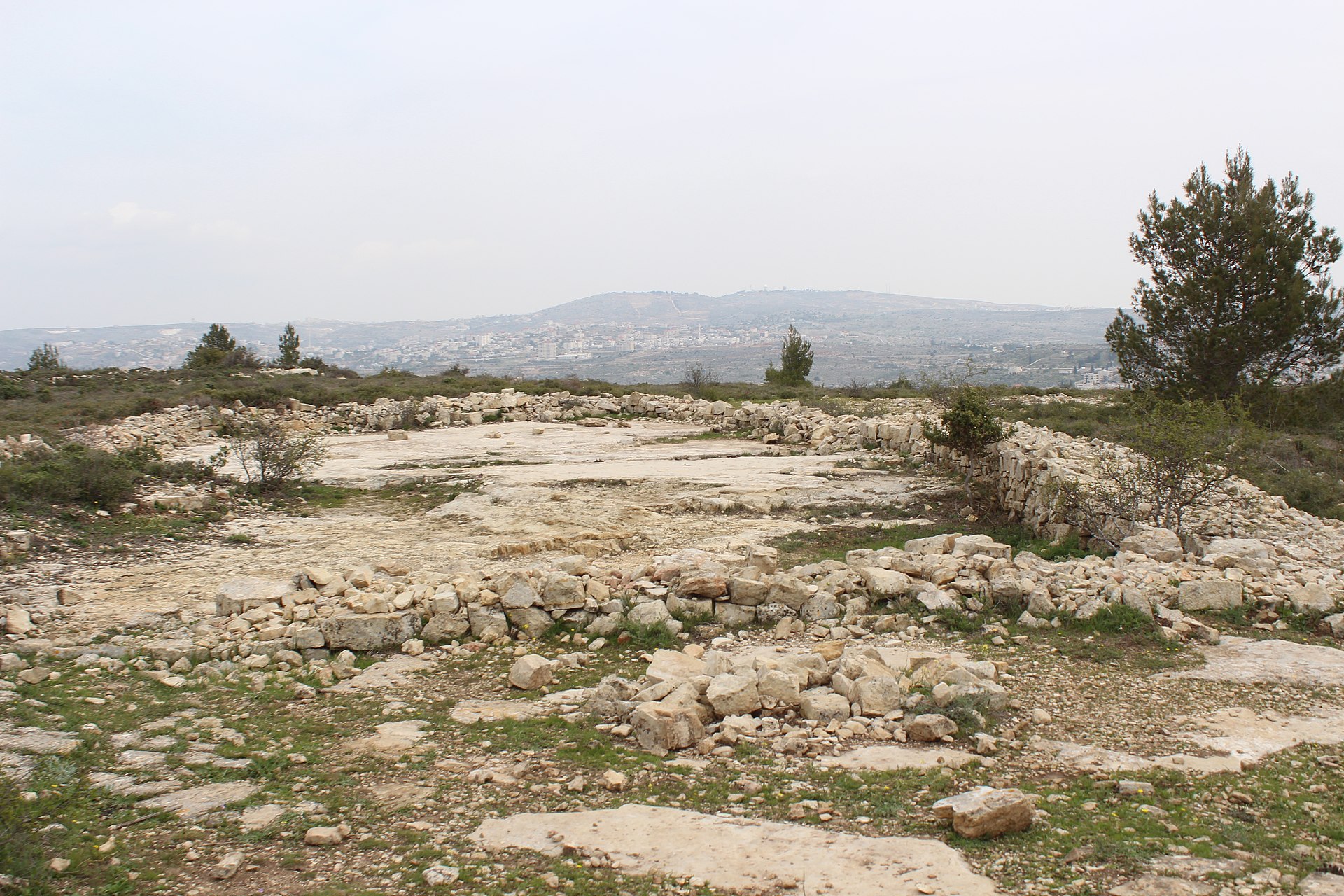 Ruins of King Jeroboam’s idolatrous temple at Bethel. Photo © Deror Avi. License: CC BY-SA 4.0.
His reign was one of constant war with the house of Judah.
God communicated his final judgment on Jeroboam through the prophet Ahijah.
Thus says Yahweh, the God of Israel, “Because I exalted you from among the people and made you ruler over My people Israel, and tore the kingdom away from the house of David and gave it to you—yet you have not been like My servant David, who kept My commandments and who walked after Me with all his heart, to do only that which was right in My sight; you also have done more evil than all who were before you, and have gone and made for yourself other gods and molten images to provoke Me to anger, and have cast Me behind your back—therefore behold, I am bringing evil on the house of Jeroboam:
I will cut off from Jeroboam every male person, both bond and free in Israel, and I will make a clean sweep of the house of Jeroboam, as one sweeps away dung until it is all gone. Anyone belonging to Jeroboam who dies in the city the dogs will eat. And he who dies in the field the birds of the sky will eat; for Yahweh has spoken it.”’ —1 Kings 14:7-11 LSB
He died soon after his son Abijah (1 Kings 14:1-18).
Q & A -
King Jeroboam II
King Jeroboam II is the son and successor of King Jehoash. He was the 14th king of the Kingdom of Israel, over which he ruled for 41 years, 825-784 BC (2 Kings 14:23).
He followed the example of the first Jeroboam in keeping up the idolatrous worship of the golden calves (2 Kings 14:24).
His reign was contemporary with those of Amaziah (2 Kings 14:23) and Uzziah (2 Kings 15:1), kings of Judah. He was victorious over the Syrians (2 Kings 13:4; 14:26-27), and extended Israel to its former limits, from “the entering of Hamath to the sea of the plain” (2 Kings 14:25; Amos 6:14).
His reign of 41 years was the most prosperous that Israel had ever known as yet.
With all this outward prosperity, however, iniquity widely prevailed in the land (Amos 2:6-8; 4:1; 6:6; Hos. 4:12-14). The prophets Hosea (Hosea 1:1), Joel (Amos 1:1-2), Amos (Amos 1:1), and Jonah (2 Kings 14:25) lived during his reign.
He died, and was buried with his ancestors (2 Kings 14:29). He was succeeded by his son Zachariah.
His name occurs in Scripture only in 2 Kings 13:13; 14:16, 23, 27-29; 15:1, 8; 1 Chronicles 5:17; Hos. 1:1; Amos 1:1; 7:9-11. In all other passages, it is his father Jeroboam the son of Nebat that is meant.