What and who is…
Shechem
also known as: Sichem (Genesis 12:6 KJV) (see other names)
Shechem is the name of 2 biblical men and a city central to Israelite history, where very important Biblical events took place.
Shechem, a city in ancient Canaan (and later Samaria) on the highway to Jerusalem
Ancient Shechem sat in a narrow east–west pass in the central hill country of the Tribe of Ephraim (later Samaria), about 30 miles (48 km) north of Jerusalem. Its location is said to be beautiful. It controlled the watershed ridge road (the “Way of the Patriarchs”) and the pass between two mountains that form a natural amphitheater. That geography explains why so many covenant, family, and political events in the Hebrew Bible cluster here.
The name of this city first appears in Genesis 33:18. It was a very old Canaanite city that stood in a strategic narrow sheltered valley between Mount Ebal on the north and Mount Gerizim on the south—these mountains at their base being only some 500 yards apart.
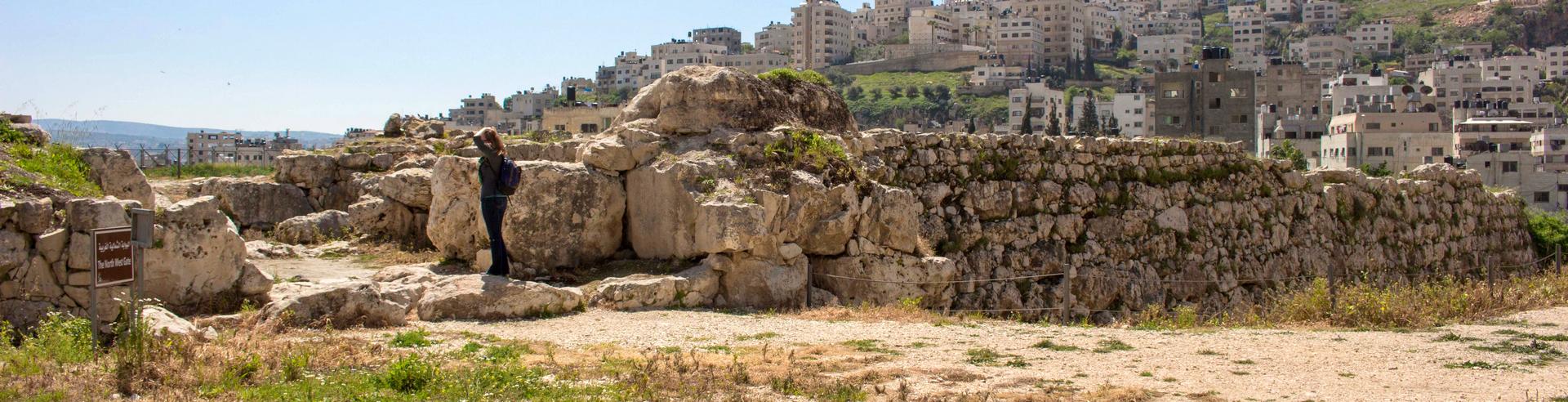
It is considered one of the oldest settlements in Canaan. Known named rulers or “kings” of ancient Shechem are few. Shechem was an important Canaanite city-state in the central hill country (modern Tell Balata near Nablus), but it did not leave a continuous royal dynasty or long king list like some other ancient Near Eastern cities. Surviving references come mainly from the Hebrew Bible and the 14th-century BC Amarna letters.
Jacob bought the plot and it was later given to his son Joseph (Genesis 33:19; 48:22; Joshua 24:32), and Joseph’s bones were buried there. The whole region was Josephite country; the two brother-tribes (Ephraim and Manasseh, Joseph’s sons) shared a long, interlocking border.
After the Israelite conquest, Shechem belonged to Tribe of Ephraim (Joshua 20:7; 21:21; 1 Chronicles 6:67; 7:28; 1 Kings 12:25). It sat on the northern edge of Ephraim’s territory. The Tribe of Manasseh border ran just east of the city (Joshua 17:7).
Ephraim held the southern half of the central hill country (the “house of Joseph”); western Manasseh held the northern half, up toward the Jezreel Valley. Shechem sat in the pass between Gerizim and Ebal, which put it at the northern limit of Ephraim.
Overlooking the city of Shechem is Mount Ebal where the first great altar to YHWH was built by Joshua (SEE: Mount Ebal).
Biblical events at Shechem
-
Abraham arrives
Here Abraham pitched his tent and built his first altar in the Promised Land, and received the first Divine promise.
And Abram passed through the land as far as the site of Shechem, to the oak of Moreh. Now the Canaanite was then in the land. Then Yahweh appeared to Abram and said, “To your seed I will give this land.” So he built an altar there to Yahweh who had appeared to him. —Genesis 12:6-7 LSB
-
Abraham purchased the Cave of Machpelah here
“Purchased for a sum of money from the sons of Hamor [descendants of Heth] in Shechem” (Acts 7:16; Genesis 25:9-10)
This became the burial place of his wife Sarah and of Abraham himself, and also of his son Isaac, Rebekah, Leah, and Jacob (named Israel by God) (Genesis 49:31; 50:13). (also see: Ishmael)
-
Jacob bought land here
Jacob “bought a parcel of a field at the hands of the children of Hamor” the Hivite after his return from Mesopotamia, and settled with his household, which he purged from idolatry by burying the teraphim of his followers under an oak tree, which was afterwards called “the oak of the sorcerer” (Genesis 33:19; 35:4; Judges 9:37). (See Meonenim.)
-
Jacob’s Well
Here too, after a while, Jacob dug a well, which bears his name to this day (John 4:5, 39-42).
-
Hamor, prince of Shechem
also known as: Emmor
Period: Patriarchal era (traditional biblical dating, roughly Middle Bronze Age context in Genesis).
Description: Hivite “prince of the land” / “prince of Shechem” (Genesis 33:19; 34:2). Father of the young man named Shechem (below). Jacob purchased land from “the sons of Hamor.” Later texts refer to the inhabitants as “the men of Hamor” or “sons of Hamor” (Judges 9:28). He is the local chief/ruler of the city and its territory rather than a formal “king” in every translation, but he functions as the head of the Shechemite society.
-
Dinah raped and all the males of Shechem massacred
Jacob’s sons Simeon and Levi killed Hamor the Hivite who ruled the city, his son Shechem, and all the other males of the city of Shechem because the son had taken and violated their sister Dinah. Jacob’s sons tricked the men by demanding that every male in Shechem be circumcised as a condition for intermarriage with their Hebrew daughters. On the 3rd day, while these men were still in pain and unable to fight, Simeon and Levi attacked the unsuspecting city, slaughtered every male, killed Hamor and Shechem themselves, and retrieved Dinah.
The other brothers then looted the city and took its women, children, and livestock.
Jacob rebuked them for the massacre, saying it had made his household odious to the surrounding Canaanites and Perizzites and put the whole family in danger. In his deathbed blessing (Genesis 49:5–7) he again condemned their violence and prophecied that their descendants would be scattered in Israel.
-
Joshua’s covenant with the Israelites
The acoustics of the valley between the two mountains are famous; voices carry easily from the slopes into the pass.
Joshua “made a covenant with the people that day” at the very place where, on first entering the land, they had responded to the law from Mount Ebal and Mount Gerizim (Joshua 24:25), the terms of which were recorded “in the book of the law of God”, i.e., in the roll of the law of Moses; and in memory of this solemn transaction a great stone was set up “under an oak” (compare Genesis 28:18; 31:44-48; Exodus 24:4; Joshua 4:3, 8-9), possibly the old “oak of Moreh,” as a silent witness of the transaction to all coming time.
Joshua’s Great Witness Stone Discovered at Shechem“Has Joshua’s Altar Been Found on Mt. Ebal?”See: Mount Ebal and Mount Gerizim, what is their significance?
-
Joshua’s parting speech
Joshua assembled the Israelites here and gave a parting address here. He gathered all Israel to Shechem “before God,” and delivered to them his 2nd parting address (Joshua 24:1-15).
-
City of Refuge
Shechem became one of the 6 cities of refuge, the central city of refuge for Western Israel (Joshua 20:7).
 What is a city of refuge? and how many were there? Are they a “Sanctuary City”?
 -
Levite city
Shechem became a Levite city of the Kohathite clan (Joshua 21:20-21).
-
Tomb of Joseph, son of Israel
Here the bones of Joseph were buried (Joshua 24:32).
-
King Jeroboam I, son of Nebat ruled here
Evil King Jeroboam rebuilt and fortified the city of Shechem as the capital of his kingdom.
-
King Rehoboam’s coronation
Rehoboam, son of Solomon, was appointed king in Shechem (1 Kings 12:1, 19).
-
Christ’s famous conversation at Jacob’s Well with a Samaritan woman
This city is mentioned in connection with our Lord's conversation with the woman of Samaria.
He [Christ] left Judea and went away again into Galilee. And He had to pass through Samaria. So He came to a city of Samaria called Sychar [Shechem], near the parcel of ground that Jacob gave to his son Joseph; and Jacob’s well was there. So Jesus, being wearied from His journey, was sitting thus by the well. It was about the sixth hour.
There came a woman of Samaria to draw water. Jesus said to her,
“Give Me a drink.”
…the Samaritan woman said to Him,
“How is it that You, being a Jew, ask me for a drink since I am a Samaritan woman?” (For Jews have no dealings with Samaritans.)
Jesus answered and said to her,
“If you knew the gift of God, and who it is who says to you, ‘Give Me a drink,’ you would have asked Him, and He would have given you living water.” —John 4:3-10 NASB
“Archaeology of Jacob’s Well at Shechem”
Abimelech (son of Gideon/Jerubbaal)
Abimelech was explicitly made king by the citizens of Shechem and Beth-millo (Judges 9:6). He is a son of the judge Gideon by a Shechemite concubine. He secured support from his mother’s kin and the “lords of Shechem,” massacred most of his half-brothers, and ruled for 3 years (Judges 9:22).
His rule centered on Shechem and nearby places (including Arumah and Thebez).
Archaeologist Bryant G. Wood, PhD, notes that…
Judges 9 documents a furtive attempt by Abimelech, son of Gideon, to take over leadership of the Israelite tribes in the mid-12th century. It mentions a temple, city gate and destruction at Shechem. What was found at Shechem from this time period? A temple, city gate and destruction!
The city later rebelled; Abimelech destroyed Shechem, sowed it with salt, and was ultimately killed at Thebez.
Period: Judges era (Iron Age I, traditionally placed around the 12th–11th century BC)
Archaeological discoveries related to “Abimelech at Shechem” by Bryant G. Wood PhD (Associates for Biblical Research) —“For some 800 years, from the time of Jacob until the time of Gideon, Shechem was an important highland urban center controlling the area from Megiddo to Jerusalem. It is no surprise, then, that Gideon’s son Abimelech went to the leaders of Shechem to gain support for his failed attempt to become king of the Israelite tribes. Three archaeological discoveries at Shechem relate to the narrative of Judges 9. …”
More information
- “The Role of Shechem in the Conquest of Canaan,” Bryant G. Wood PhD
- “Abimelech at Shechem,” Bryant G. Wood PhD
- “The Sacred Precinct on Mount Gerizim,” Yitzhak Magen
Shechem is one of the world’s oldest cities. It still remains in existence to the present day, but under a different name. It is the modern Nablus, a contraction for Neapolis, the name given to it by Emperor Vespasian. It lies about 1½ miles up the valley on its southern slope, and on the north of Mount Gerizim, which rises about 1,100 feet above it, and is about 34 miles north of Jerusalem.
The Temple of Baal Berith mentioned in Judges 9 has been found by archaeologists at Shechem.
A city called Gaza, near Shechem, only mentioned 1 Chronicles 7:28, has entirely disappeared. It was destroyed at the time of the Israelite Conquest, and its place was taken by Shechem.
Labayu, a Canaanite ruler of Shechem
also known as: Labaya
He was Canaanite ruler of Shechem (Šakmu). He is the best-attested historical figure connected to the city. Labayu wrote several letters to the Egyptian pharaoh and is mentioned in others. He controlled a significant territory in the central highlands (extending influence toward the Jezreel Valley and other areas), recruited Habiru/ʿApiru (Hebrew) forces, and was accused by neighboring rulers (including the king of Jerusalem) of aggression and disloyalty to Egypt. After his death, his sons continued related activities. Scholars widely identify him as the king or dominant ruler of Shechem during this era.
Period: Late Bronze Age, Amarna period (c. 1350 BC, during the reigns of Amenhotep III and/or Akhenaten).

Q & A
- Shechem: Its Archaeological and Contextual Significance, David G. Hansen PhD
- What is a city of refuge? and how many were there? Are they “Sanctuary Cities”?
- What is Jacob’s Well, and were is it?
- What is Sychar?
- What is Sichem?
- What is Neapolis?
- What is Mount Ebal?
- What is the significance of Mount Gerizim?
Places in the vicinity of ancient Shechem
Ancient SHILOH the location of the Holy Tabernacle for many years is 10.5 miles (17 km) south of Shechem
Samaritan Temple on Gerizim — After the Assyrian exile the region became the heartland of the Samaritans and they made their temple on Gerizim the mountain the rival of the Temple in Jerusalem.
Oak / Terebinth of Moreh (Elon Moreh) — the sacred tree (or grove) where Abraham camped and built his first altar in Canaan (Genesis 12:6). Deuteronomy 11:30 locates Gerizim and Ebal “beside the oaks of Moreh.” Judges 9:37 mentions the “Diviners’ Oak” in the same vicinity. The exact tree is lost; the name survives in the modern Israeli settlement of Elon Moreh a few kilometers east on Mount Kabir, which overlooks the Shechem valley.
Michmethath, lay east of Shechem (Joshua 16:6; 17:7)
Tappuah (En-tappuah) a short distance south, an Ephraimite town, while the surrounding land belonged to Manasseh (Joshua 17:7, 8)
Arumah (Judges 9:41) — Abimelech’s base after he was driven from Shechem. Generally identified with Khirbet el-‘Urma / Khirbet al-‘Ormeh, a prominent hill about 4-5 miles (7–8 km) southeast of Shechem that later had a Hasmonean–Herodian fortress.
Tirzah (aka Tirza, Tell el-Far‘ah North) — 2.5-6 miles (6–10 km) northeast. After Shechem, it served as an early capital of the northern kingdom before Omri moved the capital to Samaria (1 Kings 14:17; 15:21, 33; 16:8–23).
Samaria (aka Sebaste, Sebastia) — 5-6 miles (9–10 km) northwest of Omri’s new capital—later a major Herodian and Roman city. Close enough to be part of the same regional network.
The road north toward Dothan, where Joseph’s brothers were pasturing when they sold him (Genesis 37:12–17).
More information
 What are the CITIES OF THE BIBLE? Names, descriptions, locations and types
 Discoveries of Bible archaeology
Men named Shechem
-
Shechem, a son of Hamor the Hivite
He was a prince of the land of Shechem. His descendants are called Shechemites.
And Jacob came safely to the city of Shechem, which is in the land of Canaan, on his way from Paddan-aram, and he camped before the city. And from the sons of Hamor, Shechem's father, he bought for a hundred pieces of money [a hundred qesitah] the piece of land on which he had pitched his tent. There he erected an altar and called it El-Elohe-Israel [God, the God of Israel]. —Genesis 33:18-20 ESV
At a later time, Shechem kidnapped Jacob and Leah’s daughter, Dinah, and raped her. Her brothers Simeon and Levi rescued her and killed Shechem and his father, Hamor.
-
Shechem, a son of Gilead, son of Machir
His family/descendants are also called Shechemites. They are descendants of Joseph’s son Manasseh (Numbers 26:31; Joshua 17:2). Manasseh is a grandfather of this Shechem.
Names in various languages
Hebrew: שְׁכֶם or שכם —transliteration: Shekem (Šəḵem) —possible meaning: shoulder or ridge
Canaanite name transliteration: Šakmu
Egyptian: —transliteration: Sekmem (s-k-m-m)
Greek name: Συχέμ —transliteration: Sychem (Acts 7:16 Septuagint), or Sykhem or Suchém
Greek: Συχάρ —transliteration: Sychar (John 4:5)
Roman name: Flavia Neapolis (or simply Neapolis)
Arabic name: نابلس —transliteration: Nablus
Modern name: Nablus, Israel, with the ancient ruins called Tel Balata, Tell Balata, Tell Balatad, and Balata' Hill,
More information