Rivers of the Bible
Many rivers are mentioned in Scripture.
-
Abana River of Syria
-
Afik — Hebrew: 'Aphik, properly the channel or ravine that holds water (2 Samuel 22:16), sometimes translated “brook,” “river,” or “stream,” but not necessarily a perennial stream (Ezek. 6:3; 31:12; 32:6; 34:13).
-
Ahava River of the Kingdom of Babylon
-
Amana River of Syria
-
Cestrus River, in southwestern Turkey / Primarily fed by Taurus Mountain springs, it discharges into the Mediterranean near the city of Antalya.
-
Gihon River (pre-Flood)
-
River of Gozan in Mesopotamia
-
Hasbani River, major tributary of the Jordan River which receives much of its water from 2 springs / Hebrew: נחל שניר
-
Hiddekel River (Tigris)
-
Jabbok River (near Penuel/Peniel)
-
Jordan River. Also see: Swelling of Jordan
-
Kanah stream of Israel
-
Khabur (same as Habor River and Chebar)
-
Kishon River of Israel
-
Lycus River of the city of Colossae, home of the Colossians in Phrygia
-
Me-jarkon River of Israel
-
Nahal
Hebrew: nahal, in winter a “torrent,” in summer a “wady” or valley (Genesis 32:23; Deuteronomy 2:24; 3:16; Isaiah 30:28; Lam. 2:18; Ezek. 47:9).
These winter torrents sometimes come down with great suddenness and with desolating force. A distinguished traveller thus describes his experience in this matter:
“I was encamped in Wady Feiran, near the base of Jebel Serbal, when a tremendous thunderstorm burst upon us. After little more than an hour’s rain, the water rose so rapidly in the previously dry wady that I had to run for my life, and with great difficulty succeeded in saving my tent and goods; my boots, which I had not time to pick up, were washed away. In less than two hours a dry desert wady upwards of 300 yards broad was turned into a foaming torrent from 8 to 10 feet deep, roaring and tearing down and bearing everything upon it, tangled masses of tamarisks, hundreds of beautiful palmtrees, scores of sheep and goats, camels and donkeys, and even men, women, and children, for a whole encampment of Arabs was washed away a few miles above me. The storm commenced at five in the evening; at half-past nine the waters were rapidly subsiding, and it was evident that the flood had spent its force.” (Compare Matthew 7:27; Luke 6:49)
-
Nahar, a “river” continuous and full, a perennial stream, as the Jordan, the Euphrates (Genesis 2:10; 15:18; Deuteronomy 1:7; Psalm 66:6; Ezek. 10:15).
-
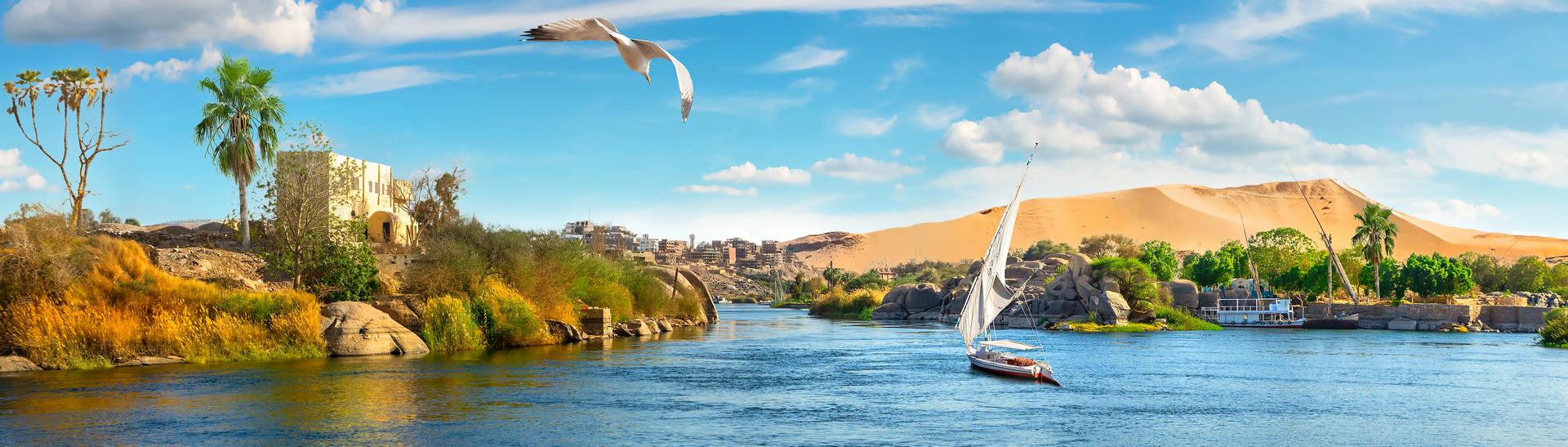
Nile River in Egypt
-
Peleg, properly “waters divided,” i.e., streams divided, throughout the land (Psalm 1:3); “the rivers [i.e., ‘divisions’] of waters” (Job 20:17; 29:6; Proverbs 5:16).
-
Pison River (aka Pishon) (pre-Flood)
-
River of Egypt. Also see: Stream of Egypt
-
“A river of fire was flowing” in Daniel’s prophetic vision of four beasts (Daniel 7:10).
-
River of Life
River of Life (aka Water of Life River, or River of the Water of Life)
This river will exist in the future New Jerusalem of the New Earth. The Apostle John was permitted to see it in a Divine vision.
Then the angel showed me the river of the water of life, bright as crystal, flowing from the throne of God and of the Lamb through the middle of the street of the city; also, on either side of the river, the tree of life with its 12 kinds of fruit, yielding its fruit each month. The leaves of the tree were for the healing of the nations. —Revelation 22:1-2 ESV
Dr. John MacArthur notes,
This river is unlike any on Earth because no hydrological cycle exists. Water of life symbolizes the continual flow of eternal life from God’s throne to heaven’s inhabitants. —John MacArthur, Litt.D., D.D., The MacArthur Study Bible
-
Sihor River, ancient extremity of the Nile, or possibly a Nile canal
-
Shihor-Libnath in Israel
-
Sorek (aka Nahal Sorek or Soreq) in Israel which passes Samson’s hometown of Zorah
-
Tel’alah, a Hebrew word meaning a channel, conduit, or water-course (Job 38:25; Ezek. 31:4; 2 Kings 18:17; 20:20; )
-
Ulai (aka Ubhal or 'Ubhal), at Susa (Susiana, Shushan), “a river” or “canal” mentioned by Daniel in Daniel 8:2
-
Yeor (aka Ye'or), that is a “great river,” probably from an Egyptian word (Aur), commonly applied to the Nile (Genesis 41:1-3), but also to other rivers (Job 28:10; Isaiah 33:21).
-
Yubal (aka yubhal), “spreads out its roots by the river” (Jeremiah 17:8 KJV, NKJV), by a “stream” (Jeremiah 17:8 NASB, ESV); full flowing stream
-
Zered (river or “brook” of the wilderness; Numbers 21:12; Deu. 2:13, 14)

Idolatrous worship of rivers (fetishism)
Idolatrous people worshiped many rivers, including the…
- Euphrates (Middle East/Mesopotamia, deified in Sumeria)
- Tigris (Middle East/Mesopotamia/Turkey, deified as Aranzah in Hittite/Hurrian cultures)
- Tiber (Roman Empire, deified as Tiberinus)
- Achelous (Greece, river god with cults)
- Nile (Egyptian god Hapi and goddess Anuket / Sobek, Egyptian lord of crocodiles was considered the creator of the Nile.)
- Scamander (Greece/Turkey, deified in myths)
- Sangarius (Turkey/Anatolia, river god Sangarios)
- Oxus, aka Amu Darya, Ōxus, Gozan, River Balkh, Yakhsha, or Vakhsha (Persia, venerated in Zoroastrianism)
The Greek false god Oceanus was considered the father of the river gods. The pre-Olympian god Pontus, aka Pontos, was a divinity of the rivers and sea. Yam was the Canaanite god of rivers and sea.
What are some details of Nile worship?
The Egyptians placed offerings on altars or threw offerings into the Nile. These included food, flowers, incense, amulets, and sometimes animals. The people tried to appease the Nile god Hapi for proper flood levels. They also held processions and parades, carrying statues of Hapi through towns and on river boats adorned with flowers and flags. The public gathered along banks expressing gratitude for his divine favor and throwing offerings into the river.
Festivals: “Arrival of Hapi” a Nile inundation festival (late summer, around July-August) lasted days with music, dance, feasts, sacrifices, and prayers. Wepet Renpet (“Opening of the Year” / a New Year festival) was tied to the Nile flood onset and the rising of the bright star Sirius, and included purification, offerings to Hapi/others, processions, and renewal rites.
Priestly duties included rituals at pagan temples using nilometers to measure and predict the floods. The pharaoh and priests performed ceremonies in hopes of ensure steady flow and cosmic order (Ma'at).
More information
- brooks
- Water in the Bible
- WATER: A miracle of God’s Creation
- Irrigation in the Bible
- Answers about agriculture in the Bible
- Pools
- Cisterns
- Channels
- Conduits
 What is a spring? What springs are mentioned in the Bible?
- What is a fountain in the Bible?
- Dead Sea—fed by various rivers
- Christian Baptism
- ferry boat
 What is the Global Flood?
- The Sea
- What is the Sea of Galilee? and what is its significance in the Bible?
- What’s special about the Sea of Galilee?
- Shibboleth
- Valleys of the Bible