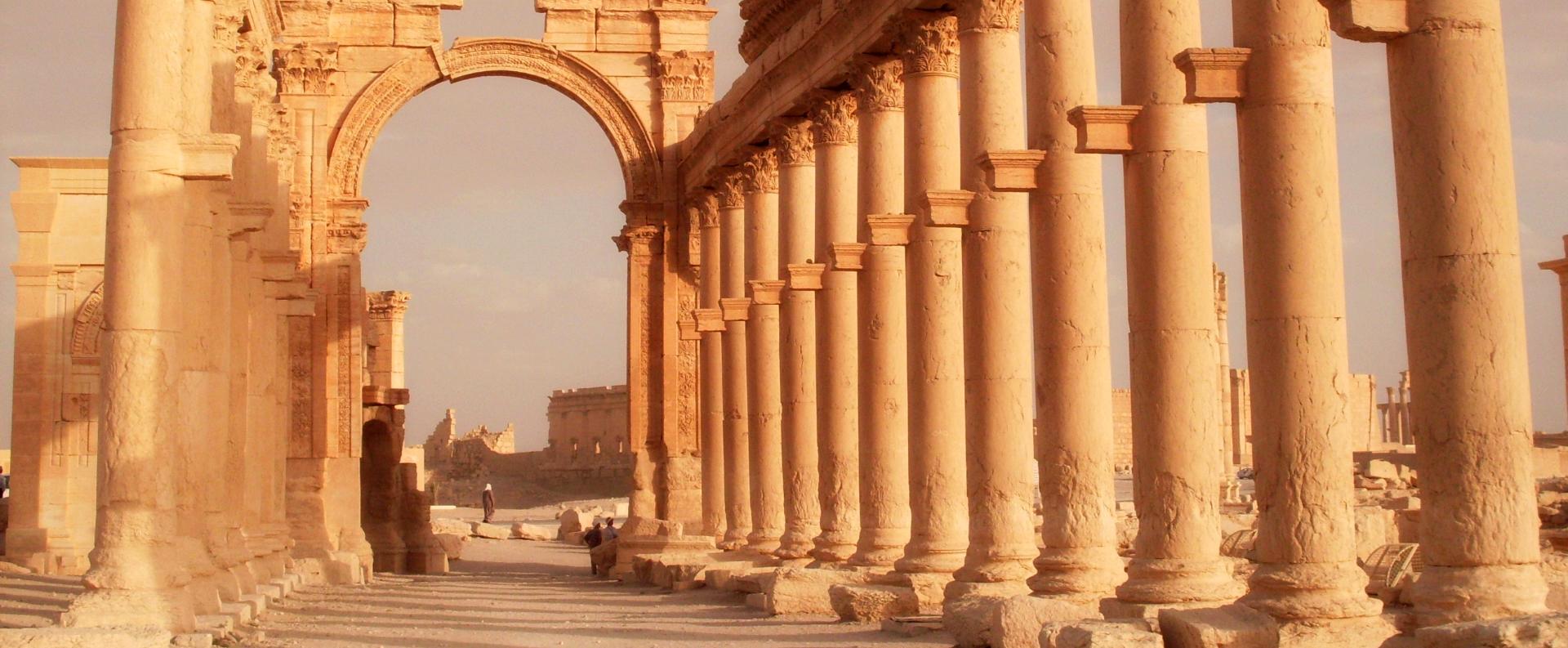
About…
Persia in the Bible
also known as: Iran (a term signifying the land of the Aryans / “Iran” name formally adopted in 1935)

Introduction
The Bible references the Persian Empire primarily in the later books of the Old Testament (Ezra, Nehemiah, Esther, and Daniel).
At its height, the Persian Empire was vast, extending from the India (Hodu) Indus River Valley to ancient Thrace, and from the Caspian Sea to the Red Sea, Cush (upper Nile) and the Persian Gulf. It included Media (Madai) (now Kurdistan and northwestern Iran) and Elam (SW Iran).
The Persians were originally a Medic tribe which settled in Persia, on the eastern side of the Persian Gulf. They were Aryans, their language belonging to the eastern division of the Indo-European group. One of their chiefs, Teispes, conquered Elam in the time of the decay of the Assyrian Empire, and established himself in the district of Anzan.
His descendants branched off into two lines, one line ruling in Anzan, while the other remained in Persia.
King Cyrus
Cyrus II, king of Anzan, finally united the divided power, conquered Media, Lydia, and Babylonia, and carried his arms into the far East. His son, Cambyses, added Egypt to the empire, which, however, fell to pieces after his death. It was reconquered and thoroughly organized by Darius, the son of Hystaspes, whose dominions extended from India to the Danube.
It was Persia’s Cyrus the Great who liberated the Jews in Babylon (Ezra 1:1-2) and returned the holy temple artifacts to Jerusalem which had been taken by King Nebuchadnezzar.
Now in the first year of Cyrus king of Persia, that the word of the LORD spoken by the mouth of Jeremiah might be accomplished, the LORD stirred up the spirit of Cyrus king of Persia, that he made a proclamation throughout all his kingdom, and put it also in writing, saying,
Thus saith Cyrus king of Persia, all the kingdoms of the earth hath the LORD God of heaven given me; and he hath charged me to build him a house in Jerusalem, which is in Judah.” —2 Chronicles 36:22-23
Kings
- Cyrus, and his sons Cambyses II and Bardiya
- Darius
- Ahasuerus/Xerxes
- Artaxerxes and his sons Sogdianus and Darius II Nothius
World’s largest empire
With close to 50-million people, the ancient Persian empire, under the rule of Darius I, was the world’s largest by percentage of world population, according to the Guinness Book of World Records:
By share of population, the largest empire was the Achaemenid Empire, better known as the Persian Empire, which accounted for approximately 49.4 million of the world’s 112.4 million people in around 480 BC—an astonishing 44%.
Other notable people of Persia
- Queen Esther
- Zerubbabel, a Jewish prince that used to live in Persia
- Judah’s bondage—Persian king freed the Jews from bondage
- Elam—predates Persia
- Amalekite—a tribe that probably migrated from the shores of the Persian Gulf
- Anshan —pre-Achaemenid era
- Asaak —Parthian era royal center
- Amol —Parthian Empire climate capital
- Babylon —Achaemenid era
- Ctesiphon —Parthian
- Shahr —Parthian era
- Nisa, Turkmenistan —periodical capital of the Parthian era
- Pasargadae —Achaemenid
- Rey (Rhagae) —Median
Cities and places related to Persia
-
City of Susa (aka Shushan, Shusah and Shush)—perhaps the most prominent Persian city in the Bible
It serves as the primary setting for the Book of Esther and is where Nehemiah served as cupbearer to King Artaxerxes. Daniel also records a vision of the ram and the goat set in Susa (Daniel 8:2).
-
City of Achmetha (aka Ecbatana, Hamgmatāna, Hamedan) —Median Empire, Achaemenid era
Mentioned in Ezra 6:2 as the location of the summer palace where a scroll was found containing Cyrus the Great’s decree to rebuild the Temple in Jerusalem.
-
City of Babylon. While originally a Chaldean city, it was a major capital of the Persian Empire after Cyrus the Great conquered it in 539 BC. Much of the biblical record involving Persian kings (like the fall of Belshazzar) centers here.
-
 Persepolis ruins (Iran)
Persepolis —Achaemenid grand capital
While not explicitly named in the Hebrew Bible, it appears in the Deuterocanonical book of 2 Maccabees 9:2 in the context of the later Greek-Persian conflicts describing how Antiochus retreated in disgrace from Persia after attempting to rob temples in Persepolis, where he was defeated by the local people. This event marks a significant moment in his downfall and the struggles faced by the Jewish people during his reign.
Persepolis was the ceremonial capital of the Achaemenid Empire, founded by Darius I in 518 BC. It symbolized Persian imperial power, architectural grandeur, and cultural sophistication. Its reliefs depicted tribute from subject nations, showcasing the empire's vast reach. Now a UNESCO World Heritage site, it remains a unique witness to ancient Persian civilization.
Persepolis ruins include:
- Gate of All Nations with massive winged bull guardians
- Elaborate bas-relief sculptures depicting delegations and processions
- Hall of a Hundred Columns (Throne Hall)
- Apadana audience hall: hypostyle with 72 tall columns (up to 20m), double-bull/lion capitals, detailed tribute reliefs on stairways
- Massive artificial terrace platform
- Monumental double-reversed grand staircase
- Tall, slender Persian columns with composite capitals
- City of Elam—predates Persian nation
- What is Beersheba? (Beer-sheba, Be'er Sheva)—conquered by Persia
- Prophet Daniel —also see: Book of Daniel
- Persia was at one time part of the Kingdom of Babylon
- Who are the Medes?
- What is Media?
- Who and what are Madai?
 What is the city of Babylon (Babel)? and what is its significance?
Modern Persia/Iran
The Persian-language, also known as Farsi, is “the most widely spoken member of the Iranian branch of the Indo-Iranian languages.”
The nation's largest cities are Tehran, Mashhad, Isfahan, Karaj and Shiraz.
Politically, Persia, in modern times, came to be known as Iran, and came under the control of Shia Islamists with an exceptionally poor and brutal human rights record, especially against Christians and Jews. In all the world, the Islamic Republic of Iran is the nation most determined to utterly destroy the nation of Israel.
Culturally, the names “Persia” and “Iran” are today used interchangeably.
As of 2026, Iran has a population of approximately 93 million (source: UN/Worldometer). Its Islamic government claims that over 99% are Muslims. This number is grossly exaggerated. Realistic surveys of private beliefs indicate growing secularism/non-religiosity.
Realistic estimates (accounting for underreporting due to apostasy laws, social pressure):
Independent surveys (e.g., 2020–2023 online polls—GAMAAN: Group for Analyzing and Measuring Attitudes in Iran) suggest much higher non-religious/irreligious (~20–40%, “nones,” atheists ~9%, agnostics ~6%) and lower practicing Muslims (~30–40% Shia). Zoroastrian identification inflated (~8% in one poll, likely symbolic/protest). The Islamic government claims that there are only 100,000–300,000 Christians, including ethnic Armenians/Assyrians. Hoever, the actual number is likely higher due to converts (~hundreds of thousands unofficially).
Other things related to Persia
- Bear—God’s vision given to Daniel represented the Medo-Persian empire as a bear-like beast with 3 ribs clenched in its teeth (7:5)
- Who is Persis?
- Amethyst
- Arabia
- Ararat
- archer
- axe
- Chaldea
- Chancellor
- Crown
- Cup-bearer
- Cushites
- Daric
- Dedan
- Dehavites
- deputy
- dispersion
- Dram
- Dress (clothing)
- Eating
- Egypt
- Esdraelon
- Esther, Queen
- Esther, book of
- Euphrates
- Fiery serpent
- Fox
- Hadassah
- Haggai
- Haman
- Harbona
- Havilah
- India
- Jerusalem
- Lieutenant
- Magog
- Malachi
- Marble
- Media
- Melzar
- Meshech
- Messianic prophecies
- Mithredath
- Money
- Mordecai
- Nebuchadnezzar
- Nehemiah and the Jerusalem wall
- Nehemiah, book of
- Nimrod
- Nineveh
- No
- paradise
- What are Parthians?
- Pearl
- Pethahiah
- Pharpar
- Prayer
- Presidents
- Purim (pur)
- Sela
- Sennacherib
- Sephar
- Sheba
 Answers about sheep in the Bible
- Shethar-boznai
- Shinar, the land of
- Sivan
- Tabeel
- Tatnai
- Tebeth
- Tirshatha
- toll
 What and who is Ur in the Bible?
- wisemen
- Answers about writing in Biblical times